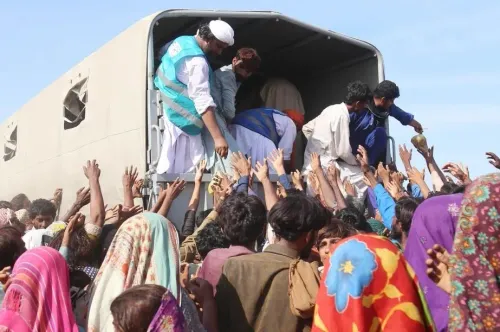
Pakistan child malnutrition: 12 million children stunted in national crisis
Synopsis
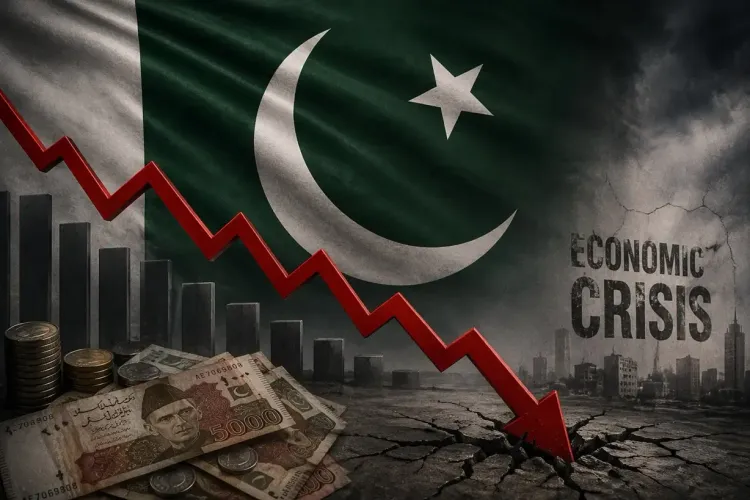
Pakistan's child malnutrition emergency is no longer a crisis in waiting — it is entrenched. With 12 million children stunted, a $17 billion annual economic cost, 304,000 children treated for severe acute malnutrition, and 2025 monsoon floods killing 255 children and wiping out over a million acres of farmland, the data paints a portrait of systemic failure that decades of interventions have failed to reverse.
Key Takeaways
40.2 per cent of children under five in Pakistan are stunted — equivalent to 12 million children , per the National Nutrition Survey 2018 .
Wasting affects 17.7 per cent of children under five; stunting has remained above 40 per cent since at least 2001 .
Malnutrition and undernutrition cost Pakistan an estimated $17 billion annually , according to nutrition partners.
UNICEF recorded 946 deaths — including 255 children — by 12 September due to the 2025 monsoon floods , which also inundated over one million acres of farmland in Punjab .
Four in ten children aged 12–36 months in high-risk areas of seven Pakistani cities had elevated blood-lead levels, per UNICEF's May 2025 report.
UNICEF's 2025 annual report recorded treatment for 304,000 children suffering from severe acute malnutrition.
Pakistan is confronting a deepening national human-development crisis as 12 million children under five — or 40.2 per cent of that age group — remain stunted, according to figures from the country's National Nutrition Survey 2018. A new analytical report warns that malnutrition can no longer be treated as an episodic emergency but demands sustained political will and cross-departmental coordination.
Scale of the Crisis
The National Nutrition Survey 2018 recorded stunting at 40.2 per cent among children under five, alongside a wasting rate of 17.7 per cent. The data shows a troubled trajectory: stunting stood at 41.6 per cent in 2001, climbed to 43.7 per cent in 2011, before easing marginally to the current figure — a pattern that signals structural failure rather than cyclical shortfall.
Pakistan's nutrition partners estimate the combined economic cost of malnutrition and undernutrition at approximately $17 billion annually, a burden that compounds across generations through impaired physical and cognitive development, diminished learning capacity, and poorer educational outcomes.
Micronutrient Deficiencies and Anaemia
Chronic undernutrition is compounded by widespread deficiencies in vitamin A, zinc, and vitamin D, alongside pervasive anaemia — conditions that collectively heighten vulnerability to infections and disease. These deficiencies affect children at critical windows of development, when nutritional gaps carry lifelong consequences.
Climate Shocks Deepening the Toll
Environmental crises are accelerating the humanitarian deterioration. The 2025 monsoon floods disrupted healthcare, nutrition, water, and sanitation services across several provinces while destroying crops, food stocks, and livelihoods. According to UNICEF, the floods had claimed 946 lives by 12 September, including 255 children, while more than one million acres of farmland in Punjab had been inundated. Floodwaters contaminated drinking-water sources, sharply increasing children's exposure to diarrhoeal diseases and other infections.
Lead Poisoning and Acute Malnutrition
UNICEF reported in May 2025 that four in ten children aged 12 to 36 months living in high-risk areas of seven Pakistani cities had elevated blood-lead levels — an environmental hazard adding a toxic dimension to an already grave nutritional picture. Separately, UNICEF's 2025 annual report recorded treatment for 304,000 children suffering from severe acute malnutrition.
What Needs to Happen
The report underscores that years of interventions have failed to produce durable gains, pointing to the need for coordinated action spanning health, agriculture, sanitation, and climate-adaptation departments. Analysts note that without sustained political commitment and independent monitoring of outcomes, Pakistan risks cementing a multi-generational cycle of poverty and underproductivity. The next major stress test will come with the 2025 monsoon aftermath assessment, expected to provide a fuller picture of this year's nutritional fallout.
Point of View
But a fall of three percentage points over seven years against a base of 12 million children is not a success story. What the data actually reveals is institutional inertia: interventions exist, but do not compound. The $17 billion annual cost figure is striking precisely because it dwarfs the resources typically allocated to nutrition programmes, suggesting that the political economy of nutrition in Pakistan has never matched the rhetoric. The 2025 flood data makes the trajectory even grimmer — climate shocks are not exogenous events for Pakistan anymore, they are a recurring structural feature that any serious nutrition strategy must price in from day one.
NationPress
14 Sept 2026
Frequently Asked Questions
How severe is child malnutrition in Pakistan?
Pakistan's National Nutrition Survey 2018 found that 40.2 per cent of children under five — approximately 12 million children — are stunted, while 17.7 per cent suffer from wasting. Chronic undernutrition has persisted above 40 per cent for nearly two decades.
What is the economic cost of malnutrition in Pakistan?
Pakistan's nutrition partners estimate that malnutrition and undernutrition cost the country around $17 billion annually. These losses stem from reduced productivity, impaired cognitive development, and poor educational outcomes linked to chronic childhood undernutrition.
How did the 2025 monsoon floods worsen Pakistan's nutrition crisis?
The 2025 monsoon floods disrupted healthcare, nutrition, water, and sanitation services across several provinces and inundated more than one million acres of farmland in Punjab. UNICEF recorded 946 deaths by 12 September, including 255 children, and floodwaters contaminated drinking sources, increasing children's exposure to diarrhoeal diseases.
What did UNICEF report about lead poisoning in Pakistani children?
UNICEF reported in May 2025 that four in ten children aged 12 to 36 months in high-risk areas of seven Pakistani cities had elevated blood-lead levels. This environmental hazard compounds the existing burden of micronutrient deficiencies and acute malnutrition.
How many children in Pakistan were treated for severe acute malnutrition?
UNICEF's 2025 annual report recorded treatment for 304,000 children suffering from severe acute malnutrition in Pakistan. This figure reflects the scale of the acute nutrition emergency running alongside the country's chronic stunting crisis.