Is China Amplifying Cultural Suppression in Tibet?
Click to start listening
Synopsis
A new report reveals alarming measures by the Chinese Communist Party aimed at suppressing Tibetan cultural identity, highlighting the destruction of sacred symbols and religious practices. This disturbing trend raises questions about the future of Tibetan heritage and the global response to cultural repression.
Key Takeaways
- The CCP's efforts to erase Tibetan identity are intensifying.
- Destruction of sacred symbols, including prayer flags, is ongoing.
- Local residents see these actions as an escalation of cultural repression.
- International concern is growing regarding human rights violations in Tibet.
- Events surrounding the 90th birthday of the Dalai Lama highlight restrictions on religious practices.
Colombo, Dec 27 (NationPress) The Chinese Communist Party (CCP) is intensifying its coercive efforts to eliminate the unique Tibetan identity, encompassing language, religion, and culture, according to a report released on Saturday.
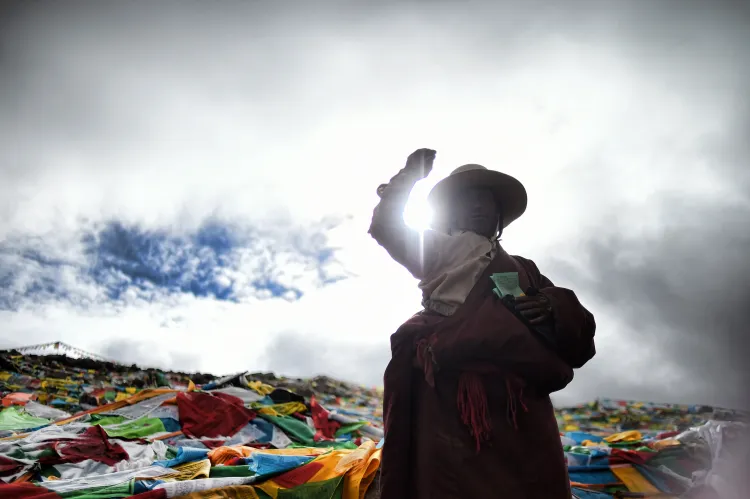
Satellite imagery indicates that Chinese officials have removed the sacred 'Om Mani Padme Hum' mantra etched into rocks on hills, replacing it with the Chinese flag. Furthermore, Tibetan nomads are compelled to exchange their traditional Mani prayer flags for Chinese ones and engage in mandatory political indoctrination sessions.
"Cultural repression in Tibet has hit a new low, as Chinese authorities have burned traditional prayer flags under the guise of fire hazard control. This destruction follows previous incidents involving the removal and alteration of Mani prayer flags prevalent throughout Tibet. Locals view this as an escalation in Beijing's efforts to obliterate visible Tibetan religious traditions," reported the prominent Sri Lankan media outlet, Ceylon Wire News.
"In recent years, there have been numerous instances of the removal and destruction of Mani flags and wheels by Chinese officials for arbitrary, illogical reasons. While Tibetans celebrated the 90th birthday of their spiritual leader, the Dalai Lama, Chinese authorities imposed severe restrictions on movement and religious practices in the region. Those who resisted participation in Beijing's 're-education program'—a national assimilation initiative—faced arbitrary detention on fabricated charges, long-term imprisonment, and systematic social exclusion," it added.
Massimo Introvigne, an Italian sociologist specializing in religions, characterized the actions of forcing Tibetans to surrender prayer flags for destruction as both an offense and sacrilege.
"The CCP aims to obliterate Tibetan religion and culture, leaving only a 'Disneyfied' version for the benefit of uninformed tourists. This initiative has been ongoing for years but has escalated under Xi Jinping's leadership. The prayer flags embody the very essence of Tibet. Even those who are not Buddhists should stand against this new form of cultural genocide," Ceylon Wire News quoted the Italian expert.
According to the report, approximately 300 Buddhist stupas were demolished in Tibet's Kham province in mid-2025.
The Central Tibetan Administration (CTA) condemned the destruction as a blatant act of cultural vandalism that has left Tibetans worldwide deeply traumatized.
"Chinese officials have insidiously defended the demolition by asserting that the stupas were constructed on 'government land' and violated unspecified regulations. The stone debris from these sacred structures has been completely cleared, erasing all evidence of these centuries-old symbols of faith," it stated.
Point of View
This report highlights a troubling trend of cultural suppression that raises concerns about human rights and the preservation of diverse identities. It is crucial to shed light on these developments and advocate for the rights of those affected while striving for a peaceful resolution to this ongoing issue.
NationPress
11/01/2026
Frequently Asked Questions
What specific actions are being taken by the CCP against Tibetan culture?
The CCP is removing sacred symbols, such as the 'Om Mani Padme Hum' mantra, replacing them with Chinese flags, and mandating the exchange of traditional prayer flags for Chinese ones.
How has the situation affected Tibetan religious practices?
Tibetan religious practices are severely restricted, with many facing arbitrary detention if they refuse to participate in Beijing's re-education programs.
What has been the international response to these actions?
The international community has expressed concern over these actions, labeling them as cultural repression and calling for the protection of Tibetan identity and rights.
Who is Massimo Introvigne and what is his viewpoint?
Massimo Introvigne is an Italian sociologist who describes the forced removal of Tibetan prayer flags as an offense and sacrilege, criticizing the CCP's efforts to erase Tibetan culture.
What was the recent incident involving Buddhist stupas?
Approximately 300 Buddhist stupas were destroyed in Tibet's Kham province, which the Central Tibetan Administration condemned as cultural vandalism.