Is China Driving the Narcotics Trade in Southeast Asia?

Synopsis
China's role as a primary supplier of precursor chemicals for synthetic drugs, particularly in the Golden Triangle, raises significant concerns. This article delves into the intricate network of chemical supply and its implications for drug production in Southeast Asia. Explore how institutional permissiveness and weak governance contribute to this alarming trend.
Key Takeaways
China is the leading supplier of precursor chemicals for synthetic drugs.
The Golden Triangle provides armed protection and logistical access for drug production.
Chinese nationals are increasingly linked to drug-related activities.
Weak governance and fragmented oversight enable criminal exploitation.
The narcotics trade reflects a governance model prioritizing economic expansion over regulation.
New Delhi, Jan 11 (NationPress) China has become the key provider of precursor chemicals and technical resources essential for the production of synthetic narcotic substances in Southeast Asia, especially within the Golden Triangle region, as reported by a media outlet.
The chemical sector in China is responsible for generating the vast majority of the globe's active pharmaceutical ingredients and industrial precursors. While many of these chemicals have legitimate uses, they can easily be modified for synthetic drug manufacturing, as outlined in an article by Ratish Mehta in the International Business Times.
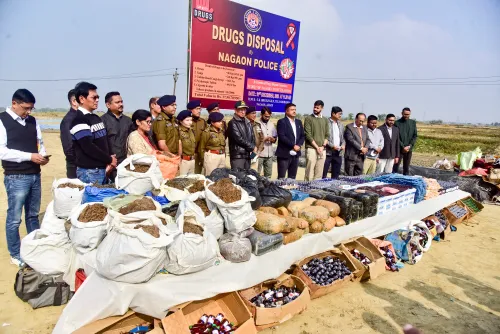
Numerous international indictments and investigative journalism have unveiled that Chinese chemical suppliers and brokers have knowingly marketed, sold, and shipped precursors for fentanyl and methamphetamines to foreign criminal networks. The US Department of Justice has prosecuted Chinese individuals and companies for trafficking fentanyl precursors, which indicates that these activities are part of organized commercial practices involving encrypted communication, mislabeled shipments, and cryptocurrency payments, according to the article.
Despite formal denials from Beijing regarding state involvement, suppliers have continuously adapted by transitioning to precursors or chemically similar compounds that remain unregulated. This indicates a regulatory framework that prioritizes industrial flexibility and export volume over proactive harm prevention, as stated in the article.
According to the article, "The narcotics trade associated with China is not maintained through explicit state sponsorship, but rather through institutional permissiveness. The lack of consistent enforcement, coupled with fragmented oversight of chemical exports and limited transparency in cross-border financial transactions, provides predictable opportunities for criminal exploitation. In this context, China’s role is better characterized as one of structural enablement rather than direct orchestration."
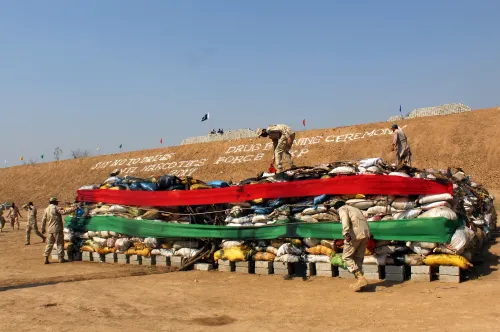
The Golden Triangle offers armed protection, weak governance, and logistical access to Chinese supply routes, contributing to a rise in drug production in the area.
Furthermore, the article indicates an increasing number of Chinese nationals being identified as financiers, chemical experts, and logistical coordinators in drug-related arrests across Thailand, Laos, and Myanmar.
Although such involvement does not indicate centralized state direction, it highlights the transnational continuity of the supply chain, as noted in the article.
The article emphasizes that such activities reflect a governance model where economic growth outpaces regulatory coordination, and political sensitivities hinder cooperation with foreign law enforcement.
Ultimately, the article concludes, "The outcome is a resilient proxy system where illicit production is tolerated as long as it remains offshore and politically deniable."
Point of View
It's imperative to recognize the multifaceted dynamics of the narcotics trade. China's involvement, while not state-sponsored, reveals a concerning level of institutional permissiveness that hinders effective global cooperation. Addressing this issue requires a unified international approach to enforce regulations and combat the rising tide of drug-related crimes.
NationPress
25 Sept 2026
Frequently Asked Questions
What role does China play in the narcotics trade?
China is a dominant supplier of precursor chemicals essential for synthetic drug production in Southeast Asia, particularly in the Golden Triangle region.
How are Chinese suppliers involved in the drug trade?
Chinese suppliers knowingly market and sell precursors for drugs like fentanyl and methamphetamine to international criminal networks.
What is the significance of the Golden Triangle?
The Golden Triangle is a region known for weak governance and logistical access to Chinese supply routes, facilitating increased drug production.
How has the Chinese government responded to allegations of involvement?
Beijing has denied any state involvement, but suppliers have adapted to circumvent regulations.
What are the implications of China's role in the narcotics trade?
China's involvement contributes to a resilient proxy system that tolerates illicit production while remaining politically deniable.