China May Access 80-90% of Ukraine's Surveillance Cameras: Report
Synopsis
A new report warns that China may access up to 90% of Ukraine's surveillance cameras — including military drone feeds — through Hikvision backdoors and Chinese-made telecom hardware. With Russian drone interceptions already reported, Ukraine's over-reliance on Chinese technology has become a critical wartime vulnerability.
Key Takeaways
China may have access to 80–90% of all surveillance cameras in Ukraine , including those on military reconnaissance drones, according to a report by dev.ua .
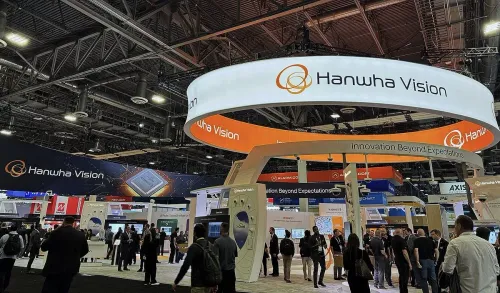
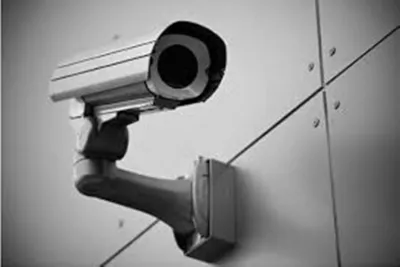
Hikvision , a Chinese manufacturer, installed 7,000 smart cameras in Kyiv under the Smart City project by 2020 , capable of facial and licence plate recognition.
There are already documented cases of Russian forces intercepting control of Ukrainian drones , highlighting active exploitation of tech vulnerabilities.
The US Federal Communications Commission has blacklisted both Hikvision and Dahua as national security risks; the UK has banned their use in sensitive facilities.
Chinese-made batteries at Ukrainian telecom base stations carry remote control capabilities, while energy brands Ecoflow, Bluetti , and Deye dominate household energy supply in Ukraine.
The United States remains the only other country with comparable tech influence over Ukraine, controlling major payment systems, cloud platforms, and AI tools.
New Delhi, April 23: A alarming new report has revealed that China may have the ability to access between 80 and 90 per cent of all surveillance cameras operating across Ukraine, including cameras mounted on military reconnaissance drones — a vulnerability that poses a severe and direct security threat during the ongoing war with Russia. The findings, published by Ukrainian technology media outlet dev.ua, have triggered fresh concerns about foreign technological infiltration in a nation already under active military conflict.
Hikvision Cameras Dominate Ukraine's Surveillance Infrastructure
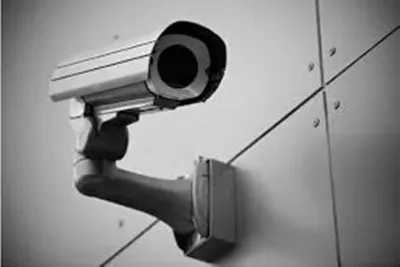
The report highlights that Chinese manufacturer Hikvision installed approximately 7,000 cameras across Kyiv as part of the city's Smart City project by 2020, according to Octava Capital founder Oleksandr Kardakov, who was cited in the report. These are not ordinary cameras — they are intelligent systems capable of facial recognition, licence plate identification, and continuous security monitoring at sensitive locations including schools and kindergartens.
Hikvision is currently the most widely deployed video surveillance brand across Ukraine. The report warns that if China has embedded a backdoor within these systems, it could effectively monitor street-level activity across the capital and other major Ukrainian cities in real time.
Drone Interception Risks Already Materialising
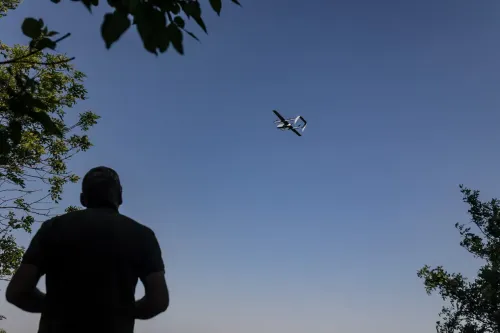
Beyond static cameras, the report raises serious alarms about the use of Chinese-manufactured components in Ukrainian military drones. According to the report, there have already been documented instances of Russian forces intercepting control of Ukrainian drones — a scenario that could be linked to exploitable vulnerabilities in Chinese-origin hardware and software embedded in these unmanned systems.
The possibility of real-time drone feed access or remote control hijacking represents a catastrophic operational security risk on an active battlefield, analysts note.
Chinese Tech Influence Extends to Telecom and Energy Sectors
The security concern does not stop at cameras. The report points out that Chinese-manufactured batteries installed at mobile network base stations frequently carry remote control capabilities, raising fears of potential network disruption or surveillance. Additionally, a significant proportion of smartphones in use across Ukrainian networks are also of Chinese origin.
In the energy sector, brands such as Ecoflow, Bluetti, and Deye — all Chinese manufacturers — have become top-selling household energy solutions in Ukraine amid the ongoing energy crisis caused by Russian strikes on power infrastructure.
Regulatory Precedents in the US and UK
The report draws attention to regulatory actions taken by Western allies. In the United States, both Hikvision and Dahua have been listed by the Federal Communications Commission (FCC) as posing an unacceptable risk to national security. In the United Kingdom, sensitive government and defence facilities are legally prohibited from deploying Chinese surveillance systems under intelligence legislation.
Ukraine, however, has not yet implemented equivalent restrictions, leaving critical urban and military infrastructure exposed to potential foreign exploitation.
US Tech Dominance Provides a Counterbalance
The report acknowledges that the United States is the only other nation with comparable technological influence over Ukraine. American companies control dominant payment platforms — Visa and Mastercard — as well as major cloud infrastructure providers including AWS, Microsoft Azure, and Google Cloud. US firms also lead in artificial intelligence, with OpenAI (ChatGPT), Anthropic (Claude), and Google Gemini shaping the information environment.
As the war continues, pressure is likely to mount on Ukrainian authorities to audit and replace Chinese-origin technology across critical infrastructure — a move that would require significant international financial and technical support. The findings are expected to intensify global debates around supply chain security and the risks of Chinese hardware in conflict zones.
Point of View
Ukraine's failure to follow suit underscores the urgent need for a comprehensive technology audit backed by NATO allies. This is no longer just a cybersecurity concern — it is a live wartime vulnerability.
NationPress
19 Sept 2026
Frequently Asked Questions
Why is China's access to Ukraine's surveillance cameras a security threat?
China could potentially exploit backdoors in Chinese-manufactured cameras to monitor Ukrainian streets, military movements, and sensitive locations in real time. During an active war, this intelligence could be shared or leveraged in ways that directly endanger Ukrainian forces and civilians.
Which Chinese company installed surveillance cameras in Kyiv?
Chinese manufacturer Hikvision installed approximately 7,000 cameras in Kyiv as part of the city's Smart City project by 2020. These cameras are capable of facial recognition and licence plate identification.
Have Ukrainian drones already been intercepted by Russia?
Yes, according to the dev.ua report, there have already been documented cases of Russian forces intercepting control of Ukrainian drones. This raises serious concerns about vulnerabilities in Chinese-origin drone components.
Has the US or UK banned Hikvision cameras?
Yes, the US Federal Communications Commission has listed Hikvision and Dahua as posing unacceptable national security risks. The UK has also prohibited sensitive facilities from using Chinese surveillance systems under intelligence legislation.
What other Chinese technology poses a risk to Ukraine?
Beyond cameras, Chinese-made batteries at mobile network base stations with remote control capabilities, Chinese smartphones, and energy products from brands like Ecoflow, Bluetti, and Deye are widely used across Ukraine, expanding the potential attack surface.