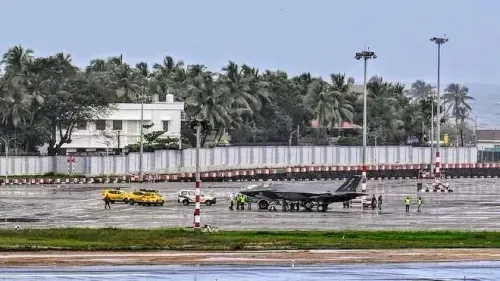
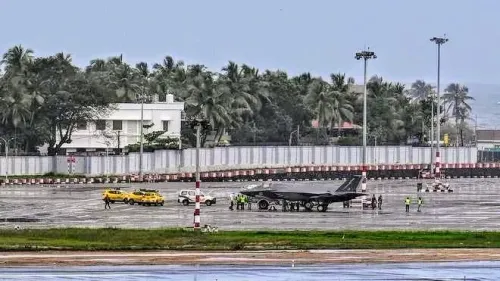
F-35 parts reportedly diverted to China; US lawmaker demands Pentagon probe
Synopsis
Sensitive F-35 stealth fighter components — reportedly including a weapons-bay door and jet canopy — were allegedly diverted from an Australia-to-US shipment to Hong Kong, where the Chinese government reportedly took possession. Congressman Raja Krishnamoorthi has given Defence Secretary Pete Hegseth until 12 October to explain how a million-dollar vulnerability in America's most advanced combat aircraft supply chain was allowed to happen.
Key Takeaways
F-35 components — reportedly including a weapons-bay door and jet canopy — were allegedly diverted from an Australia-to-US shipment to Hong Kong , where the Chinese government reportedly took possession.
Congressman Raja Krishnamoorthi has formally demanded a probe from Defence Secretary Pete Hegseth , citing risks of China reverse-engineering US stealth technology.
The shipment reportedly stopped in South Korea before being diverted; Krishnamoorthi has asked who authorised the stop and why commercial shipping was used for sensitive parts.
A 2023 GAO report found more than one million F-35 spare parts worth $85 million went missing over five years; the Pentagon investigated only 2% of those losses.
Hegseth has been given until 12 October to respond to Krishnamoorthi's questions on chain of custody, recovery efforts, and any similar known diversions.
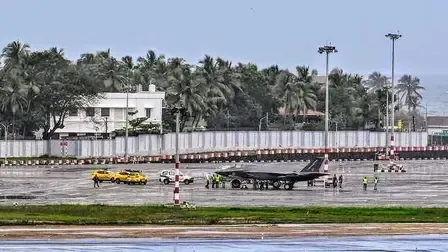
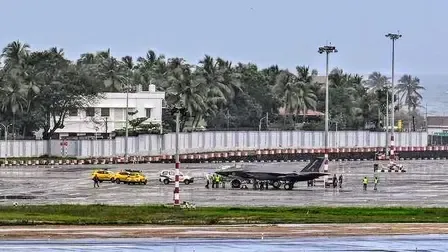
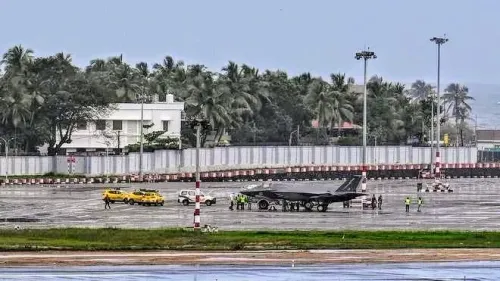
Indian-origin US Congressman Raja Krishnamoorthi has demanded a formal investigation after components of America's advanced F-35 fighter aircraft — reportedly including a weapons-bay door and a jet canopy — were allegedly diverted to Hong Kong while being shipped from Australia to the United States, and subsequently taken into the possession of the Chinese government. The incident, which reportedly involved a stopover in South Korea before the diversion, has triggered urgent questions about the security of the F-35's sprawling international supply chain.
What Krishnamoorthi Has Asked the Pentagon
In a letter addressed to Defence Secretary Pete Hegseth, Krishnamoorthi — a senior member of both the House Permanent Select Committee on Intelligence and the House Select Committee on the Strategic Competition Between the United States and the Chinese Communist Party — has demanded a full account of the shipment's chain of custody from its departure in Australia to its reported arrival in Hong Kong.
The congressman has asked why the consignment stopped in South Korea, who authorised that stop, and which entity bore responsibility for maintaining custody of the components at each stage. He also pressed the Pentagon to clarify whether the diversion was the result of an intentional act, negligence, inadequate safeguards, or subversion.
A central concern raised by Krishnamoorthi is why sensitive F-35 parts were routed through a commercial shipping network rather than military transportation channels, and whether the criteria governing such decisions will now be reconsidered.
The National Security Stakes
'According to Bloomberg, the Chinese government took possession of the parts and has not returned them. Possession of F-35 parts could allow the CCP to reverse engineer U.S. stealth technology, threatening our service members and national security,' Krishnamoorthi wrote to Hegseth.
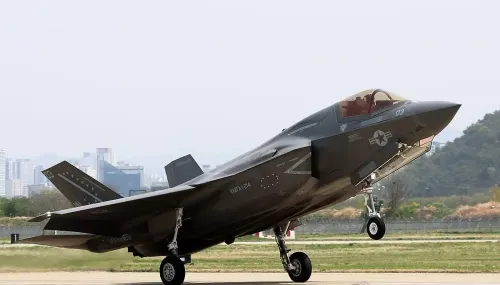
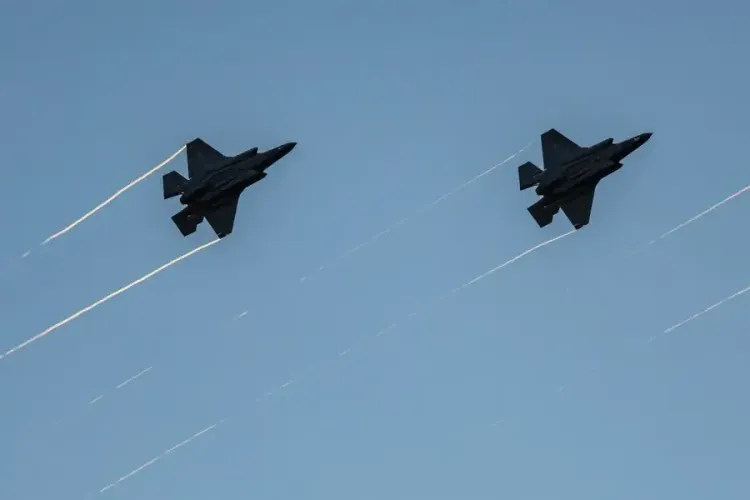
The F-35 is a fifth-generation stealth combat aircraft developed by Lockheed Martin and operated by the United States and several allied nations. Its radar-evading technology is among the most closely guarded in the US defence inventory. Analysts warn that even partial access to physical components could offer adversaries meaningful insight into materials science, structural design, and signature-reduction techniques.
A Pattern of Missing Parts
Krishnamoorthi has placed the incident in the context of a broader accountability failure within the F-35 programme. Citing a 2023 Government Accountability Office (GAO) report, he noted that more than one million F-35 spare parts collectively worth $85 million went missing over a five-year period, and that the Pentagon investigated only 2% of those losses. He also questioned why the Pentagon has not yet fully implemented four GAO recommendations from 2023 on accountability for the F-35 global spare-parts pool.
'Incidents like this simply should not happen, and they raise serious questions over Department of Defense and commercial shipping companies' policies for tracking sensitive U.S. military hardware,' the congressman said.
Deadline and Next Steps
Krishnamoorthi has given Hegseth until 12 October to respond to his detailed list of questions, which also includes a request for an assessment of any other known cases in which F-35 parts or sensitive military components were lost, diverted, or routed through China, Hong Kong, or territories controlled by US adversaries. He has further asked whether the Pentagon is actively pursuing the recovery of the components. The Pentagon had not publicly responded to the letter as of the time of this report.
Frequently Asked Questions
What F-35 parts were reportedly diverted to China?
The components reportedly include a weapons-bay door and a jet canopy from the F-35 stealth fighter. They were being shipped from Australia to the United States when the consignment was allegedly diverted to Hong Kong, where the Chinese government reportedly took possession of them.
Who is Raja Krishnamoorthi and why is he involved?
Raja Krishnamoorthi is an Indian-origin US Congressman representing Illinois and a senior member of both the House Permanent Select Committee on Intelligence and the House Select Committee on Strategic Competition with China. He has formally demanded a probe from Defence Secretary Pete Hegseth, citing national security risks from potential Chinese reverse engineering of US stealth technology.
Why does China having F-35 parts pose a national security threat?
The F-35 is a fifth-generation stealth aircraft whose radar-evading materials and design features are among the most classified in the US arsenal. According to Krishnamoorthi, possession of physical components could allow China to reverse engineer stealth technology, potentially enabling it to detect or counter the aircraft in a future conflict.
How serious is the F-35 supply chain accountability problem?
A 2023 GAO report cited by Krishnamoorthi found that more than one million F-35 spare parts worth a combined $85 million went missing over a five-year period, and the Pentagon investigated only 2% of those losses. Four GAO recommendations on improving accountability for the global spare-parts pool have reportedly not been fully implemented.
What happens next in the investigation?
Krishnamoorthi has set a 12 October deadline for Defence Secretary Pete Hegseth to respond to a detailed set of questions covering the shipment's chain of custody, the rationale for using commercial shipping, the South Korea stopover, recovery efforts, and whether similar diversions have occurred before. The Pentagon had not publicly responded as of the time of this report.