F-35 fleet readiness gap: US sustainment system built for 800, not 1,300 jets
Synopsis
The US has over 1,300 operational F-35s but a sustainment system built for fewer than 800 — a structural readiness gap that Lt Gen Gregory Masiello laid bare before the Senate on 24 June. With the FY2027 budget, Block 4 upgrades, and allied commitments all in play, the world's most expensive weapons programme is at a critical inflection point.
Key Takeaways
The F-35 fleet has grown to over 1,300 operational aircraft , but sustainment infrastructure was designed for only 700–800 jets , creating a structural readiness gap.
Lt Gen Gregory Masiello disclosed the shortfall before the Senate Armed Services Airland Subcommittee on 24 June .
Since 2016 , the programme has expanded from 170 aircraft and 12 nations to 1,300+ jets , 20 nations , and over 1.2 million flight hours .
The proposed FY2027 budget requests funding for 85 US aircraft , Block 4 upgrades, and engine modernisation — all flagged as critical by programme leadership.
Senator Mark Kelly demanded accountability on readiness improvement and cost control.
The F-35 , built by Lockheed Martin , remains the largest and most expensive weapons programme in US history .
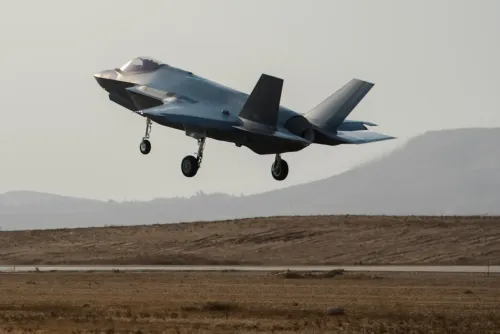
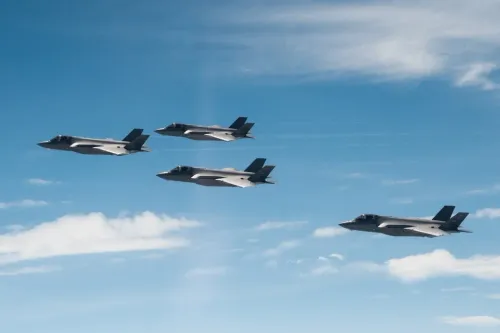
The Pentagon's F-35 Lightning II programme is under mounting pressure to close a widening gap between fleet size and sustainment capacity, a senior US defence official told lawmakers on Wednesday, 24 June. With over 1,300 operational F-35s now deployed across the United States and allied nations, the programme's support infrastructure was designed for roughly half that number.
The Readiness Gap in Plain Numbers
Lieutenant General Gregory Masiello, Programme Executive Officer of the F-35 Joint Programme Office, told the Senate Armed Services Airland Subcommittee that the scale of the problem is structural. 'There are over 1,300 operational F-35s out there, 832 of which are inside the US inventory, and the other ones are with our partner nations,' Masiello said. 'If I have over 1,300 operational aircraft out there, I believe we have set and enabled a sustainment system for about 7 to 800. So there is our challenge in readiness.'
That shortfall — a sustainment architecture built for fewer than 800 jets now supporting more than 1,300 — represents the central challenge before the programme as it enters its next phase of expansion.
How the Programme Has Scaled Since 2016
Masiello placed the readiness challenge in historical context, noting that when the last F-35 programme chief appeared before the Senate in 2016, there were just 170 aircraft in service across 12 participating nations. Today, the programme spans 20 nations, has logged more than 1.2 million flight hours, and has trained over 3,400 pilots.
The aircraft now operates from 42 sites worldwide and 13 ships, including platforms operated by allied nations. The Netherlands and Australia have both declared full operational capability, and several other partner countries have completed delivery of their planned fleets.
Block 4 Upgrades and the FY2027 Budget
The hearing also examined progress on the Block 4 modernisation programme, which is designed to sharpen the aircraft's combat edge against advanced air defences and next-generation threats. Subcommittee Chairman Senator Kevin Cramer described the F-35 as 'a strategic asset that strengthens deterrence, enhances interoperability, and reinforces the alliances and partnerships that underpin global security,' adding that Block 4 upgrades were essential to keeping the aircraft relevant.
Masiello warned that the proposed fiscal year 2027 budget — which includes funding for 85 US aircraft, Block 4 upgrades, and engine modernisation — was critical. 'If we did not get the totality of the budget or only got one portion of it, there's a significant impact on the production line and the number of aircraft,' he said.
Lawmakers Demand Accountability on Costs
Senator Mark Kelly, a former naval aviator and astronaut, acknowledged the aircraft's capabilities but pressed for greater fiscal discipline. 'We need accountability, and we need to have a clear understanding of how the department is improving readiness, controlling costs, and ensuring that the programme delivers on the promises,' Kelly said.
His concerns reflect a broader pattern of congressional scrutiny. The F-35, developed by Lockheed Martin, is the largest and most expensive weapons programme in US history, operated by the US Air Force, Navy, and Marine Corps, as well as allies across Europe, the Indo-Pacific, and the Middle East.
Combat Operations Cited as Proof of Capability
Masiello pointed to recent operations — including missions described as Rough Rider, Absolute Resolve, Midnight Hammer, and Epic Fury — as evidence of the aircraft's unique operational value. 'This is the only aircraft that can hit some of the targets that it was able to hit and see everything that it could be to actually act as a quarterback of that joint force,' he said.
With the fleet set to keep growing, the programme now faces a defining test: whether its sustainment infrastructure can scale as fast as the aircraft itself.
Point of View
300, and that arithmetic does not improve on its own. What is striking is that this gap widened in plain sight: the fleet's growth trajectory has been known for years, yet the support infrastructure did not keep pace. Congressional pressure on costs is warranted, but the deeper accountability question is why programme planners allowed sustainment capacity to lag so far behind procurement. The FY2027 budget battle will reveal whether the Pentagon treats this as an engineering problem to be solved or a budget line to be negotiated.
NationPress
23 Sept 2026
Frequently Asked Questions
What is the F-35 readiness challenge the Pentagon is facing?
The Pentagon's sustainment system for the F-35 was built to support roughly 700–800 aircraft, but the fleet has grown to over 1,300 operational jets across the US and allied nations. Lt Gen Gregory Masiello told the Senate Armed Services Airland Subcommittee on 24 June that this gap is the programme's core readiness challenge.
How large has the F-35 programme grown since 2016?
In 2016, there were 170 F-35s in service across 12 nations. Today, the programme spans 20 nations, has logged more than 1.2 million flight hours, trained over 3,400 pilots, and operates from 42 sites worldwide and 13 ships.
What is the F-35 Block 4 modernisation programme?
Block 4 is an upgrade package designed to enhance the F-35's combat capabilities against advanced air defences and next-generation threats. Funding for Block 4 is included in the proposed FY2027 budget, which also covers 85 new US aircraft and engine modernisation.
Why is the FY2027 budget critical for the F-35 programme?
Lt Gen Masiello warned that failing to secure the full FY2027 budget request would have a significant impact on the production line and aircraft numbers. The request covers 85 US aircraft, Block 4 upgrades, and engine modernisation — all considered essential to maintaining programme momentum.
Which countries have declared full operational capability on the F-35?
The Netherlands and Australia have both declared full operational capability on the F-35. Several other partner nations have also completed delivery of their planned fleets, according to programme officials.