B-21 bomber fleet of 100 may fall short amid China threat, US Air Force warns
Synopsis
The US Air Force has told Congress that 100 B-21 stealth bombers — long the programme's baseline — may no longer be enough to deter China. Combined with a 64-year-old tanker fleet, a cost-asymmetry crisis in counter-drone warfare, and a $1 million-versus-$4,000 drone dilemma laid bare in open testimony, the hearing exposed just how wide the gap between America's legacy force structure and its future threat environment has become.
Key Takeaways
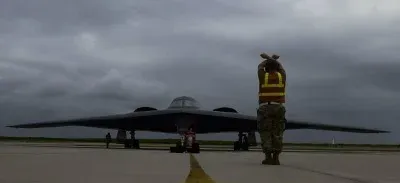
Lieutenant General David Tabor told the House Armed Services subcommittee on 14 May that the Air Force may need more than the planned 100 B-21 stealth bombers to meet future threats.
Internal reviews are still underway to determine the precise fleet size required.
Some KC-135 tanker aircraft average nearly 64 years in age; full modernisation is planned over the next six years .
Acquisition chief William Bailey flagged the cost-exchange problem: intercepting a $4,000 drone with a $1 million missile is unsustainable.
The Air Force is working with Joint Task Force 401 and the 'Golden Dome' initiative to bolster counter-drone defences.
Planning is underway for a next-generation airlift platform to replace ageing C-17 and C-5 aircraft.
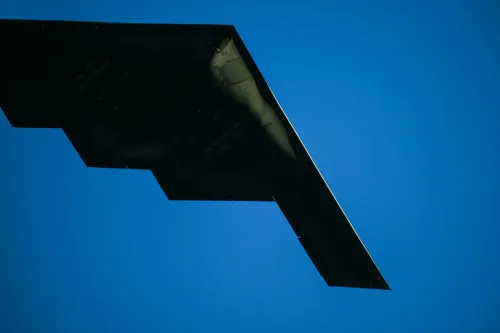
Senior US Air Force officials testified before Congress on 14 May that the rapidly intensifying threat posed by China is compelling the Pentagon to reconsider whether its planned fleet of 100 B-21 Raider stealth bombers will be sufficient, as lawmakers pressed the military on ageing aircraft, tanker vulnerabilities, and the growing menace of low-cost drones.
Key Testimony: More Than 100 Bombers Needed
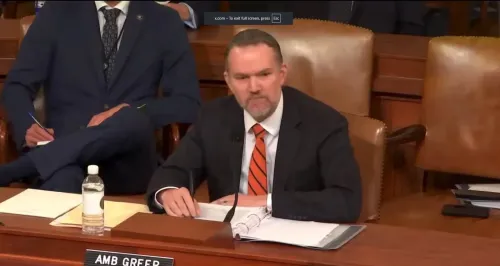
Testifying before the House Armed Services subcommittee on projection forces, Lieutenant General David Tabor stated that the Air Force now believes its current procurement target may be inadequate. 'My sense is that we do need more than 100,' Tabor told lawmakers, while noting that internal reviews were still underway to determine the precise number required.
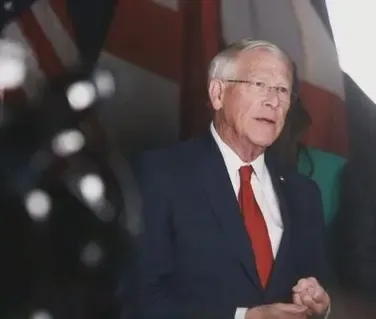
Republican Congressman Rob Wittman reinforced the concern, arguing that the strategic environment had shifted dramatically since the B-21 programme was conceived more than a decade ago. 'The capability that aircraft provides is pretty amazing,' Wittman said, adding that the bomber would prove critical in a 'highly contested environment' where the US confronts a 'large-scale threat.'
Ageing Fleets and Tanker Vulnerabilities
The hearing centred heavily on the Air Force's fiscal year 2027 budget request and the mounting urgency of modernising bomber, tanker, and airlift fleets. Subcommittee chairman Trent Kelly warned that US adversaries were 'investing heavily in advanced capabilities as they try to close in on our lead.'
'Our bomber fleet is the cornerstone of our strategic deterrent,' Kelly said. 'Our mobility platforms are the backbone of our operational effectiveness.'
Air Force acquisition chief William Bailey defended Pentagon modernisation efforts, noting investments in advanced tanker survivability systems, satellite communications, and countermeasures. 'We have hundreds of tankers,' Bailey said. 'We have hundreds and hundreds of airlifters that also face those same style of threats.'
Tabor confirmed that the Air Force plans to fully modernise the KC-135 tanker fleet over the next six years, incorporating upgraded communications, tactical data systems, and hybrid satellite connectivity. Congressman Joe Courtney flagged that some tanker aircraft average nearly 64 years in age — a detail that underscored the scale of the modernisation challenge.
Drone Threat: The Cost Asymmetry Problem
Congressman Eugene Vindman pressed officials on whether the Air Force was adequately investing in offensive and defensive unmanned systems, citing lessons from recent conflicts in Ukraine and the Middle East. Bailey acknowledged the rapidly evolving threat landscape and warned against relying on costly missile interceptors to neutralise cheap drones.
'Shooting up a $1 million weapon at a $4,000 drone does not make sense,' Bailey said — a blunt articulation of the cost-exchange problem that has troubled military planners since drone warfare emerged as a decisive factor in modern conflict.
The Air Force said it was working closely with Joint Task Force 401 and the broader 'Golden Dome' missile defence initiative to strengthen counter-drone capabilities at military bases and overseas operations.
Next-Generation Airlift on the Horizon
Officials confirmed that planning was underway for a next-generation airlift platform to eventually replace the ageing C-17 and C-5 aircraft. The timeline for that programme was not specified, but the hearing made clear that the Air Force's modernisation agenda — spanning bombers, tankers, and airlifters — is being stress-tested by a strategic environment that has grown considerably more complex since most of these platforms were designed.
With China's military build-up accelerating and drone warfare reshaping battlefield calculus, the pressure on Capitol Hill to approve expanded procurement and faster modernisation timelines is set to intensify in the months ahead.
Point of View
On the record, that the B-21 programme's foundational number may already be obsolete. That admission reflects a broader structural problem: US force planning has repeatedly struggled to keep pace with China's military modernisation, and procurement timelines measured in decades are poorly suited to a threat that evolves in years. The drone cost-exchange dilemma is equally telling — the world's most expensive air force is wrestling with how to defeat a $4,000 aircraft without bankrupting itself in the process. If these hearings produce only incremental budget adjustments rather than a fundamental rethink of force structure, the gap between rhetoric and readiness will keep widening.
NationPress
8 Oct 2026
Frequently Asked Questions
Why does the US Air Force want more than 100 B-21 bombers?
Lieutenant General David Tabor told Congress on 14 May that China's rapidly evolving military capabilities have made the original target of 100 B-21 Raider stealth bombers potentially insufficient. Internal reviews are still underway to determine the exact number needed to maintain deterrence in highly contested environments.
What is the B-21 Raider and why does it matter?
The B-21 Raider is the US Air Force's next-generation stealth bomber, designed to penetrate advanced air-defence systems. Lawmakers and officials described it as critical to strategic deterrence, particularly in scenarios involving large-scale conflict with a near-peer adversary such as China.
How old is the US Air Force tanker fleet?
Some KC-135 tanker aircraft in the US Air Force fleet average nearly 64 years in age, according to testimony at the hearing. The Air Force plans to fully modernise the KC-135 fleet over the next six years with upgraded communications, tactical data systems, and hybrid satellite connectivity.
What is the drone cost-exchange problem the Air Force raised?
Air Force acquisition chief William Bailey warned that using a $1 million missile interceptor to shoot down a $4,000 drone is fiscally unsustainable. The Air Force is working with Joint Task Force 401 and the 'Golden Dome' missile defence initiative to develop more cost-effective counter-drone solutions.
What aircraft are planned to replace the C-17 and C-5 airlifters?
Officials confirmed that planning is underway for a next-generation airlift platform to eventually replace the ageing C-17 and C-5 aircraft, though no specific timeline was given at the hearing.