China-India boundary talks: Wang Yi vows 'harmonious coexistence' at 25th Special Representatives meeting
Synopsis
At the 25th Special Representatives meeting in Beijing, China's Wang Yi pledged 'harmonious coexistence' with India and pointed to the Xi-Modi summits in Kazan and Tianjin as the diplomatic foundation. The next round is already confirmed for India in 2027 — a rare institutional commitment that signals both sides are investing in the reset, even as the underlying boundary dispute remains far from settled.
Key Takeaways
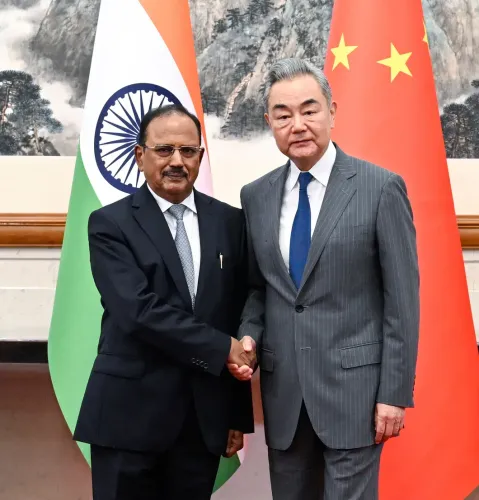
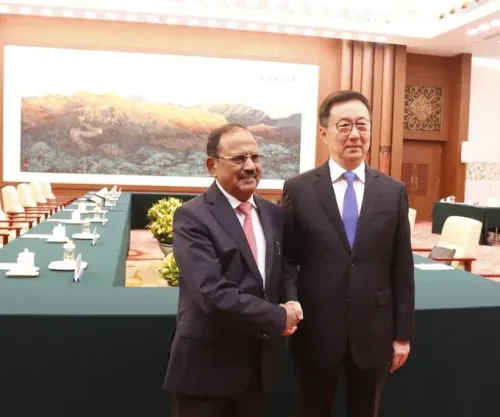
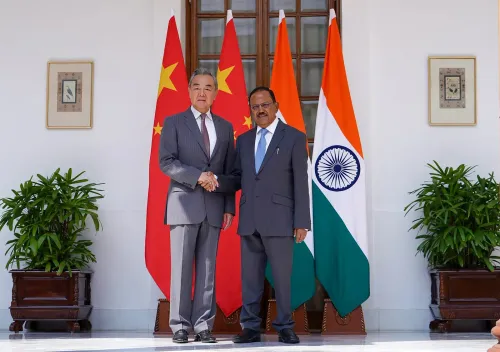
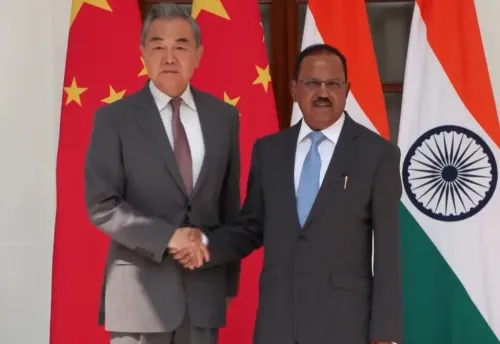
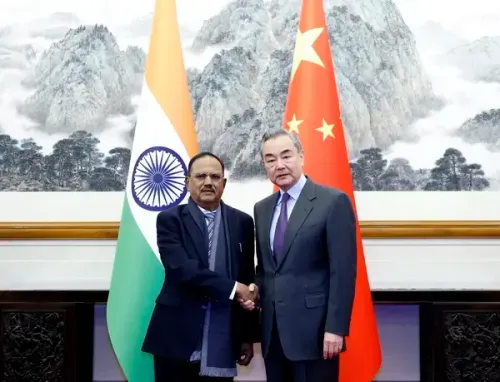
Wang Yi and NSA Ajit Doval held the 25th Special Representatives meeting on the China-India Boundary Question in Beijing on 25 August .
Wang Yi called for 'harmonious coexistence' and pledged China's willingness to 'eliminate differences' and 'overcome obstacles' with India.
NSA Doval stressed the need for a 'stable, predictable, and forward-looking' bilateral relationship of significance to Asia and the world.
Both sides agreed to advance border demarcation negotiations , strengthen border control, and improve bilateral mechanisms.
The 26th Special Representatives meeting is confirmed to be held in India in 2027 .
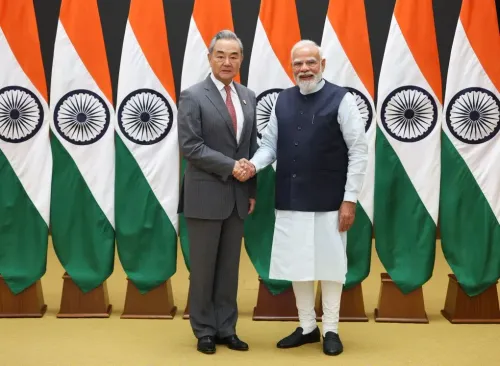
The meeting follows the Modi-Xi summits in Kazan and Tianjin , which Beijing credits with charting the course for the bilateral reset.
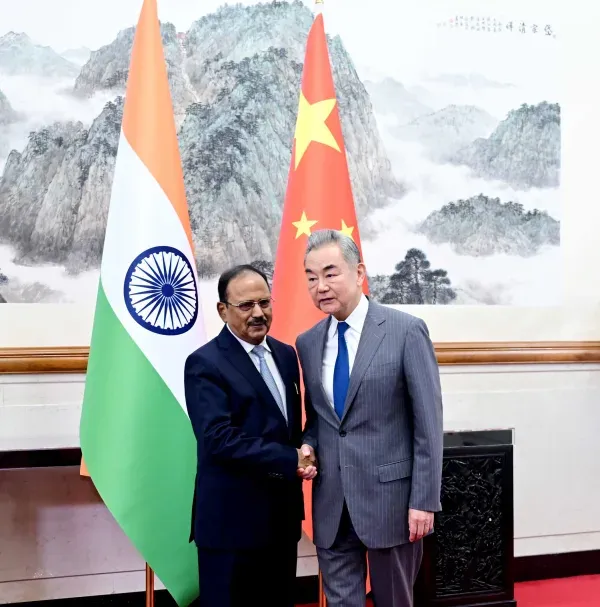
China's top diplomat Wang Yi on Tuesday, 25 August declared Beijing's willingness to work with New Delhi to 'eliminate differences' and achieve 'harmonious coexistence' between the two nations, as National Security Advisor Ajit Doval and Wang Yi held the 25th meeting of the Special Representatives on the China-India Boundary Question in Beijing. The talks, described by both sides as 'comprehensive, in-depth, friendly, and candid,' mark a continued thaw in bilateral relations following years of border-driven tensions.
What Wang Yi Said
Wang Yi — China's Foreign Minister, Member of the Politburo of the Central Committee of the Communist Party of China (CPC), and Director of the Office of the Central Foreign Affairs Commission — framed the meeting in sweeping strategic terms. According to China's Ministry of Foreign Affairs, he stated: 'China and India are important neighbours and representatives of major developing countries and emerging economies. The healthy and stable development of China-India relations is in the fundamental interests of both peoples, meets the common aspirations of countries in the Global South, and aligns with the trend of the times.'
Wang Yi further noted that bilateral ties 'have transcended the bilateral scope and possess global and strategic significance,' pointing to the two meetings between President Xi Jinping and Prime Minister Narendra Modi in Kazan and Tianjin as having 'charted the course for the improvement and development of bilateral relations.'
Doval's Position: Stable, Forward-Looking Ties
NSA Doval underscored the need for a 'stable, predictable, and forward-looking India-China relationship,' describing it as being in the common interest of both peoples and of 'great significance to Asia and the world.' He acknowledged that, under the guidance of both countries' leaders, bilateral ties 'have returned to the right track,' with border areas maintaining 'overall peace' and cooperation across various fields progressing steadily.
Key Outcomes of the Beijing Meeting
According to the Chinese Foreign Ministry statement, both sides held in-depth discussions on advancing border demarcation negotiations, strengthening border control, improving bilateral mechanisms, and promoting cross-border cooperation. The two sides agreed to 'properly handle the border issue through dialogue and consultation, and jointly maintain peace and tranquility along the border.'
Significantly, both delegations agreed to hold the 26th meeting of the Special Representatives on the China-India Boundary Question in India in 2027 — a concrete institutional signal of sustained engagement. The two sides also exchanged views on international and regional issues of common concern.
Context: A Relationship Rebuilding After Galwan
The meeting comes against the backdrop of a gradual but cautious diplomatic reset between the two Asian giants, following the deadly Galwan Valley clashes of June 2020 that had pushed ties to their lowest point in decades. Disengagement at key friction points along the Line of Actual Control (LAC) — including Depsang and Demchok — was completed in late 2024, paving the way for a resumption of high-level dialogue. The Modi-Xi meetings in Kazan and Tianjin were pivotal in restoring diplomatic momentum.
Notably, this is the first time the Special Representatives' meeting has been held since the border disengagement was formalised, lending the Beijing session added weight. With the next round scheduled for India in 2027, both sides appear committed to institutionalising the recovery — though the underlying boundary dispute, spanning thousands of kilometres of contested terrain, remains unresolved.
Point of View
' 'Global South solidarity,' 'strategic significance' — is carefully calibrated and worth reading critically. China has used similar framing before, including in the years leading up to the Galwan crisis, when diplomatic rhetoric and ground-level military assertiveness diverged sharply. The real indicator will not be Wang Yi's statements but whether border demarcation negotiations produce verifiable, mapped outcomes. Confirming the 26th meeting in India is a positive procedural signal, but it is a scheduling commitment, not a territorial concession. India's insistence on a 'stable, predictable' relationship — Doval's phrasing — reflects New Delhi's awareness that goodwill declarations must be backed by durable LAC arrangements. The asymmetry in leverage has not disappeared; it has been temporarily managed.
NationPress
25 Aug 2026
Frequently Asked Questions
What was decided at the 25th China-India Special Representatives meeting in Beijing?
Both sides agreed to continue handling the border issue through dialogue, advance border demarcation negotiations, and hold the 26th Special Representatives meeting in India in 2027. China's Wang Yi also pledged Beijing's commitment to 'harmonious coexistence' and eliminating differences with New Delhi.
Who represented India and China at the 25 August boundary talks?
India was represented by National Security Advisor Ajit Doval , while China's side was led by Wang Yi , who serves as Foreign Minister, Politburo Member of the CPC Central Committee, and Director of the Office of the Central Foreign Affairs Commission.
What is the Special Representatives mechanism on the China-India Boundary Question?
It is a high-level bilateral dialogue framework established to address the long-running border dispute between India and China along the Line of Actual Control. The 25th meeting, held in Beijing on 25 August, is the first since the two sides completed disengagement at key friction points in late 2024.
Why is the China-India border reset significant now?
The reset follows the deadly Galwan Valley clashes of June 2020, which had pushed ties to their lowest point in decades. Disengagement at Depsang and Demchok was completed in late 2024, and the subsequent Modi-Xi meetings in Kazan and Tianjin restored high-level diplomatic engagement, making the 25 August talks a formal institutionalisation of that recovery.
When and where will the next China-India boundary talks be held?
Both sides have agreed to hold the 26th meeting of the Special Representatives on the China-India Boundary Question in India in 2027, marking a concrete commitment to continued structured dialogue.