China's new welfare law flags minority exclusion, structural inequality: Report
Synopsis
China's new Social Assistance Law, hailed by the CCP as a welfare milestone, may entrench the very inequalities it claims to address. An ORCA report finds that debt-ridden provinces will deliver unequal coverage, the Hukou system remains a barrier, and ethnic minorities — governed separately under a simultaneously enacted Ethnic Unity Law — are absent from the welfare framework entirely.
Key Takeaways
China's Social Assistance Law takes effect on 1 July 2026 , formalising welfare assistance after over a decade without dedicated legislation.
An ORCA report warns the law's decentralised structure will create welfare gaps, with debt-laden provinces like Inner Mongolia , Liaoning , Ningxia , and Tianjin unable to match richer regions.
Ethnic and religious minorities facing structural discrimination are absent from the law's legal language, according to the report.
The Ethnic Unity Law , passed a month earlier, also comes into force on 1 July 2026 — with both laws together reflecting an assimilation-first rather than welfare-first approach to minorities, critics argue.
The report identifies the absence of meaningful civil society participation as a core structural limitation of the new framework.
China's Social Assistance Law, set to come into force on 1 July 2026, has drawn sharp scrutiny from analysts who argue that the legislation, despite its sweeping welfare ambitions, systematically excludes the country's most marginalised communities — including ethnic and religious minorities — from formal protection. The concerns are detailed in a report by the Organisation for Research on China and Asia (ORCA), released on 21 May.
What the Law Promises
The Chinese Communist Party (CCP) has positioned the new law as a landmark step toward a more comprehensive and efficient national welfare framework, formalising social assistance after more than a decade without dedicated legislation. The law's administrative architecture promises broader coverage and streamlined governance across the country's vast and varied provinces.
Economic Pressures Behind the Timing
According to the ORCA report, the timing of the law is telling. 'The law is being introduced at a time when China is grappling with deepening economic uncertainty, rising youth unemployment and growing pressure on local government finances,' the report noted. It added that the legislation also 'reflects a growing concern with managing social insecurity and preventing rising insecurity from translating into broader instability.'
This context matters because the law adopts a decentralised funding structure, leaving implementation largely to provincial governments. Debt-laden provinces such as Inner Mongolia, Liaoning, Ningxia, and Tianjin — already contending with unemployment and entrenched structural poverty — are unlikely to match the welfare levels achievable in wealthier regions, the report warned.
Geographical Disparities Over Actual Need
The ORCA report argued that this decentralised design fundamentally undermines the law's stated purpose. 'Access to social assistance under the new law will be shaped more by geographical disparities rather than actual need,' it stated. Critics argue the provision risks creating new layers of vulnerability rather than resolving existing ones — a structural contradiction at the heart of the legislation.
The report described the law as shaped by 'economic pressure, the absence of meaningful civil society participation, geographical luck and the Hukou system' — China's household registration framework that has long restricted rural migrants from accessing urban welfare entitlements.
Minority Exclusion and the Ethnic Unity Law
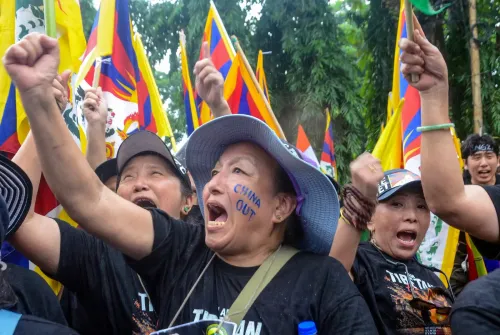
Perhaps the most pointed criticism concerns what the law omits. According to the report, ethnic and religious minorities facing structural discrimination are entirely absent from the law's legal language. This gap is rendered more conspicuous by the fact that China's Ethnic Unity Law — passed just one month earlier — is also scheduled to take effect on 1 July 2026, the same date as the Social Assistance Law.
The two laws, the report argued, together illustrate how 'the Chinese state approaches the governance of minority communities through the language of assimilation and state-led social stability' rather than by confronting 'welfare vulnerability and structural inequality' directly. Despite framing itself as a safety net for vulnerable populations, the Social Assistance Law, according to ORCA, 'once again leaves some of the country's most socially and economically marginalised groups outside the boundaries of formal welfare protection.'
What Comes Next
With both laws due to take effect simultaneously in July 2026, analysts will be watching whether implementation guidelines address the gaps flagged in the report. The absence of independent civil society oversight mechanisms — which the report identifies as a structural limitation — means accountability for welfare delivery will remain largely internal to the state apparatus. How debt-stressed provinces respond to their new obligations is expected to be an early indicator of whether the law's ambitions translate into ground-level impact.
Point of View
Effectively bifurcating vulnerability into 'addressable' and 'political.' The decentralised funding model compounds this by ensuring that the provinces with the deepest poverty are also the least equipped to deliver on the law's promises. What mainstream coverage misses is that the Hukou system — unreformed — remains the single largest structural barrier to equitable welfare access, and this law does nothing to dismantle it.
NationPress
6 Oct 2026
Frequently Asked Questions
What is China's Social Assistance Law?
China's Social Assistance Law is a new piece of legislation set to take effect on 1 July 2026, formally codifying the country's social welfare assistance framework after more than a decade without dedicated law. The Chinese Communist Party has described it as a key step toward a more comprehensive and efficient welfare system.
Why does the ORCA report criticise the new law?
The Organisation for Research on China and Asia argues the law is shaped by economic pressure, the absence of civil society participation, the Hukou system, and geographical disparities that will result in unequal welfare access. It also flags the complete absence of ethnic and religious minorities from the law's legal language.
How does the Hukou system affect welfare access under the new law?
The Hukou household registration system restricts migrants from accessing welfare entitlements in cities where they work but are not registered. The new Social Assistance Law does not reform this system, meaning its structural barriers to equitable welfare access remain intact, according to the ORCA report.
Which provinces are most at risk of failing to deliver adequate welfare under the law?
The ORCA report specifically identifies Inner Mongolia, Liaoning, Ningxia, and Tianjin as debt-ridden provinces that also face high unemployment and structural poverty. Their fiscal constraints mean they are unlikely to provide welfare support comparable to wealthier regions, the report warned.
What is the connection between the Social Assistance Law and the Ethnic Unity Law?
Both laws were passed within a month of each other and are scheduled to come into force on the same date — 1 July 2026. The ORCA report argues that together they reveal how China governs minority communities through assimilation and state-led stability rather than addressing their welfare vulnerability and structural inequality.