Is China's Aviation Sector Facing a Crisis with Empty Airports and Suspended International Routes?
Synopsis
China's aviation sector is in deep trouble with eerily quiet airports and international routes suspended. A dire media report reveals how mismanaged policies are at the heart of this crisis, leading to significant airline losses and a troubling future for air travel in the nation.
Key Takeaways
China's aviation crisis is marked by empty airports and suspended routes.
Financial losses exceed 4.7 billion yuan among major airlines.
Mismanagement of policies is a key factor in the crisis.
High-speed rail competition is impacting air travel appeal.
Strained international relations are discouraging foreign airlines.
Beijing/New Delhi, Jan 3 (NationPress) The aviation industry in China is grappling with a profound crisis characterized by vacant airports, halted international routes, and escalating losses for airlines, as reported by the media.
This situation has become emblematic of the nation's broader economic and political isolation from the global community, according to the Ceylon News wire. The crisis is attributed to the mismanagement of both domestic and foreign policies.
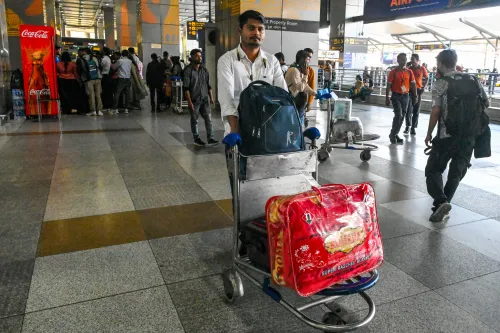
The haunting silence at China’s airports is not just a logistical challenge; it signals deeper structural issues. Once thriving centers of global travel, airports like Beijing’s Daxing International now appear abandoned. Social media posts from travelers illustrate shuttered shops, empty terminals, and flights with minimal passengers,” the report highlighted.
This dramatic decline in air traffic is not a singular event but part of a larger trend reflecting the vulnerability of China’s economy and the constraints of its governance model under the Chinese Communist Party (CCP), the report indicated.
The report criticized the CCP's cost-reduction strategies that compelled airlines, primarily state-owned entities like Air China, China Eastern, and China Southern, to cut services, introduce hard seating, and even secure cargo to passenger seats, undermining consumer trust.
Furthermore, the government’s domestic focus on infrastructure expansion without fostering consumer confidence has left airlines overstretched and unable to respond effectively.
Competing high-speed rail services, which offer cheaper and more reliable alternatives, have also diminished the attractiveness of air travel.
These issues are worsened by strained relations with Western nations, aggravated by the ongoing US-China trade war and geopolitical tensions in the South China Sea, leading to reluctance among international airlines to maintain routes.
As reported, over 30 foreign airlines, including Virgin Atlantic, Scandinavian Airlines, and El Al, ceased operations to China by December 2024.
Even Beijing’s unilateral visa-free initiative for citizens from 38 nations has not reversed the downturn, with inbound travel recovery rates remaining low: only 45.2% from the US, 56.2% from Germany, 57.9% from the UK, and 53% from France as of mid-2025.
This has resulted in a staggering financial loss exceeding 4.7 billion yuan (approximately $645 million) for Air China, China Eastern, and China Southern combined.
“The CCP’s policies, both domestically and internationally, have failed to cultivate confidence, rendering the aviation sector a cautionary example of the repercussions of prioritizing political agendas over economic rationality,” the report concluded.
Point of View
I view the current challenges in China's aviation sector as a critical issue that reflects broader economic instability. While the CCP's policies have been aimed at promoting growth, their mismanagement has resulted in significant setbacks. It is essential to approach this situation with a sense of realism and acknowledge the interconnectedness of global travel and international relations.
NationPress
1 Oct 2026
Frequently Asked Questions
What is causing the crisis in China's aviation sector?
The crisis is primarily attributed to poor management of domestic and foreign policies, leading to empty airports and suspended routes.
How many foreign airlines have suspended flights to China?
More than 30 foreign airlines, including Virgin Atlantic and Scandinavian Airlines, have suspended flights to China as of December 2024.
What financial losses have airlines faced?
Air China, China Eastern, and China Southern have collectively suffered over 4.7 billion yuan ($645 million) in losses.
How has consumer trust been affected?
Cost-cutting measures by airlines, such as reducing services and altering seating arrangements, have significantly eroded consumer trust.
What are the recovery rates for inbound travel?
As of mid-2025, recovery rates for inbound travel are 45.2% from the US, 56.2% from Germany, 57.9% from the UK, and 53% from France.