Is China the World's Largest Perpetrator of Illegal Fishing?
Synopsis
In a dramatic revelation, US lawmakers accuse China of leading the world in illegal, unreported, and unregulated fishing practices. With over 16,000 vessels in its Distant-Water Fishing fleet, China is allegedly manipulating global food supply chains and exploiting labor. This investigation raises urgent concerns about national security and economic sovereignty.
Key Takeaways
China leads the world in illegal, unreported, and unregulated fishing.
The Distant-Water Fishing fleet consists of over 16,000 vessels .
Forced labor and human rights abuses are rampant in the fishing industry.
This situation threatens US national security and economic sovereignty.
Collaboration with allies is crucial to counter these challenges.
Washington, Jan 23 (NationPress) A recent investigation by US lawmakers has accused China of being the “largest perpetrator in the world” of illegal, unreported, and unregulated (IUU) fishing, as highlighted in a new report.
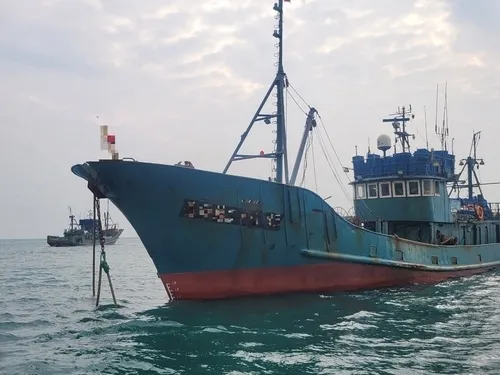
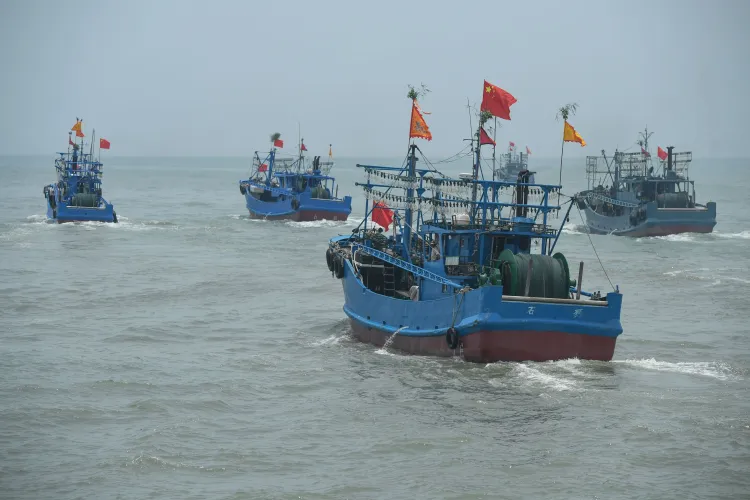
Chairman John Moolenaar of the US Select Committee on China, alongside Chairman Carlos Gimenez of the US House Homeland Security Committee’s Transportation and Maritime Security Subcommittee, unveiled an investigation that elucidates how China operates the world’s largest Distant-Water Fishing (DWF) fleet, estimated to encompass over 16,000 vessels. This fleet is reportedly used to intimidate other countries, manipulate the global food supply, and deplete fisheries worldwide, as asserted by the Select Committee on the Chinese Communist Party (CCP).
The Select Committee emphasizes its commitment to collaborating on a bipartisan level to build a consensus regarding the “threat posed by the CCP” and to devise a plan of action to protect the American populace, economy, and values.
The report further claims that this fleet operates with forced labor and engages in human rights violations that go unaddressed while China monopolizes seafood processing. Over 80 percent of US seafood is imported, much of which depends on supply chains dominated by China.
Moolenaar remarked that the investigation has unveiled how the CCP has exploited unregulated fishing to its benefit and manipulated the world’s food supply.
“The Select Committee has documented how various American industries face supply chain vulnerabilities that leave the US exposed to China, and the food supply is no exception. This investigation highlights how the CCP has leveraged unregulated fishing to its advantage and manipulated the global food supply. By collaborating with allies, we can address the vulnerabilities impacting the food supply that Americans depend on and halt China’s oceanic exploitation,” he stated.
Carlos Gimenez characterized the Communist Chinese fishing fleet as “a weapon of the Chinese Communist Party”. He pointed out that US national security is compromised due to the CCP’s strategy to dominate food systems.
Gimenez declared, “The fishing fleet of Communist China is not merely a commercial endeavor; it is a tool of the Chinese Communist Party. The CCP commands the world’s largest fishing fleet akin to a military apparatus, employing it to deplete resources from countries, exploit forced labor, destroy marine ecosystems, and dominate global seafood supply chains. The CCP’s strategy to monopolize food systems has devastated economies from West Africa to Latin America and has direct implications for our national security.”
“Our laws are crafted to regulate fishermen, not to counter a subsidized, state-operated fleet designed to evade enforcement and project power. This investigation reveals a crucial reality: the CCP is weaponizing seafood as a means of coercion, and the United States must recognize this threat as a direct challenge to our national security and economic sovereignty,” he added.
According to the committee, the investigation has disclosed that China has established a global system that eliminates distance as a limitation on fishing. China has monopolized the processing of global seafood supplies through its hubs, gaining a permanent, state-supported cost advantage across major production inputs. Moreover, China has transformed its dominance in seafood processing into a global power, manipulating markets to undermine US processing capabilities and increase American reliance.
The findings of this probe reveal a “deliberate, state-directed campaign by the CCP” aimed at achieving maritime supremacy, monopolizing food systems, and undermining the rules-based international order, which constitutes a direct threat to US national security, economic sovereignty, and global stability.
Point of View
I firmly believe that the ongoing issues of illegal fishing and human rights abuses should not be overlooked. With China's significant influence on global seafood supply chains, it is crucial for the US to take a proactive stance to protect its interests and collaborate with allies to ensure a fair and sustainable fishing industry.
NationPress
1 Oct 2026
Frequently Asked Questions
What is illegal, unreported, and unregulated (IUU) fishing?
IUU fishing refers to fishing activities that are conducted in violation of applicable laws and regulations, including fishing without a license, catching fish during closed seasons, or exceeding quotas.
How does China's fishing fleet affect global food supply?
China's massive Distant-Water Fishing fleet is accused of depleting fish stocks worldwide, thereby manipulating the food supply and impacting the economies of many nations.
What role does forced labor play in China's fishing industry?
Reports indicate that forced labor and human rights abuses are prevalent within China's fishing industry, contributing to unethical practices and supply chain vulnerabilities.
Why is this issue significant for US national security?
The investigation suggests that China's control over seafood supply chains poses a threat to US national security by creating dependence on a foreign power for essential food resources.
What actions can be taken to address these issues?
Bipartisan collaboration among US lawmakers and partnerships with allied nations can help to address vulnerabilities in the food supply chain and curb China's exploitation of marine resources.