Rubio's China sanctions sidestepped via name spelling at Trump-Xi summit
Synopsis
Beijing didn't lift its sanctions on Marco Rubio — it simply changed how his name is spelled in Chinese. That quiet transliteration swap let America's top diplomat walk into the Great Hall of the People without either side having to formally back down. It is a small but telling window into how Washington and Beijing are managing a relationship too consequential to let protocol derail.
Key Takeaways
Marco Rubio , sanctioned by China in 2020 , attended Trump 's two-day summit with Xi Jinping in Beijing in May 2025 .
Chinese officials adopted a different transliterated Chinese spelling of Rubio's surname, allowing his entry without formally lifting sanctions.
Former Chinese diplomat Zhang Jiadong described the move as Beijing finding 'a middle ground' to avoid banning a sitting secretary of state.
Chinese authorities framed the sanctions as targeting Rubio's conduct 'as a US senator', not his current office.
Rubio joined Treasury Secretary Scott Bessent , Defence Secretary Pete Hegseth , and Trade Representative Jamieson Greer in meetings at the Great Hall of the People .
The summit covered trade , Taiwan , and Iran ; Xi warned that mishandling Taiwan could cause 'clashes and even conflicts.'
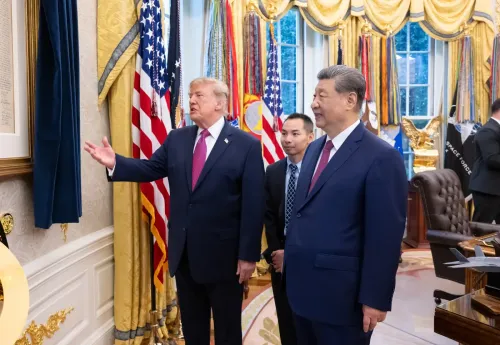
US Secretary of State Marco Rubio, sanctioned by Beijing in 2020 over his sharp criticism of Chinese policies, appeared prominently at President Donald Trump's two-day summit with Chinese President Xi Jinping in Beijing this week — after Chinese officials quietly adopted a different transliterated Chinese spelling of his surname, according to a report by The Washington Post. The workaround allowed Beijing to sidestep formally lifting its sanctions while still permitting America's top diplomat to participate in high-level talks.
The Name-Change Manoeuvre
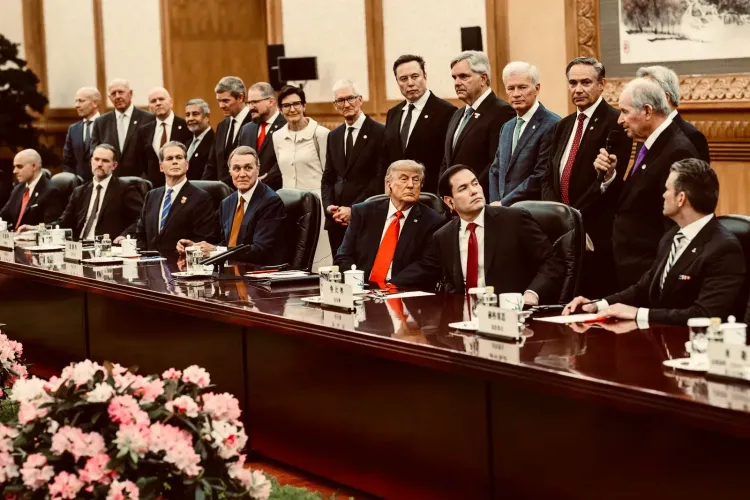
According to The Washington Post, Chinese state media and official records began using a revised Chinese character transliteration of Rubio's surname after Trump appointed him Secretary of State in 2025. At the summit, Rubio sat across from Chinese counterparts with a nameplate displaying the new spelling — a subtle but consequential diplomatic signal.
Analysts cited by the newspaper suggested the change gave Beijing a face-saving exit. Zhang Jiadong, a former Chinese diplomat, told The Washington Post: 'China is giving itself a way out of the awkward situation. We can't cancel the sanctions, because they were announced for a reason, but banning a secretary of state from entry could further damage bilateral ties. So we found a middle ground.'
Why Rubio Was Sanctioned
Rubio has long been one of Washington's most vocal critics of Beijing. He repeatedly condemned the Chinese government's crackdown on pro-democracy activists in Hong Kong and its treatment of Uyghur Muslims in Xinjiang. China sanctioned him alongside other American lawmakers and organisations during his Senate years, amid escalating bilateral tensions.
Chinese officials this year drew a distinction between Rubio's past role and his current office, stating that the sanctions had targeted his 'words and deeds when he served as a US senator' — a framing that reportedly provided the diplomatic cover for his participation in the summit.
Rubio's Role at the Beijing Summit
Far from being sidelined, Rubio was central to the American delegation. He joined Treasury Secretary Scott Bessent, Defence Secretary Pete Hegseth, and Trade Representative Jamieson Greer in meetings with Xi at the Great Hall of the People, and later accompanied Trump to the Zhongnanhai leadership compound.
Notably, Rubio adopted a markedly more measured tone on China during interviews surrounding the summit. As reported by The Washington Post, he described China as 'both our top political challenge geopolitically and it's also the most important relationship for us to manage' — a departure from his historically hawkish Senate-era rhetoric.
What the Summit Covered
The two-day talks focused heavily on trade, Taiwan, and Iran. According to Chinese accounts of the discussions cited by multiple US media outlets, President Xi warned Trump that mishandling Taiwan could create 'clashes and even conflicts.'
The Rubio episode underscores the pragmatic recalibrations both sides appear willing to make as Washington and Beijing attempt to stabilise a relationship strained by years of confrontation over trade, technology, military competition, and Taiwan. Whether this diplomatic flexibility signals a deeper thaw — or remains a transactional accommodation — will become clearer in the months ahead.
Point of View
The real win is subtler: a once-implacable China hawk now sits across the table describing the US-China relationship as the most important to manage. Whether that shift reflects a genuine recalibration by Rubio or the gravitational pull of executive office is the question mainstream coverage has largely skipped. The answer matters enormously for how durable this diplomatic detente actually is.
NationPress
9 Oct 2026
Frequently Asked Questions
Why was Marco Rubio sanctioned by China?
China sanctioned Rubio in 2020 during his Senate tenure for his vocal criticism of Beijing's crackdown on pro-democracy activists in Hong Kong and its treatment of Uyghur Muslims in Xinjiang. The sanctions were part of a broader set of retaliatory measures against American lawmakers and organisations.
How did Rubio attend the Beijing summit despite Chinese sanctions?
Chinese officials quietly adopted a different transliterated Chinese character for Rubio's surname after he became Secretary of State in 2025, according to a report by The Washington Post. This allowed Beijing to permit his entry without formally rescinding the sanctions.
What did China say about the sanctions on Rubio?
Chinese officials stated earlier in 2025 that the sanctions had targeted Rubio's 'words and deeds when he served as a US senator', implying they did not apply to him in his current role as America's top diplomat — a distinction that provided diplomatic cover for his participation.
What was discussed at the Trump-Xi summit in Beijing?
The two-day summit focused on trade, Taiwan, and Iran. Chinese President Xi Jinping reportedly warned President Trump that mishandling Taiwan could lead to 'clashes and even conflicts', according to Chinese accounts cited by multiple US media outlets.
Did Rubio change his position on China at the summit?
Rubio struck a notably more measured tone during the summit, describing China as 'both our top political challenge geopolitically and it's also the most important relationship for us to manage', a shift from his historically hawkish Senate-era stance on Beijing.