Chinese solar firm near Wright-Patterson Air Base faces US security review
Synopsis
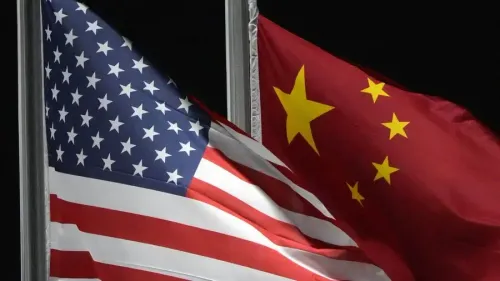
A Chinese solar manufacturer reportedly seeking a facility just 13 miles from one of America's most sensitive air force bases has triggered a formal CFIUS review request from a Republican senator — the latest flashpoint in Washington's escalating scrutiny of Chinese commercial activity near US military infrastructure.
Key Takeaways
Senator Bernie Moreno wrote to Treasury Secretary Scott Bessent on 1 August requesting a formal CFIUS national security review.
Chinese firm SolarSpace Technology Co., Ltd. is reportedly seeking to lease or purchase a facility at 2555 Woodman Drive, Kettering, Ohio — approximately 13 miles from Wright-Patterson Air Force Base .
Wright-Patterson employs approximately 38,000 personnel and houses the Air Force Research Laboratory .
The referral stems from a 22 June submission by the Dayton Development Coalition .
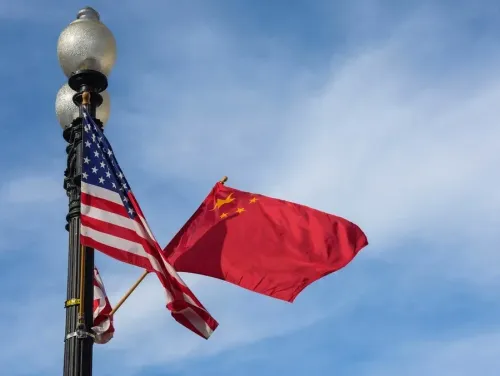
The case reflects a broader bipartisan push in the US to restrict foreign land ownership near military installations, particularly involving Chinese-linked entities.
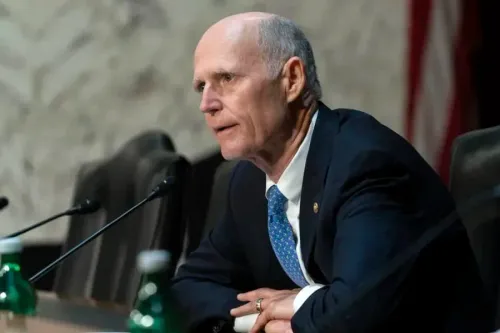
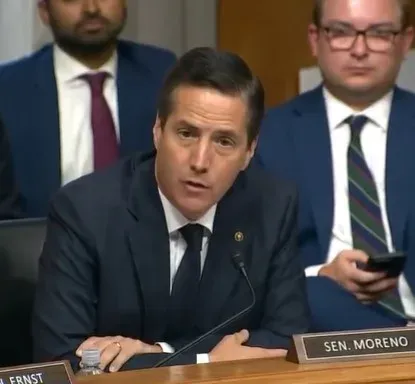
Republican Senator Bernie Moreno has formally urged Treasury Secretary Scott Bessent to initiate a comprehensive national security review of a proposed real estate transaction involving SolarSpace Technology Co., Ltd., a Chinese manufacturer of photovoltaic cells and modules, over its proximity to Wright-Patterson Air Force Base in Ohio. The letter, sent on Friday, 1 August, requests that Bessent, in his role as Chairperson of the Committee on Foreign Investment in the United States (CFIUS), examine the deal before it proceeds.
The Transaction Under Scrutiny
According to Moreno, the referral originates from a 22 June submission by the Dayton Development Coalition concerning a pending real estate deal involving SolarSpace. The Chinese firm is reportedly seeking to lease or purchase a facility at 2555 Woodman Drive, Kettering, Ohio, which Moreno states is approximately 13 miles from Wright-Patterson Air Force Base.
SolarSpace Technology manufactures photovoltaic cells and modules — a sector in which Chinese firms have expanded aggressively in global markets, drawing increasing scrutiny from US lawmakers on both sides of the aisle.
Why Wright-Patterson Raises Alarms
Moreno described Wright-Patterson as 'a critical military installation with a workforce of approximately 38,000 employees, including military personnel, civilians, and contractors.' He further characterised the base as 'a cornerstone of U.S. air and space superiority, serving as a central hub for aerospace research, engineering, and intelligence, including the Air Force Research Laboratory.'
'Yet, one of our greatest foes is attempting to move in nearly next door,' Moreno wrote in the letter addressed to Bessent.
The CFIUS Angle and National Security Concerns
CFIUS is the interagency body responsible for reviewing foreign investments in the United States for potential national security risks. Moreno's letter argues that Chinese commercial entities have previously been leveraged to advance Beijing's broader strategic and intelligence objectives, making the proposed transaction a candidate for immediate CFIUS scrutiny.
'At a time when the Chinese Communist Party has leveraged American commercial entities to advance its military and intelligence objectives, we cannot let this potential transaction proceed without investigation,' Moreno wrote. He also urged the administration to prevent 'potential shell companies for the Chinese Communist Party' from acquiring land or facilities near sensitive military sites.
Broader Context: Foreign Land Ownership Under the Microscope
The SolarSpace case sits within a broader legislative and executive push to tighten oversight of foreign land purchases near US military installations. Federal lawmakers from both parties have backed stronger controls in recent years, citing risks of espionage, intelligence collection, and threats to critical infrastructure — particularly from entities linked to China.
Notably, Moreno also referenced a recent Supreme Court ruling in his letter, framing it in the context of broader concerns about Chinese interests operating within the United States, though the direct legal connection to the SolarSpace transaction was not elaborated upon in the correspondence.
With CFIUS now formally in focus, the outcome of this review could set a precedent for how the US handles Chinese commercial real estate activity near strategically sensitive sites going forward.
Point of View
Not straightforward commercial real estate leases — meaning this transaction may not automatically trigger a mandatory review without political pressure of exactly the kind Moreno is applying. The senator's letter is as much a public signal to the Trump administration as it is a legal instrument. What is notable is the bipartisan consensus forming around foreign land ownership near military sites — a concern that has moved from fringe to mainstream in Washington in under three years. Whether CFIUS acts, and how quickly, will reveal how seriously the administration treats commercial proximity as a security variable, not just ownership.
NationPress
15 Sept 2026
Frequently Asked Questions
What is the SolarSpace Technology national security concern in Ohio?
SolarSpace Technology Co., Ltd., a Chinese manufacturer of photovoltaic cells and modules, is reportedly seeking to lease or purchase a facility approximately 13 miles from Wright-Patterson Air Force Base in Ohio. Senator Bernie Moreno has asked CFIUS to review the transaction before it proceeds, citing the base's strategic sensitivity.
What is CFIUS and why is it relevant here?
CFIUS — the Committee on Foreign Investment in the United States — is the interagency body that reviews certain foreign investments for national security risks. Treasury Secretary Scott Bessent chairs the committee. Moreno's letter requests that CFIUS conduct a comprehensive review of the SolarSpace transaction.
Why is Wright-Patterson Air Force Base considered sensitive?
Wright-Patterson Air Force Base in Ohio employs approximately 38,000 military, civilian, and contractor personnel. It hosts the Air Force Research Laboratory and is described by Moreno as 'a cornerstone of U.S. air and space superiority' for aerospace research, engineering, and intelligence operations.
What triggered Senator Moreno's letter?
The letter was prompted by a 22 June submission from the Dayton Development Coalition regarding a pending real estate transaction involving SolarSpace. Moreno sent the formal request to Treasury Secretary Bessent on 1 August.
Is foreign land ownership near US military bases a wider issue?
Yes. Federal lawmakers from both parties have backed stronger oversight of land purchases involving entities linked to foreign adversaries, particularly China, over the past several years. Concerns centre on espionage, intelligence gathering, and critical infrastructure security.