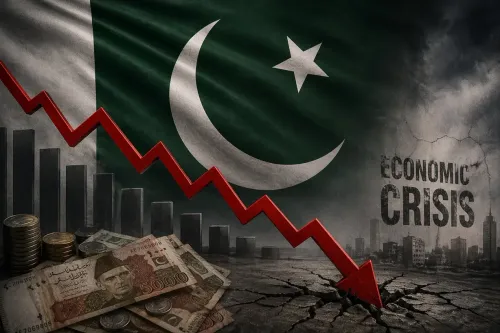
Is Circular Debt in Pakistan's Energy Sector Reaching Crisis Levels?

Synopsis
A new report reveals that Pakistan's energy sector is facing a severe crisis due to inadequate implementation of policies and lack of coordination. The rising circular debt highlights these governance failures, and manufacturers are increasingly affected by unpredictable tariffs and energy prices that threaten the economy's stability.
Key Takeaways
Circular debt is a significant issue in Pakistan's energy sector.
Policy fragmentation leads to systemic failures.
Manufacturers face challenges due to unpredictable tariffs.
Energy prices are hindering local competitiveness.
Urgent reforms are necessary to stabilize the economy.
New Delhi, Jan 26 (NationPress) A recent report highlights that Pakistan's energy crisis stems not from a lack of strategic planning but from a consistent failure in implementation, coordination, and adherence to market-oriented principles. According to the Business Recorder, the circular debt within the energy sector is escalating, exacerbated by fragmented policies that lead to institutional paralysis.
The Businessmen Panel (BMP) of the Federation of Pakistan Chambers of Commerce and Industry has criticized the government's management of the energy sector.
They cautioned that “repeated policy mistakes and postponed structural reforms are steering the economy towards prolonged instability.”
The rising circular debt serves as a stark indicator of governance failures in the energy sector.
Years of politically driven tariff controls, ineffective power procurement, inflated demand forecasts, and unchecked capacity payments have created a harmful cycle where liabilities are perpetually deferred instead of being addressed, stated former FPCCI President and BMP Chairman, Mian Anjum Nisar.
He added, “While interest payments to state-owned entities may temporarily improve balance sheets, they do not prevent the debt from re-emerging.”
The report indicates that power, petroleum, water resources, and finance continue to function in isolation.
This lack of coordination has led to contradictory decisions that heighten costs, distort supply chains, and undermine investor confidence, Nisar noted.
Energy prices in Pakistan have now soared beyond those in competing regional economies, diminishing the competitiveness of domestic industries and exports.
Additionally, manufacturers are grappling with unpredictable tariffs, frequent fuel price fluctuations, and unreliable supply, compelling many to scale back operations or completely shut down. This trend exacerbates deindustrialization and unemployment at a time when the country can least afford it.
Pakistan is already plagued by a culture of excessive committee meetings, where reports are generated but accountability is lacking. Without defined targets, timelines, and consequences for failures, he lamented, structural changes will remain merely cosmetic.
Point of View
It is imperative to acknowledge the critical challenges facing Pakistan's energy sector. The insights from the Businessmen Panel highlight the urgent need for cohesive strategies and accountability. The Nation stands with the call for immediate reforms to address these systemic issues and foster a sustainable economic environment.
NationPress
23 Oct 2026
Frequently Asked Questions
What is circular debt?
Circular debt refers to a situation where one entity owes money to another, creating a cycle of debt that perpetuates financial instability within the sector.
How does circular debt affect the energy sector?
It leads to increased costs, reduced investor confidence, and operational inefficiencies, ultimately impacting energy supply and prices.
What are the causes of the energy crisis in Pakistan?
The crisis is fueled by poor implementation of policies, lack of coordination among sectors, and politically motivated tariff controls.
Why are energy prices higher in Pakistan compared to regional economies?
Higher energy prices result from inefficient procurement processes and a lack of competitive pricing strategies.
What steps can be taken to resolve the energy crisis?
Implementing structural reforms, improving coordination across sectors, and ensuring accountability can help alleviate the crisis.