Bangladesh climate migrants face unsafe housing, joblessness in cities: Report
Synopsis
Millions fleeing Bangladesh's eroding coastline are landing in cities with no safety net — their own National Identity Cards locking them out of public services because the address still reads 'village.' A Caritas Bangladesh roundtable has put a name to what experts call the country's biggest developmental blind spot: a near-total policy vacuum on climate migration.
Key Takeaways
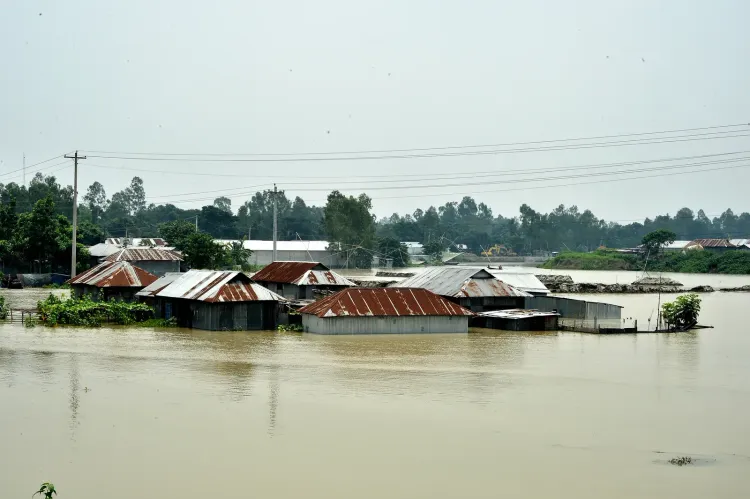
Tidal surges, cyclones, river erosion, and rising salinity are driving mass displacement from Bangladesh's coastal delta to urban centres.
Climate migrants in cities face unsafe housing , temporary jobs, and exclusion from national social safety net programmes.
National Identity Cards (NIDs) listing village addresses block migrants from accessing emergency public services, rations, and financial aid.
A roundtable organised by Caritas Bangladesh at the Dhaka Reporters Unity auditorium called for a comprehensive national policy on climate migration.
Alexander Tripura of Caritas Bangladesh argued that developed nations' carbon emissions are driving the crisis, framing it as an issue of international climate justice .
Experts warn that existing policy frameworks remain 'largely inadequate' to protect the rights and security of displaced communities.
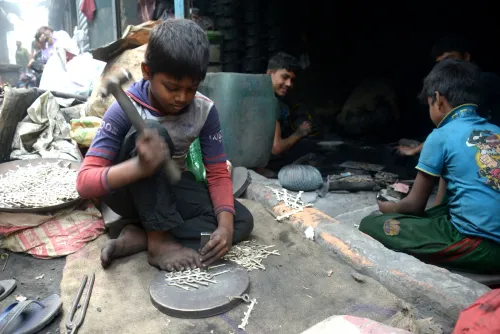
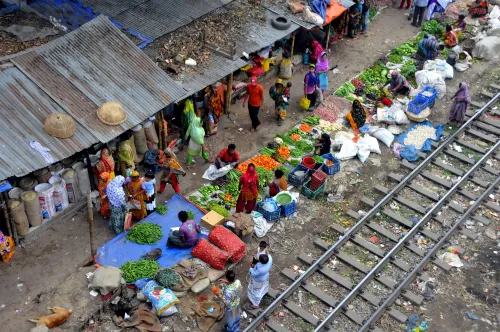
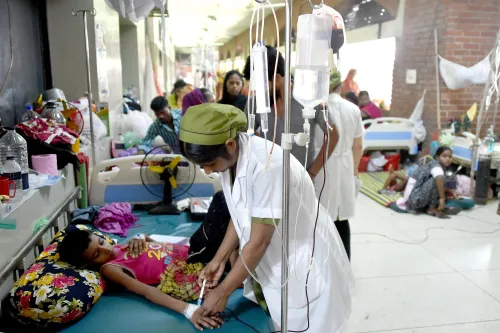
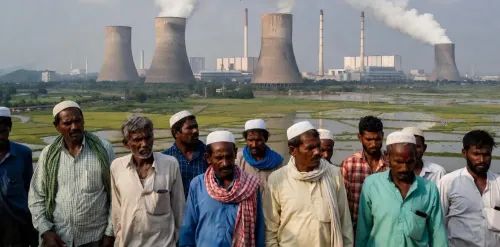
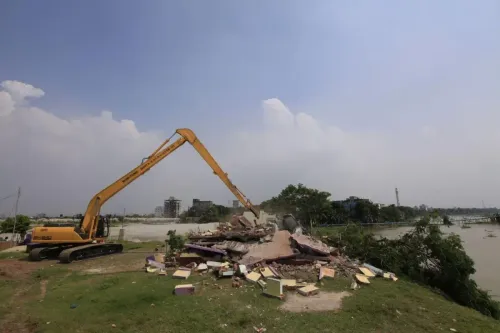
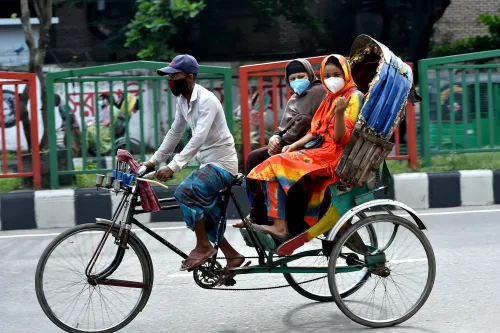
Thousands of climate migrants in Bangladesh are struggling to rebuild their lives in urban centres, facing unsafe housing, precarious employment, limited access to healthcare and education, and deep social exclusion, according to a report published by Pressenza International Press Agency. The findings come as tidal surges, cyclones, river erosion, and rising salinity continue to devastate homesteads across the country's coastal delta, driving mass displacement toward cities.
Scale of the Crisis
Bangladesh ranks among the world's most climate-vulnerable nations. Sea-level rise, frequent cyclones, severe river erosion, and a rapid expansion of salinity across the southern and southwestern coastal regions are continuously threatening the lives and livelihoods of millions of people. According to the report, this severe climate pressure is dismantling the rural economy and triggering a massive population shift toward urban centres — a trend experts warn has become one of the country's most pressing social and developmental challenges.
Experts cited in the report cautioned that policy frameworks and coordinated initiatives to protect the rights and security of climate migrants remain 'largely inadequate,' leaving displaced communities exposed and unsupported.
What Migrants Face in Cities
Once in cities, climate migrants find themselves caught in a cycle of vulnerability. They are frequently excluded from national social safety net programmes, according to journalist Sohrab Hasan, who spoke at a recent roundtable discussion. A critical structural barrier is the National Identity Card (NID) system: because migrants' NIDs still carry their permanent village addresses, they face bureaucratic hurdles and discrimination when attempting to access emergency public services, rations, or financial aid.
'No one leaves their hearth, home, and ancestral memories to move to a city by choice. It is a brutal decision forced upon them solely by the urge to survive,' Sohrab Hasan said at the event.
Roundtable Calls for Urgent Policy Action
The discussion was organised by Caritas Bangladesh at the Dhaka Reporters Unity (DRU) auditorium and brought together journalists, development workers, and media representatives. Participants called for the creation of an effective, comprehensive national policy for climate migrants and urged that the issue be highlighted with greater urgency in both national and international media.
Alexander Tripura, head of the Disaster Management Department at Caritas Bangladesh, argued that climate-vulnerable nations like Bangladesh are bearing the cost of unchecked carbon emissions by developed countries. Participants framed the migrant crisis explicitly as a matter of international climate justice, calling on the Bangladesh government to implement a coordinated national response.
The Broader Context
This comes amid growing global attention to climate-induced internal displacement, which the Internal Displacement Monitoring Centre (IDMC) has repeatedly flagged as an undercounted crisis in South Asia. Bangladesh's delta geography makes it disproportionately exposed: it sits at the confluence of three major river systems and absorbs roughly 80% of its landmass within low-lying floodplains. Notably, climate displacement in Bangladesh is not a future risk — it is an ongoing reality, and the policy gap identified at the roundtable reflects a broader failure to treat internal climate migrants with the same urgency as cross-border refugees.
Without a dedicated legal and administrative framework, experts warn, the humanitarian and social dimensions of this crisis will deepen further as climate pressures intensify in the years ahead.
Point of View
But without binding timelines and dedicated funding, it risks becoming another conference resolution. Meanwhile, the climate pressures driving displacement are accelerating — not waiting for policy cycles to catch up.
NationPress
21 Jun 2026
Frequently Asked Questions
Why are climate migrants in Bangladesh struggling in cities?
Climate migrants in Bangladesh face unsafe housing, precarious and temporary employment, and limited access to healthcare and education in urban areas. Critically, their National Identity Cards still list their village addresses, blocking them from accessing emergency public services, rations, and financial aid in the cities where they now live.
What is driving climate migration in Bangladesh?
Tidal surges, cyclones, severe river erosion, and rapidly expanding salinity in the southern and southwestern coastal regions are destroying homesteads and livelihoods. Bangladesh's low-lying delta geography makes it one of the world's most climate-vulnerable countries, forcing millions to flee toward urban centres.
What did the Caritas Bangladesh roundtable recommend?
Participants at the roundtable, held at the Dhaka Reporters Unity auditorium, called on the Bangladesh government to implement a comprehensive and coordinated national policy for climate migrants. They also urged national and international media to cover the issue with greater urgency.
How does this relate to international climate justice?
Alexander Tripura of Caritas Bangladesh argued that nations like Bangladesh are paying the price for carbon emissions generated primarily by wealthier, industrialised countries. Experts at the roundtable called for climate migrants to be treated as a matter of international climate justice, not merely a domestic policy issue.
What policy gap exists for climate migrants in Bangladesh?
According to the report, policy frameworks and coordinated initiatives to protect the rights and security of climate migrants in Bangladesh remain largely inadequate. There is no dedicated legal or administrative framework that recognises internal climate displacement as a distinct category requiring targeted support.