Intensifying Debate in US Congress on Allies' Contributions to Global Security
Synopsis
On March 5, U.S. lawmakers clashed over the role of allies in global security during a hearing on the National Defense Strategy, revealing deep partisan divisions and concerns over U.S. military commitments abroad.
Key Takeaways
Debate on Allies' Role: Lawmakers are divided on how much responsibility allies should bear in global defense.
Concerns Raised: There are apprehensions about the implications of the National Defense Strategy on U.S. commitments abroad.
Burden-Sharing Focus: The strategy promotes a greater role for allies in their own defense.
Military Operations vs.
Strategy: Critics argue that recent military actions contradict the strategy's intent to avoid prolonged conflicts.
Long-Term Priorities: The National Defense Strategy outlines key military priorities and informs defense planning.
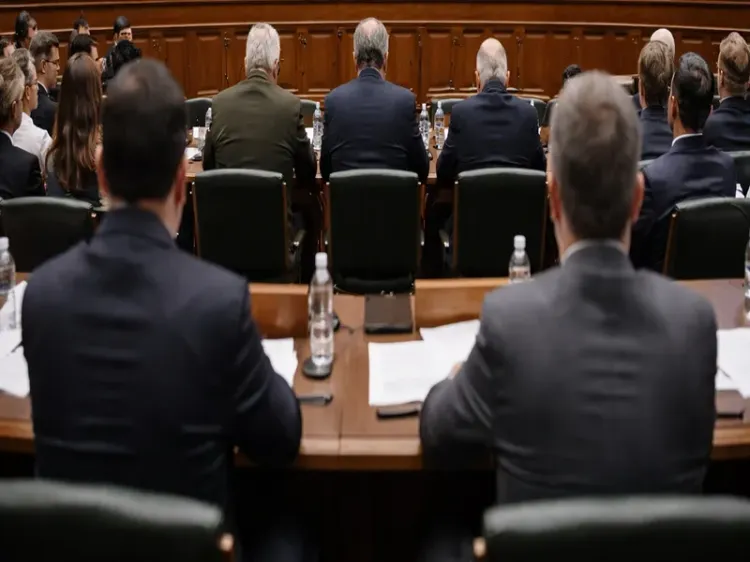
Washington, March 5 (NationPress) A contentious debate unfolded on Thursday among U.S. lawmakers regarding the contribution of allies to global security as Congress reviewed the recently published National Defense Strategy during a session of the House Armed Services Committee.
This discussion underscored the stark differences between Republicans and Democrats concerning how much responsibility allies should take on for their regional defense while the U.S. prioritizes its strategic goals.
Committee chairman Mike Rogers initiated the hearing, indicating that legislators were evaluating a strategy that shapes U.S. military planning and resource distribution.
He noted that the strategy has made strides in several key areas, including homeland defense and safeguarding U.S. interests within the Western Hemisphere.
However, Rogers expressed concerns about aspects of the strategy that place increased security duties on U.S. allies.
He cautioned that urging European allies to take on larger military responsibilities too quickly could be risky.
“This is a formula for guaranteed failure and will create a deterrence gap that Russia may exploit,” Rogers warned.
He also criticized the decision to withdraw a U.S. brigade from Romania, asserting that allies were not adequately consulted prior to this action.
“A brigade is not just ‘small,’” he remarked.
In contrast, Democrats provided a more pointed critique of the strategy, arguing that it could weaken established alliances and hinder global collaboration.
Ranking member Adam Smith stated that the 2026 National Defense Strategy embodies an “America First” ideology that raises questions about U.S. commitments on the international stage.
“The 2026 NDS seems to abandon U.S. commitments to global norms,” Smith commented.
He also pointed out that the strategy appears inconsistent with the recent military operations executed by the administration.
Smith referenced the President’s military engagements abroad, claiming they seem to contradict the strategy’s proclaimed goal of avoiding prolonged conflicts.
“The President’s tendency for military interventionism, including Operation Epic Fury, is at odds with the strategy,” he stated.
Pentagon officials defended the strategy during the hearing, arguing that it represents a pragmatic approach to global security in light of limited resources.
Elbridge Colby, Under Secretary of Defense for Policy, told lawmakers that the strategy aligns with President Donald Trump’s “America First, peace through strength” philosophy.
He emphasized the need for the United States to concentrate its military capabilities on the most significant threats.
“The American military, though unmatched, is not limitless in its deployment and resources,” Colby explained.
He highlighted several foundational pillars of the strategy, including protecting the homeland, deterring China in the Indo-Pacific, and revitalizing the U.S. defense industrial base.
Another critical aspect of the strategy is the emphasis on burden-sharing. Colby remarked that allies and partners must play a more significant role in their own regional defense.
The goal, he said, is for allies to take on “primary responsibility for their conventional defense.”
The strategy also aims to thwart China’s dominance in the Indo-Pacific while encouraging partners to enhance their military capacities.
The National Defense Strategy delineates the Pentagon’s long-term military priorities and serves as a foundational document for defense planning.
It further guides decisions regarding force posture, military expenditure, and alliance structures.
Congress reviews this strategy as part of its oversight functions and utilizes it to shape defense policy and the annual National Defense Authorization Act.
Point of View
It is crucial to recognize the complexities of international defense dynamics. The ongoing debate reflects a growing concern over America's military commitments and the shifting responsibilities of allies. The implications of the National Defense Strategy could redefine how the U.S. engages with global partners.
NationPress
27 Sept 2026
Frequently Asked Questions
What is the National Defense Strategy?
The National Defense Strategy is a guiding document for U.S. military planning and resource allocation, outlining priorities and objectives for national security.
Why is Congress reviewing the National Defense Strategy?
Congress reviews the National Defense Strategy as part of its oversight responsibilities to shape defense policy and the annual National Defense Authorization Act.
What concerns did lawmakers raise during the hearing?
Lawmakers expressed concerns about the shift of security responsibilities to allies, the impact on long-standing alliances, and the consistency of military operations with the strategy's goals.
What is the goal of the strategy regarding allies?
The strategy aims for allies to take on primary responsibility for their conventional defense while the U.S. focuses on major strategic threats.
How does the strategy address the Indo-Pacific region?
The strategy emphasizes deterring China's influence in the Indo-Pacific and encourages partners in the region to strengthen their military capabilities.