US Calls for Allies to Strengthen Defense Contributions Amid Growing Threats

Synopsis
As the U.S. faces mounting threats from various adversaries, Pentagon official Elbridge Colby urges allies to take on a greater role in regional security during a Senate hearing, emphasizing a need for shared defense responsibilities.
Key Takeaways
U.S. calls for greater ally responsibility in regional security Emphasis on burden sharing among affluent allies NATO 3.0 model proposed for European defense Collaborations with Israel in the Middle East against Iran Focus on reducing Iranian military power to manage threats
Washington, March 4 (NationPress) The United States is calling on its allies to take on more responsibility for regional security as it faces multiple threats from adversaries across various regions, according to Pentagon policy chief Elbridge Colby during his testimony to the Senate Armed Services Committee.
While discussing the 2026 National Defense Strategy (NDS) of the Trump administration, Colby emphasized that the U.S. must increasingly depend on its partners and allies, allowing its military resources to focus on the most pressing challenges.
Colby stated, “The American military, although unmatched, does not have infinite resources and applications.”
The strategy highlights the necessity for greater burden sharing, especially among affluent allies in Europe and Asia, who Washington believes should enhance their contributions to their own defense.
“Many allies have effectively demilitarized since the Cold War's conclusion,” Colby pointed out. “This situation is both untenable and unreasonable.”
He further noted that the administration is advocating for allies to take the lead in defending their regions against conventional threats.
In Europe, the U.S. seeks for NATO partners to spearhead conventional defenses against Russia, while on the Korean Peninsula, Washington is encouraging South Korea to take on more responsibility in deterring North Korea.
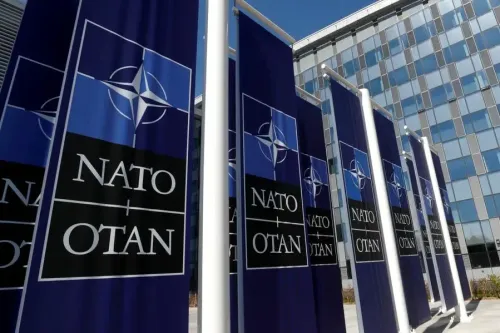
“We are pressing our allies in Europe to adopt a NATO 3.0 model, where wealthy European nations lead the conventional defense of NATO Europe,” Colby explained.
The Pentagon's approach is similarly applied in other areas, such as the Middle East, where the U.S. collaborates with Israel and regional partners to counter threats from Iran and militant organizations.
Colby stated, “In the Middle East, we are collaborating with our key ally Israel and other regional partners to mitigate the threats posed by Iran and terrorism.”
He indicated that the defense strategy acknowledges the likelihood of adversaries coordinating actions across various regions, raising the risk of simultaneous crises.
“The 2026 NDS correctly asserts that our adversaries’ best strategy involves coordinated or opportunistic actions across multiple fronts,” he said.
He cautioned that the United States must prepare for such scenarios while avoiding overextension of its military capabilities.
“We cannot do everything everywhere at all times,” Colby remarked.
The Pentagon believes that neutralizing threats in one region could enable the United States to focus resources on its highest priorities in other areas.
Colby noted that the ongoing military operations against Iran aim to diminish Tehran’s capacity to project power through its missile systems, drones, and naval capabilities.
“The focus of our military campaign is to counter the Islamic Republic's ability to exert military force against us, our bases, and our allies,” he stated.
He added that weakening Iran’s military capabilities might lower the risk of simultaneous conflicts, allowing Washington to better navigate global security challenges.
“The reduction of Iranian military power will mitigate the threat of simultaneity in the Middle East,” Colby concluded.
The new defense strategy also highlights the importance of expanding the U.S. defense industrial base and enhancing cooperation with allies to maintain long-term military competition with rival powers.
Point of View
The U.S. is navigating a complex global landscape with rising tensions. The call for allies to enhance their defense roles reflects a strategic shift towards shared responsibility, highlighting the imperative of cooperation in facing multifaceted threats.
NationPress
14 Oct 2026
Frequently Asked Questions
What is the main focus of the U.S. 2026 National Defense Strategy?
The 2026 National Defense Strategy emphasizes greater burden sharing among allies, particularly in Europe and Asia, while allowing the U.S. to concentrate its military resources on critical challenges.
How are U.S. allies expected to contribute to their own defense?
The U.S. is urging wealthy allies, especially in NATO, to take the lead in their own conventional defense, as seen in the call for NATO 3.0.
What threats are being addressed in the Middle East?
In the Middle East, the U.S. is collaborating with Israel and regional partners to counter threats from Iran and terrorism.
What is the significance of reducing Iranian military power?
Reducing Iranian military capabilities is seen as a way to lower the risk of simultaneous conflicts and enable better management of global security challenges.
What does the new defense strategy highlight regarding cooperation?
The new defense strategy emphasizes expanding the U.S. defense industrial base and strengthening cooperation with allies to sustain long-term military competition.