European Council's Costa backs ICJ, ICC at UN General Assembly
Synopsis
European Council President Antonio Costa used the UNGA stage to deliver an unambiguous defence of the ICJ and ICC, warn against political threats to international courts, and co-launch P4M — a new multilateral coalition that unusually includes both Western nations and India. With Russia, Gaza, and Iran all named, the speech signals the EU is pushing hard for a rules-based accountability framework with no geopolitical exceptions.
Key Takeaways
European Council President Antonio Costa reaffirmed EU support for the ICJ and ICC at the 81st UNGA in New York on 25 September 2026 .
Costa warned: 'Accountability cannot depend on political convenience,' directly condemning threats against the ICC and its officials.
The EU co-launched P4M: Partners for Multilateralism, International Law, Peace and Prosperity with Australia , Barbados , Brazil , Canada , India , and Kenya .
Costa called for a peaceful end to Russia's aggression in Ukraine , civilian protection in Gaza , and resolution of the Iran conflict under UN Charter principles.
He urged a UN-led accountable framework for AI governance and described the 2027 SDG Summit as a 'turning point' for global sustainable development targets.
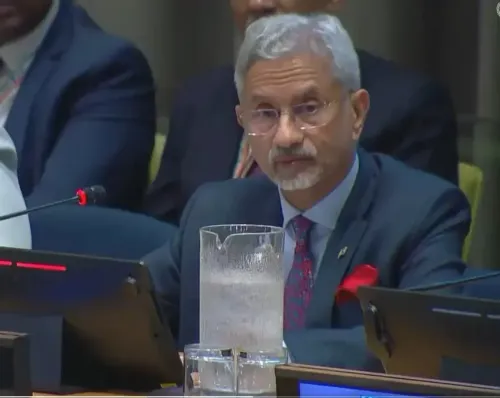
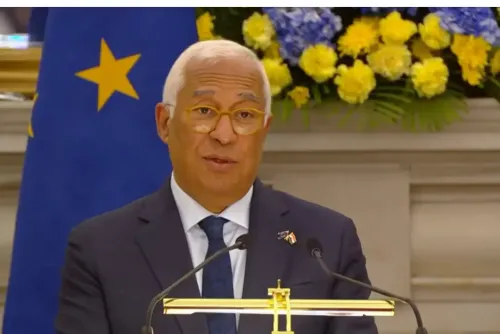
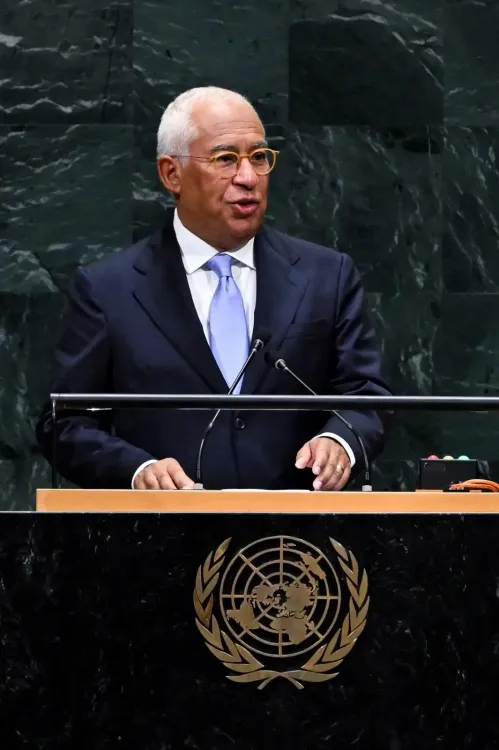
European Council President Antonio Costa used his address at the 81st United Nations General Assembly (UNGA) in New York on 25 September 2026 to firmly reiterate the European Union's backing for the International Court of Justice (ICJ) and the International Criminal Court (ICC), declaring that adherence to international law is 'not an option but a responsibility.' His remarks came amid ongoing global debates over selective enforcement of international legal norms.
Costa's Core Message on International Law
Speaking during the general debate, Costa stated that the world is 'witnessing deliberate violations of international law' and warned against applying double standards. He made an explicit commitment on behalf of the EU to uphold the independence and integrity of both international courts.
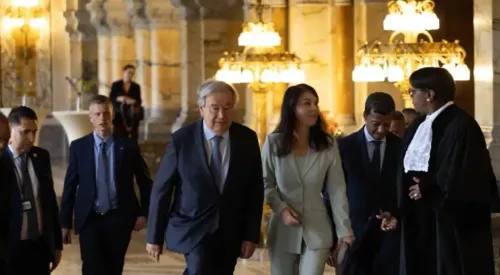
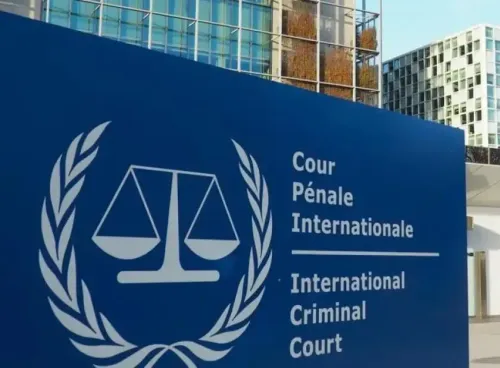
'We stand firmly behind them and will uphold their independence, their integrity and their ability to fully exercise their mandate,' Costa said, referring to the ICJ and ICC. He went further, calling out threats directed at the criminal court: 'It is unacceptable to threaten or attack the International Criminal Court, its officials and its staff. Accountability cannot depend on political convenience.'
Launch of P4M: A New Multilateral Coalition
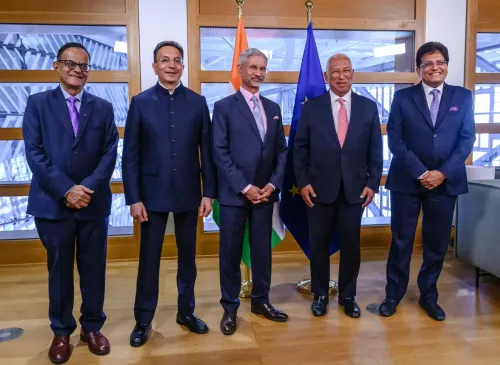
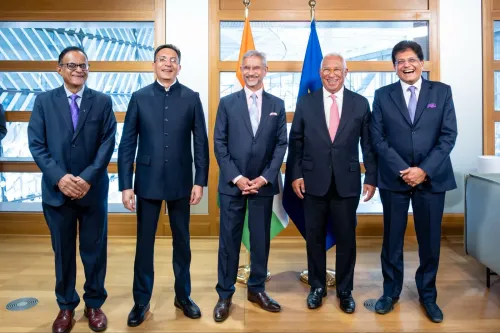
Sharing details of his UNGA address in a post on X, Costa announced that the EU had joined forces with Australia, Barbados, Brazil, Canada, India, and Kenya to launch P4M: Partners for Multilateralism, International Law, Peace and Prosperity. The coalition reflects a coordinated push by a cross-regional group of nations to reinforce rules-based international order at a time when multilateral institutions face mounting pressure.
'Multilateralism is the only realistic way to address the defining challenges of our time: peace and security, the climate emergency, economic insecurity and artificial intelligence,' Costa said in his post. He called for multilateralism that is 'strong, effective, representative and capable of delivering for people.'
Key Conflicts Named: Ukraine, Gaza, Iran
Costa identified three active conflict situations requiring urgent multilateral action. He called for ending Russia's aggression and achieving 'a just and lasting peace in Ukraine, in line with the UN Charter.' He also urged an end to civilian suffering in Gaza and Palestine, with progress toward a two-state solution, and called for a peaceful resolution to the conflict in Iran. Notably, this framing places all three situations under the same multilateral accountability framework — signalling the EU's intent to resist geopolitical carve-outs.
AI Governance and Global Financial Reform
Beyond security, Costa pressed for an accountable and regulated architecture for artificial intelligence (AI), insisting that the United Nations must play a central role in setting global AI governance standards. 'We need an AI that serves humanity, not controls it,' he said. He additionally called for reform of the global financial architecture with a focus on sustainable development, and described the 2027 Sustainable Development Goals Summit as a potential 'turning point' to correct course and meet 2030 targets. This is consistent with his earlier public positions; in August, Costa had posted on X expressing solidarity with ICC President Tomoko Akane and officials working to uphold the court's mission.
Significance for India and the Broader Coalition
India's inclusion as a founding partner of P4M is notable, given New Delhi's historically non-aligned posture on Western-led multilateral initiatives. The partnership signals an emerging convergence — at least at the rhetorical level — between the EU and major emerging economies on rules-based governance. Whether the coalition translates into coordinated action at the UN Security Council level or within WTO and IMF reform processes remains to be seen. The next major test for P4M will likely come at the 2027 SDG Summit, which Costa has identified as a critical milestone.
Point of View
Gaza, and Iran is a diplomatic calibration that New Delhi does not make lightly. The real question is whether P4M has any enforcement architecture or whether it is a statement of principle dressed as a coalition. Costa's call for the UN to govern AI, combined with financial architecture reform, suggests the EU is trying to expand the multilateralism frame well beyond security — but without reform of the Security Council, the accountability gaps he described will persist regardless of how many co-signatories a new partnership attracts.
NationPress
25 Sept 2026
Frequently Asked Questions
What did Antonio Costa say about the ICJ and ICC at the UNGA?
European Council President Antonio Costa declared full EU support for the International Court of Justice and the International Criminal Court at the 81st UNGA session, stating it is 'unacceptable to threaten or attack the ICC, its officials and its staff.' He stressed that accountability in international law cannot be subject to political convenience.
What is P4M and which countries joined?
P4M stands for Partners for Multilateralism, International Law, Peace and Prosperity — a new coalition co-launched by the EU, Australia, Barbados, Brazil, Canada, India, and Kenya at the UNGA. It aims to strengthen multilateral institutions and translate shared commitments into concrete international action.
Why is India's inclusion in P4M significant?
India's participation is notable given its traditionally non-aligned stance on Western-led multilateral groupings. Its co-founding of P4M signals a degree of convergence with the EU on rules-based governance, though the extent of operational cooperation within the coalition is yet to be defined.
What conflicts did Costa specifically address in his UNGA speech?
Costa named three conflicts: Russia's war in Ukraine, calling for a just peace in line with the UN Charter; the humanitarian situation in Gaza and Palestine, urging progress on the two-state solution; and the conflict in Iran, calling for a peaceful resolution. He framed all three within the same multilateral accountability framework.
What did Costa say about artificial intelligence at the UN?
Costa called for an accountable, transparent, and regulated global architecture for AI governance, insisting the United Nations must play a central role in setting international standards. 'We need an AI that serves humanity, not controls it,' he said.