India at COP31: Developed nations must meet climate-finance obligations, says Yadav
Synopsis
At COP31 in Antalya, India's Environment Minister Bhupender Yadav drew a hard line: the Global South will not absorb the costs of two centuries of industrialisation by wealthy nations. With India's new NDCs tied to its 2047 Viksit Bharat vision, New Delhi is simultaneously asserting its development rights and staking a claim to climate leadership among emerging economies.
Key Takeaways
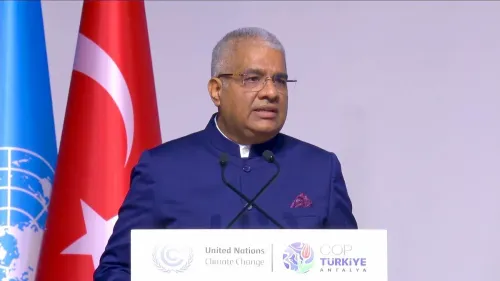
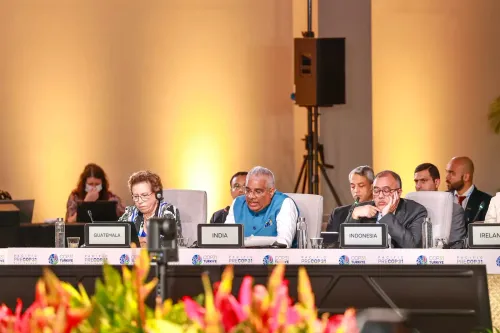
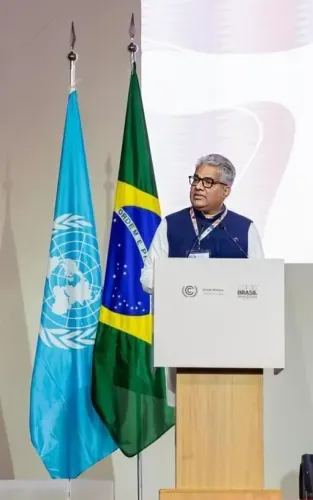
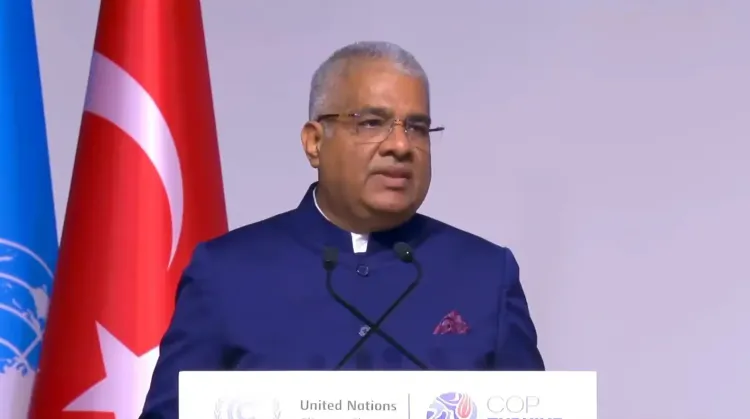
Bhupender Yadav delivered India's national statement at COP31 in Antalya, Turkey on 18 November 2026 .
India declared equitable access to the remaining, depleted carbon budget is non-negotiable.
Yadav demanded the developed world honestly and expeditiously discharge its climate-finance obligations .
India's new NDCs are aligned with the Viksit Bharat goal of a Developed India by 2047 under PM Narendra Modi .
Yadav warned against unilateral trade measures penalising developing countries under the guise of climate action.
India called for the Just Transition Mechanism and Global Stocktake to remain equity-anchored and non-prescriptive.
Union Minister for Environment, Forest and Climate Change Bhupender Yadav on Wednesday, 18 November 2026, delivered India's national statement at the 31st Conference of the Parties (COP31) in Antalya, Turkey, declaring that equitable access to the remaining carbon budget is non-negotiable and that the developed world must urgently honour its climate-finance commitments. Yadav firmly rejected any framework that would force developing nations to choose between climate action and the right to development, decent living standards, health, and education.
India's Core Position at COP31
Speaking at the Mediterranean resort city of Antalya, Yadav invoked the principle of CBDR-RC (Common But Differentiated Responsibilities and Respective Capabilities), insisting that all COP decisions must be rooted in equity. 'Equitable access to the remaining, depleted, carbon budget is non-negotiable,' he said in his address.
He called on the global community to ensure the mitigation work programme remains facilitative and non-prescriptive, and stressed that the Global Stocktake must serve only as an informing instrument for parties — not a tool to impose targets on developing economies.
Critique of Historical Emissions and Higher Ambition Demands
Yadav drew a pointed distinction between cause and consequence in the climate crisis. 'Our planet is warmer today. The cause is the industrialisation and economic growth of some, fuelled over two centuries by unabated greenhouse gas emissions. To now expect the Global South to bear the burden of addressing the consequences of their past actions, in the name of higher ambition, is unjustified,' he said.
This comes amid growing concern among developing nations that the prospect of a 1.5 degrees Celsius exceedance is being used to justify prescriptive demands on economies that bear least historical responsibility for cumulative emissions. Yadav also specifically warned that unilateral trade measures must not penalise developing countries under the guise of climate action — a remark widely read as a reference to mechanisms such as the EU Carbon Border Adjustment Mechanism (CBAM).
India's NDCs and the Viksit Bharat Vision
Yadav highlighted that under Prime Minister Narendra Modi, India has declared its next Nationally Determined Contributions (NDCs), aligned with the vision of achieving Viksit Bharat — a Developed India by 2047 — in a sustainable manner. He positioned India's development trajectory as a potential growth engine for other developing nations. 'India's growth is a rising tide that can also lift other developing countries,' he said.
He also touched on trans-boundary water flows, noting that constructive cooperation on shared resources can advance mutual prosperity, but cautioned that climatic and demographic changes, alongside technological advancement, cannot be ignored in any contemporary cooperation framework.
On the Just Transition and Climate Finance
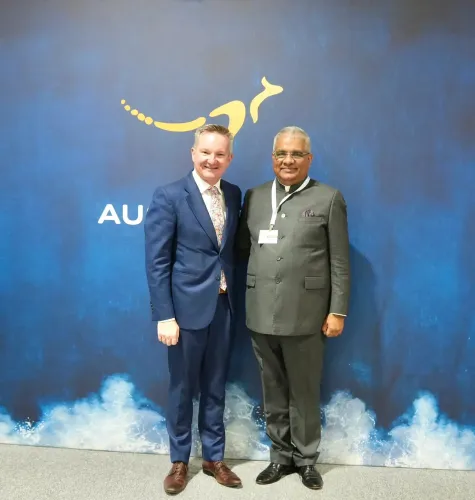
Yadav argued that the Just Transition Mechanism must be firmly anchored in equity and that climate finance must reach those who need it most. He called the COP31 theme — 'dialogue, consensus and action' — a timely prompt for honest dialogue and equity-based outcomes, thanking Turkey and Australia for their leadership at this edition.
'The developed world must honestly and expeditiously discharge their climate-finance obligations,' he said, echoing a demand that has anchored India's COP strategy across successive negotiations.
What Success at Antalya Looks Like
Yadav set a clear benchmark for measuring outcomes at COP31: implementation on the ground, resources reaching vulnerable nations, and proven solutions being scaled up. 'Let dialogue build trust, consensus uphold equity and action deliver climate justice,' he said in his closing remarks.
With climate-finance architecture under intense scrutiny following the contested outcomes of recent COPs, India's position at Antalya signals continued pressure on developed nations to convert pledges into verified disbursements ahead of the next global stocktake cycle.
Point of View
And linking the new NDCs to Viksit Bharat 2047 is a strategic move: it pre-empts pressure for steeper near-term cuts by embedding climate targets within a sovereign development narrative. What mainstream coverage tends to underweight is the finance gap itself — developed nations committed $100 billion annually by 2020 and repeatedly missed that mark; the new post-2025 finance goal remains contested. Until verified disbursements, not pledges, become the scorecard, India's demand that success be measured by implementation will keep returning to COP halls unanswered.
NationPress
18 Nov 2026
Frequently Asked Questions
What did India say at COP31 in Antalya?
India's Environment Minister Bhupender Yadav declared at COP31 on 18 November 2026 that equitable access to the remaining carbon budget is non-negotiable and that developed nations must urgently fulfil their climate-finance commitments. He rejected demands that developing countries sacrifice their right to development in the name of higher climate ambition.
What is CBDR-RC and why did India invoke it at COP31?
CBDR-RC stands for Common But Differentiated Responsibilities and Respective Capabilities — a foundational UN climate principle recognising that developed nations bear greater historical responsibility for emissions. India invoked it to argue that all COP decisions must be rooted in equity and that the Global South cannot be held equally accountable for a crisis caused primarily by industrialised economies.
What are India's new NDCs announced at COP31?
India has declared its next Nationally Determined Contributions (NDCs) aligned with the Viksit Bharat goal of becoming a developed nation by 2047 in a sustainable manner. The specific targets within the new NDCs were not detailed in Yadav's public statement at Antalya.
What did India mean by warning against unilateral trade measures?
Yadav stated that unilateral trade measures must not penalise developing countries under the guise of climate action — a remark widely interpreted as a reference to the EU's Carbon Border Adjustment Mechanism (CBAM). India and several developing nations have argued such measures amount to green protectionism that disadvantages emerging economies.
Who is hosting COP31 and what is its theme?
COP31 is being hosted by Turkey in the Mediterranean resort city of Antalya. The conference theme is 'dialogue, consensus and action', which Yadav described as a timely call for honest dialogue, equity-based consensus, and urgent climate action. Turkey and Australia are co-leading the presidency.