Rajnath Singh: India grows at 7.8% amid West Asia crisis
Synopsis
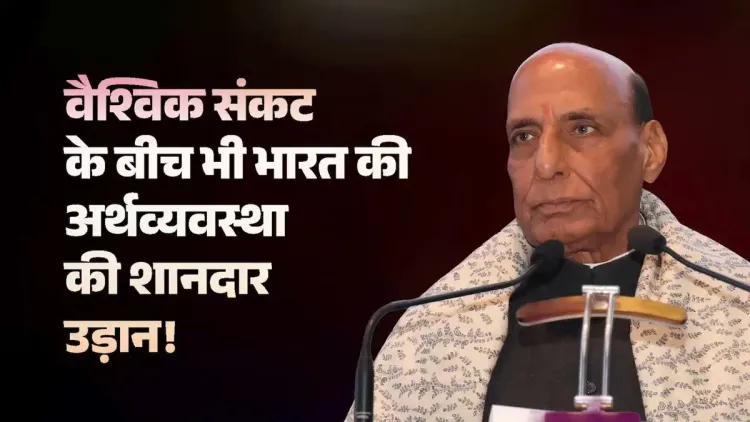
Union Defence Minister Rajnath Singh has highlighted India's approximately 7.8% growth rate on November 18, 2026, asserting the economy is sustaining momentum despite global challenges and the ongoing West Asia crisis, reinforcing the government's narrative of resilience amid geopolitical turbulence.
Key Takeaways
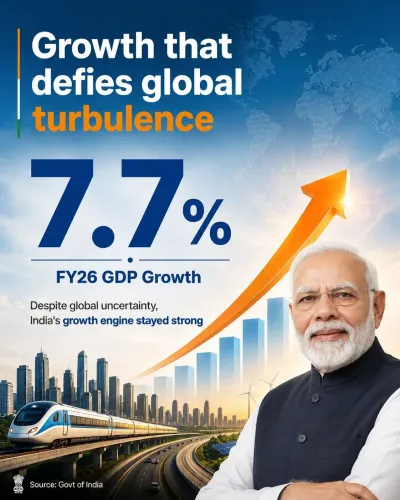
Rajnath Singh cited an approximate growth rate of 7.8% , positioning India as among the world's fastest-growing major economies.
The statement was made on Wednesday, November 18, 2026 , amid active geopolitical tensions in West Asia .
Singh framed the data as evidence of India's 'economic strength and continuity of development' despite external headwinds.
A Defence Minister amplifying economic data reflects a deliberate, government-wide messaging strategy aimed at domestic audiences and global investors.
The next quarterly GDP release from the Ministry of Statistics and Programme Implementation will serve as the data checkpoint for these claims.
India's sustained fast-growth narrative has been a consistent thread in official communications since the post-pandemic recovery, citing structural reforms and domestic demand as buffers.
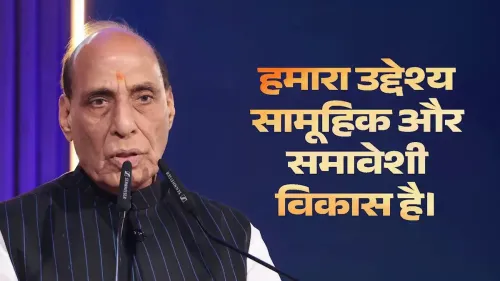
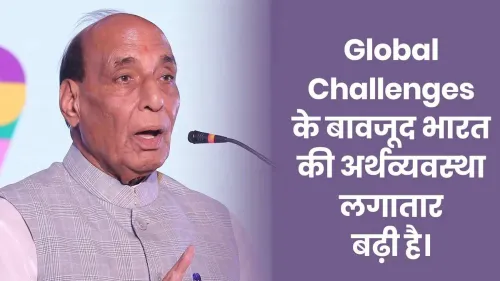
Even as geopolitical fires burn across West Asia, Union Defence Minister Rajnath Singh is making a pointed argument on Wednesday, November 18, 2026: India's economy is not flinching. Singh posted on X that India is sustaining its growth momentum despite global challenges, citing a growth rate of approximately 7.8% — a figure he says cements India's place among the world's fastest-growing major economies.
In his post, Singh wrote — 'वैश्विक चुनौतियों और पश्चिम एशिया के संकट के बीच भी भारतीय अर्थव्यवस्था ने अपनी विकास गति बनाए रखी है' — ('Even amid global challenges and the West Asia crisis, the Indian economy has maintained its growth momentum.') He added that this reflects 'the economic strength and continuity of India's development.'
Why a Defence Minister is talking economics
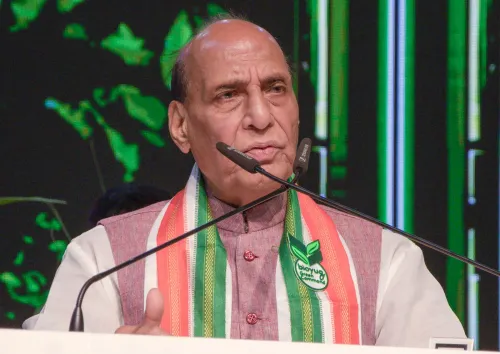
The messenger matters as much as the message. Rajnath Singh — a senior BJP leader who has previously served as Chief Minister of Uttar Pradesh and Union Home Minister — holds the defence brief, not finance. His choice to amplify economic data signals a deliberate, government-wide posture: reassure domestic and international stakeholders that security turbulence in West Asia is not bleeding into India's growth story.
This is a pattern well-established in Indian governance. When external shocks spike — energy price volatility, shipping disruptions, regional conflicts — ministers across portfolios push out economic resilience messaging in concert. The implicit audience is as much global investors and rating agencies as it is domestic voters.
India's fastest-growing-economy narrative, revisited
India has anchored its global economic identity to this claim since the post-pandemic recovery gathered pace. Government economic surveys and central bank communications have repeatedly positioned the country as the standout performer among large economies, citing structural reforms and the strength of domestic consumption as the principal buffers against external shocks — from the Russia-Ukraine conflict onwards.
At roughly 7.8%, the growth rate Singh references would comfortably outpace every other G20 economy. The next hard data test will come from the Ministry of Statistics and Programme Implementation when it releases its next quarterly GDP estimate — and any accompanying revision to projections from the Finance Ministry will be watched closely by markets.
West Asia as the stress test
West Asia matters to India's economy for concrete reasons: a large share of India's energy imports transit or originate from the region, and roughly nine million Indian workers remit wages home from Gulf states. When the region is in crisis, the pressure on oil prices, the rupee, and household incomes is real. Singh's framing — that India is holding its trajectory despite that pressure — is designed to separate the macro growth number from the anxiety the conflict generates on the ground.
Whether the 7.8% figure weathers its next official audit or not, the political signal is unambiguous: the government wants its economic credentials to stand apart from the world's disorder.
Point of View
The outreach clearly targets both domestic confidence and international investor sentiment. The 7.8% growth figure, once validated by official data, would be a powerful counterpoint to any perception that West Asia-linked energy volatility is derailing India's trajectory. This also continues a longer arc: since the Russia-Ukraine conflict, the government has systematically used cross-portfolio voices to reinforce economic resilience, widening the credibility base of the message beyond the Finance Ministry alone. The real test, however, lies in the next official GDP print.
NationPress
18 Nov 2026
Frequently Asked Questions
What did Rajnath Singh say about India's economy on November 18 2026?
Rajnath Singh posted on X stating that India's economy has maintained its growth momentum despite global challenges and the West Asia crisis, citing an approximate growth rate of 7.8% and calling India one of the world's fastest-growing major economies.
What is India's GDP growth rate in 2026 according to Rajnath Singh?
According to Rajnath Singh's post, India is growing at approximately 7.8%, which he says makes it one of the fastest-growing major economies in the world. The figure is yet to be independently verified by an official quarterly GDP release.
Why is the West Asia crisis relevant to India's economy?
West Asia is a critical source of India's energy imports and home to roughly nine million Indian workers whose remittances support domestic consumption. Conflict in the region can spike oil prices and pressure the rupee, making India's ability to sustain growth despite that backdrop significant.
Why is a Defence Minister commenting on India's economic growth?
The Indian government has a pattern of deploying ministers across portfolios to reinforce economic resilience messaging during geopolitical crises. Rajnath Singh's statement is part of a broader, coordinated effort to reassure domestic and international audiences that growth is decoupled from external security shocks.
When will India's official GDP growth data be released?
The next official quarterly GDP estimate will be released by the Ministry of Statistics and Programme Implementation, and any Finance Ministry commentary on revised projections will follow. No specific date has been announced in connection with this post.