Jaishankar at Raisina Tokyo 2026: Five Forces Shaping the World
Synopsis
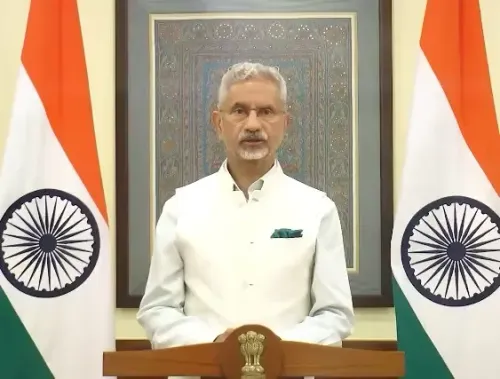
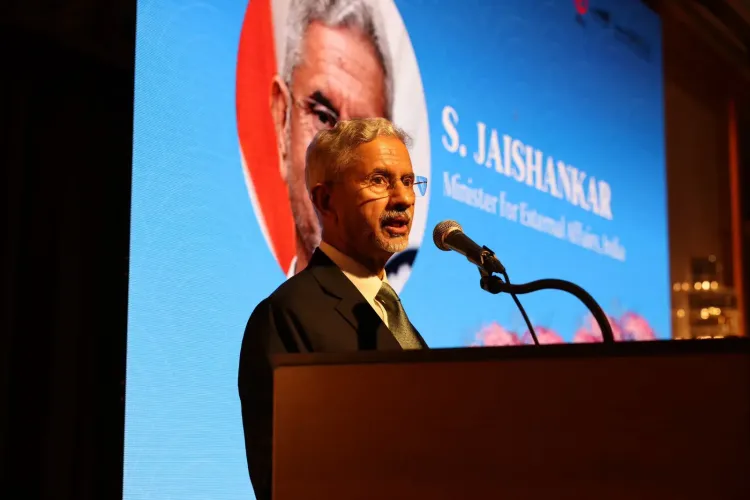
EAM Dr. S. Jaishankar, speaking at Raisina Tokyo 2026 alongside FM Toshimitsu Motegi, diagnosed five defining forces reshaping the global order and issued a pointed six-part agenda for Japan to deepen economic, technological and defence ties with India.
Key Takeaways
Jaishankar identified five global realities: systemic shocks, weaponised chokepoints, extreme competition, de-risking drives, and trusted partnerships as solutions.
He urged Japan to 'update its picture' of India, citing transformation since 2014 in infrastructure, manufacturing, skilling, digital, space and defence.
Priority sectors for deeper India-Japan collaboration named as: semiconductors, critical minerals, ICT, clean energy, advanced manufacturing and pharmaceuticals.
Jaishankar called for new 'policies and frameworks' for India-Japan security and defence cooperation, beyond existing minilateral formats.
He argued that expanding India-Japan ties would stabilise the Indo-Pacific and anchor a multipolar Asia.
People-to-people linkages were flagged as essential support infrastructure for all other areas of cooperation.
At a forum that placed two of Asia's most consequential democracies in the same room, Union External Affairs Minister Dr. S. Jaishankar laid out a sweeping five-point diagnosis of the global order — and then turned directly to Japan with a detailed prescription for what deeper partnership must look like, right now.
Five fault-lines Jaishankar sees in the global order
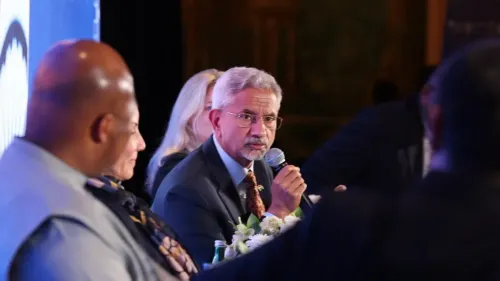
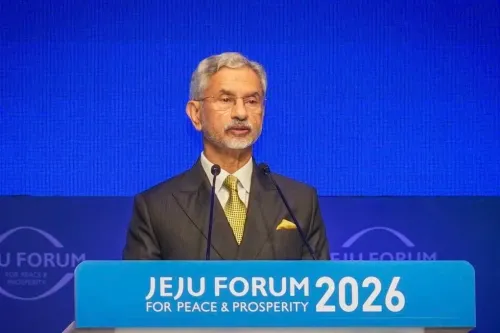
Speaking at the inauguration of Raisina Tokyo 2026 alongside Japanese Foreign Minister Toshimitsu Motegi, Jaishankar argued that the world is currently defined by five interlocking realities: shocks to the international system, the weaponisation of supply chains and chokepoints as enduring facts of life, a mindset of extreme competition and elevated risk-taking, de-risking and diversification as natural responses by states, and — cutting through the turbulence — trusted partnerships as the only durable solution.
The framing was deliberate. Each point builds on the last: disruption breeds competition, competition breeds risk, risk demands diversification, and diversification demands trust. It is a chain of logic that places India-Japan ties — rooted in what Jaishankar called a history of 'congenial relations and no clash of interests' — at the centre of a rapidly restructuring international order.
A direct briefing to Tokyo on India's transformation since 2014
Jaishankar's message to Japan was unusually candid: update your picture of India. He asked Japanese policymakers and businesses to 'appreciate the transformation that India has undergone since 2014' — pointing specifically to infrastructure progress, a deepening domestic market, and measurable gains in human resource development across education, skilling, startups, digital infrastructure, space, drones, health and defence.
The appeal is strategic. Japan's manufacturers, long embedded in China-centric supply chains, have been actively scouting alternatives. Jaishankar was making the case that India is not a future bet — it is a present-tense opportunity. He named the sectors where he wants closer collaboration: advanced manufacturing, semiconductors, critical minerals, ICT, clean energy and pharmaceuticals. Each of these sits at the intersection of economic competition and national security in the current decade.
Security, defence, and the Indo-Pacific calculus
The minister was equally direct on the strategic side. India and Japan, he said, must 'develop policies and frameworks to work together in the fields of security and defence' — a signal that the bilateral agenda needs institutional architecture, not just goodwill statements. He tied this to the broader Indo-Pacific: 'By expanding India-Japan ties, we will not only serve to stabilise and secure the Indo-Pacific but also add an important pillar to an increasingly multipolar Asia and the world.'
The Quadrilateral Security Dialogue — which India, Japan, the United States and Australia revived in 2017 and elevated to leaders' summits from 2021 — provides one existing framework. But Jaishankar's language suggests the bilateral track itself needs to thicken, not just operate through minilateral formats. He invoked the 'leadership of PM Modi and PM Takaichi' as the political engine for this next phase of cooperation.
People-to-people ties as the missing link
In a point that often gets buried under the hardware of diplomacy, Jaishankar flagged people-to-people linkages as a cross-cutting enabler. All five priority sectors, all the security frameworks, all the trade architecture — 'need to be supported through stronger people-to-people linkages and societal activities,' he said. The India-Japan Comprehensive Economic Partnership Agreement, in force since 2011, and the Strategic and Global Partnership established in 2006, laid the legal and political scaffolding. The next phase, Jaishankar signalled, is about the human connections that make formal frameworks actually work.
Raisina Tokyo — an international extension of New Delhi's flagship Raisina Dialogue — is precisely the kind of platform designed to build those connections. Having India's top diplomat and Japan's foreign minister share the inaugural stage sends its own message: this is a relationship both sides are prepared to invest in publicly, at the highest level.
Point of View
Not a ceremonial speech — a detailed operational brief for the next phase of one of Asia's most strategically aligned partnerships. The deliberate sequencing of his five global forces (disruption → competition → risk → diversification → trust) is a rhetorical device that places India-Japan ties as the logical conclusion of the current world order. His insistence that Japan 'update its picture of India' is a recurring theme in his public diplomacy since 2019 — signalling impatience with a perception gap he believes costs both sides real economic opportunity. The specific naming of semiconductors and critical minerals is not incidental: both are live contested domains in the US-China technology rivalry, and Jaishankar is positioning India as a credible node in Japan's supply-chain resilience strategy.
NationPress
18 Nov 2026
Frequently Asked Questions
What is Raisina Tokyo 2026?
Raisina Tokyo 2026 is an international dialogue forum held in Tokyo, an overseas extension of India's flagship Raisina Dialogue, bringing together policymakers and thought leaders to discuss geopolitics and geoeconomics. EAM Jaishankar and Japanese FM Motegi jointly inaugurated the event in November 2026.
What did Jaishankar say about India-Japan relations?
Jaishankar said India and Japan have 'never had a clash of interests' and share only congenial relations throughout history. He outlined six priorities for Japan including recognising India's post-2014 transformation, investing in Indian manufacturing, and developing joint defence and security frameworks.
Which sectors did Jaishankar highlight for India-Japan cooperation?
Jaishankar specifically named advanced manufacturing, semiconductors, critical minerals, ICT, clean energy and pharmaceuticals as priority sectors for deeper India-Japan economic and technological collaboration.
What is India's role in the Indo-Pacific according to Jaishankar?
Jaishankar argued that expanding India-Japan ties would stabilise and secure the Indo-Pacific while adding 'an important pillar to an increasingly multipolar Asia and the world,' positioning the bilateral relationship as a cornerstone of regional architecture.
What is the history of India-Japan strategic ties?
India and Japan established a Strategic and Global Partnership in 2006, signed a Comprehensive Economic Partnership Agreement in 2011, and both participate in the Quadrilateral Security Dialogue with the US and Australia, which was revived in 2017 and elevated to leaders' summits from 2021.