Dhaka garbage trade worth Tk 317 crore yearly runs on political patronage
Synopsis
Dhaka's household garbage collection — officially a municipal service — has become a Tk 317 crore-a-year political racket. Small entrepreneurs who invest lakhs to secure ward contracts are allegedly muscled out whenever governments change, with BNP activists reportedly taking over after August 2024 just as Awami League operatives did before them. The governance vacuum left by two years without elected mayors has made the problem worse.
Key Takeaways
Dhaka South City Corporation's 75 wards generate an estimated Tk 317 crore annually from garbage collection fees, far exceeding the city's official sanitation budget.
Contracts officially require a deposit of Tk 15–17 lakh , but are reportedly controlled by political leaders rather than awarded through fair tendering.
Residents are charged between Tk 120 and Tk 1,000 per month , despite a regulatory cap of Tk 100 per flat .
Shahabuddin Ali lost his Tk 12 lakh investment in Ward 38 after BNP activists allegedly seized his operations within two months of the elected government taking over.
The patronage pattern predates the current government — Awami League councillors dominated the trade before the August 2024 political transition.
Dhaka has had no elected mayors or councillors in either city corporation area for the past two years , deepening the accountability gap.
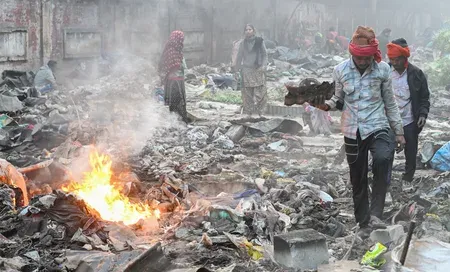
Dhaka's household waste collection industry — officially a municipal service — has quietly evolved into a Tk 317 crore annual parallel economy, sustained by political patronage and enforced through intimidation, according to a detailed investigation published by Bangladesh's Bengali daily Prothom Alo on Thursday, 14 May 2025. The report reveals how control over garbage contracts in the capital shifts hands with every regime change, leaving small entrepreneurs squeezed out while politically connected operators pocket outsized profits.
How the waste economy works
Dhaka South City Corporation manages 75 wards, each of which assigns garbage collection to private contractors through a tender process. Officially, the non-refundable deposit to secure a ward contract ranges between Tk 15 lakh and Tk 17 lakh, depending on ward size. In practice, however, the report found that contracts are not awarded on merit — they are controlled by local political leaders who extract a share of the profits in exchange for access.
City regulations cap household waste-collection fees at Tk 100 per flat per month. Yet residents across Dhaka reportedly pay between Tk 120 and Tk 1,000, depending on locality and the perceived wealth of the household or business. City officials, when pressed, acknowledged the existence of political patronage but insisted they are cracking down — promising licence revocations for contractors who exceed the prescribed rate. Residents remain sceptical.
Small entrepreneurs caught in the crossfire
Shahabuddin Ali, a former scrap iron dealer from Old Dhaka, described how the system consumed his savings. He invested Tk 12 lakh as a non-refundable deposit to secure the waste-collection contract for Ward 38 of Dhaka South City Corporation. He hired 24 workers and purchased vans, expecting steady returns. He reportedly secured the contract through an influential contact during the interim government period.
Within two months of an elected government taking over, local Bangladesh Nationalist Party (BNP) activists allegedly seized control of his operations. 'They threatened to beat me up and took away my job,' Ali told Prothom Alo, adding that appeals to influential leaders went unanswered. His savings dried up as he struggled to support his family on the income from a small inherited shop.
A similar case involved a businesswoman who received a waste-removal contract in Ward 58 of Dhaka South City in September 2024. Local BNP leaders and activists allegedly blocked her from working, claiming she had ties to the now-banned Jubo Mohila League.
The profit arithmetic
The report's financial breakdown illustrates why the trade attracts political interest. Even at the official Tk 100 rate, a single ward can generate a monthly profit of approximately Tk 3 lakh after expenses. At inflated rates of Tk 150–200, that figure rises to Tk 4–5 lakh per ward. Across all 75 wards, this amounts to roughly Tk 3 crore per month, or Tk 36 crore per year.
Urban planners cited in the report put the real figure considerably higher. Based on 293,881 registered holdings in Dhaka South alone, an average collection of Tk 150 per flat yields Tk 26 crore monthly — translating to more than Tk 317 crore annually. This figure reportedly dwarfs the city's official sanitation budget, underscoring the scale of the parallel economy that has taken root.
A pattern across regimes
The report noted that Dhaka's two city corporation areas have had no elected mayors or councillors for the past two years, creating a governance vacuum that political operatives have moved to fill. This is not a new phenomenon. According to Prothom Alo, even under the previous Sheikh Hasina-led Awami League government, party councillors and activists dominated the garbage trade. Following the party's ouster in August 2024, BNP leaders and affiliates reportedly moved in to take control — suggesting the patronage structure survives regime change intact, merely swapping one set of political beneficiaries for another.
Residents who spoke to the newspaper described feeling 'held hostage' by waste collectors, with no effective recourse to city authorities. As Dhaka awaits restored elected local governance, the waste economy — and the political machinery behind it — shows little sign of retreating.
Point of View
Which means electoral change alone will not fix it. The two-year absence of elected local bodies has removed even the thin layer of democratic accountability that previously existed. Until Dhaka restores functional ward-level governance and decouples contract awards from political access, the Tk 317 crore figure will keep growing — and small entrepreneurs will keep losing their savings to whoever holds power on the street.
NationPress
30 Sept 2026
Frequently Asked Questions
How much money does Dhaka's garbage collection industry generate annually?
According to a Prothom Alo investigation, Dhaka South City Corporation's waste collection generates an estimated Tk 317 crore per year, based on 293,881 registered holdings paying an average of Tk 150 per flat monthly. This figure reportedly exceeds the city's official sanitation budget.
How does political patronage control Dhaka's garbage contracts?
Ward-level garbage contracts in Dhaka are officially awarded through tenders requiring deposits of Tk 15–17 lakh. In practice, the report found that local political leaders control who gets the contracts, extracting influence or a share of profits in exchange for access — a pattern observed under both the Awami League and BNP governments.
What happened to small contractors after the August 2024 political transition in Bangladesh?
Following the ouster of the Awami League in August 2024, BNP leaders and activists allegedly took over garbage collection operations previously held by other contractors. Shahabuddin Ali, who had invested Tk 12 lakh in Ward 38, says BNP activists threatened him and seized his operations within two months of the new government taking over.
Why are Dhaka residents paying more than the official waste-collection rate?
City regulations cap household waste fees at Tk 100 per flat per month, but residents reportedly pay between Tk 120 and Tk 1,000. Politically connected contractors impose inflated rates with little accountability, as Dhaka has had no elected mayors or councillors in either city corporation for the past two years.
Is the Dhaka waste patronage system new?
No. According to the Prothom Alo report, the patronage structure predates the current political dispensation. Even under the previous Sheikh Hasina-led Awami League government, party councillors and activists dominated the garbage trade. The system appears to survive regime change by simply transferring control to the ruling party's affiliates.