Vessel Disha with 30 crew reports missile attack near Strait of Hormuz
Synopsis
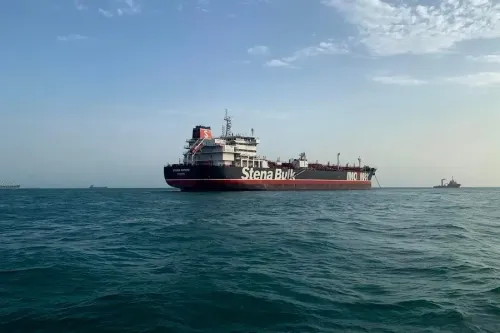
A merchant vessel named Disha, with 30 crew aboard, broadcast a distress call reporting a missile strike near the Strait of Hormuz — the same day audio emerged of what a seafarer identified as a US military operator threatening to fire on a ship heading toward Iran. With the IRGC having stopped three tankers the previous day and one catching fire, the world's most critical oil chokepoint is now a live conflict zone.
Key Takeaways
Vessel Disha , carrying 30 crew members , reported being struck by unknown missiles near the eastern entrance to the Strait of Hormuz on Friday, 25 July .
Audio recordings from a public VHF channel captured the distress call and a separate transmission from what a seafarer identified as a US military operator threatening to fire on a vessel heading toward Iran.
On Thursday , the IRGC announced it had blocked three oil tankers from transiting the Strait; one reportedly exploded and caught fire .
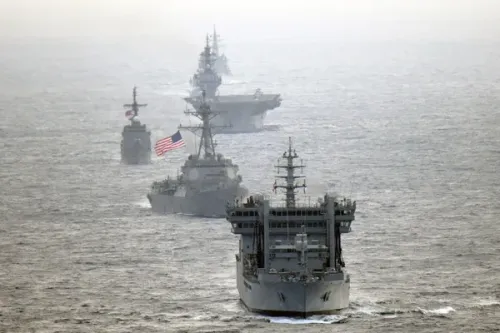
The IRGC warned any vessel attempting to pass without Iran's consent 'will suffer the same fate.' US forces have reportedly resumed a naval blockade on vessels transiting to and from Iranian ports, according to reports.
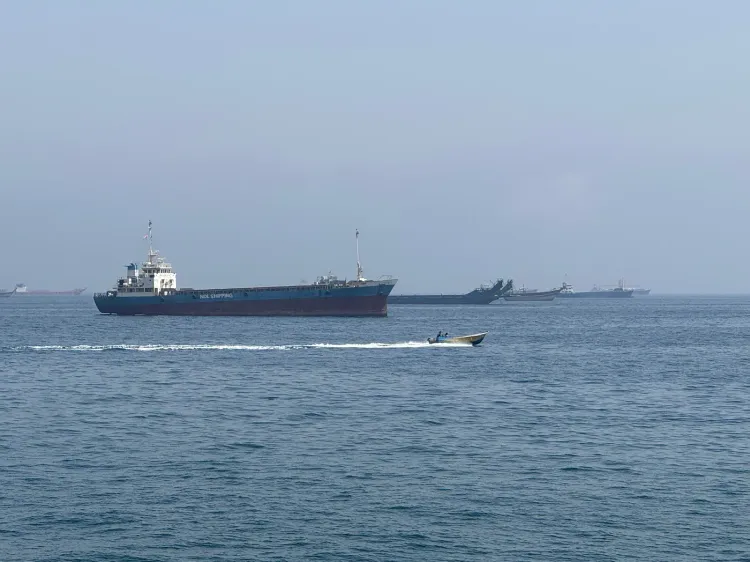
A merchant vessel identifying itself as Disha, carrying 30 crew members, reported coming under attack by unknown missiles and issued a distress call near the eastern entrance to the Strait of Hormuz on Friday, 25 July, according to audio recordings from a public VHF maritime radio channel. The incident has intensified alarm over maritime security in one of the world's most critical shipping chokepoints.
The Distress Call
In the recorded transmission, a caller identifying the vessel as Disha stated: 'This is Disha. We are attacked by unknown missiles. We require immediate assistance. We have 30 crew on board. We require immediate assistance,' reporting its position near the eastern entrance to the Strait of Hormuz. The audio was obtained from a seafarer monitoring the public VHF channel.
A separate recording from the same channel captured what the seafarer identified as a US military operator issuing repeated warnings to a merchant vessel, declaring it 'non-compliant' for continuing toward Iranian waters. 'You are non-compliant by continuing towards Iran. You have been warned several times. I am preparing to fire at your engine room,' the caller said, adding that the crew had 15 minutes to clear the engine room.
Escalating Tensions in the Strait
The reported attack on Disha comes amid a sharp escalation in maritime tensions around the Strait of Hormuz, through which an estimated 20% of global oil supplies transit. US forces have reportedly resumed a naval blockade targeting vessels transiting to and from Iranian ports and coastal areas, according to reports.
On Thursday, Iran's Islamic Revolutionary Guard Corps (IRGC) announced it had stopped three oil tankers from passing through the Strait. In a statement carried by Iranian state media, the IRGC said one of the tankers 'exploded and caught fire' after the vessels allegedly attempted to use a mine-laid route south of the Strait.
What the IRGC Said
The IRGC described the tankers as having been 'provoked and tempted by the child-killing American army' in its statement, warning that any ship 'deceived' by the United States and attempting to pass without Iran's consent 'will suffer the same fate.' The statement represents one of Tehran's most explicit threats to commercial shipping in recent months.
Notably, this is not the first time the Strait of Hormuz has become a flashpoint. The waterway has seen repeated incidents of tanker seizures, drone attacks, and naval confrontations over the past several years, particularly during periods of heightened US-Iran tensions. The latest series of incidents marks a significant intensification of that pattern.
What Happens Next
The fate of the Disha and its 30 crew members remained unclear at the time of reporting, with no official confirmation from ship operators or flag-state authorities. Maritime security agencies and naval forces operating in the region are expected to respond to the distress call. The incident is likely to prompt fresh calls for international escorts and freedom-of-navigation operations through the Strait, with global oil markets watching closely for any sustained disruption to tanker traffic.
Point of View
But the simultaneous emergence of a vessel distress call, VHF audio of military threats, and the IRGC's tanker-blocking statement within 24 hours signals a qualitative shift — from periodic confrontation to near-continuous interdiction. What is missing from most coverage is the compounding risk: if commercial insurers begin withdrawing cover for Hormuz transits at scale, the resulting freight-rate spike will hit India — one of the largest importers of Gulf crude — harder than almost any other economy. The accountability question is also unresolved: the audio recordings have not been independently verified by official sources, and the identity of the 'US military operator' on the VHF channel remains unconfirmed. Reporting these recordings as established fact, rather than as evidence requiring verification, risks accelerating an already volatile escalation cycle.
NationPress
23 Oct 2026
Frequently Asked Questions
What happened to the vessel Disha near the Strait of Hormuz?
The vessel Disha, carrying 30 crew members, issued a distress call on Friday reporting it had been struck by unknown missiles near the eastern entrance to the Strait of Hormuz. The status of the vessel and crew was not officially confirmed at the time of reporting.
What did the audio recordings from the VHF channel reveal?
Audio recordings from a public VHF maritime radio channel captured the Disha's distress call and a separate transmission from a caller a seafarer identified as a US military operator, who warned a merchant vessel it was 'non-compliant' for heading toward Iran and stated he was 'preparing to fire at your engine room.' These recordings have not been independently verified by official sources.
What did the IRGC announce regarding oil tankers?
On Thursday, Iran's Islamic Revolutionary Guard Corps (IRGC) announced it had stopped three oil tankers from passing through the Strait of Hormuz, stating that one exploded and caught fire after allegedly attempting to use a mine-laid route south of the Strait. The IRGC warned further vessels attempting to pass without Iran's consent would face the same outcome.
Why is the Strait of Hormuz so strategically significant?
The Strait of Hormuz is the world's most critical oil shipping chokepoint, with an estimated 20% of global oil supplies passing through it. Any sustained disruption to tanker traffic through the Strait can trigger sharp rises in global oil prices and freight rates, with major importing nations including India particularly exposed.
What is the broader context of US-Iran tensions in the region?
US forces have reportedly resumed a naval blockade targeting vessels transiting to and from Iranian ports and coastal areas. The Strait of Hormuz has seen repeated incidents of tanker seizures, drone attacks, and naval confrontations over several years, but the latest cluster of incidents within a 24-hour period represents a significant intensification of hostilities.