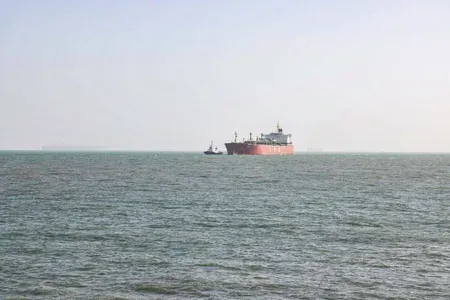
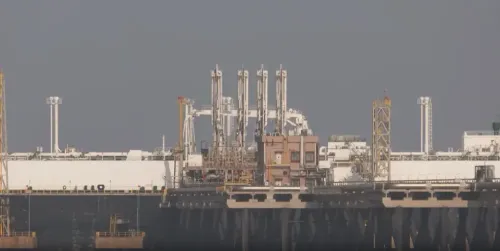
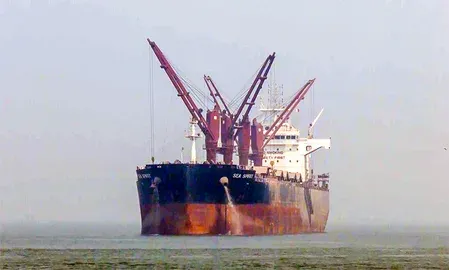
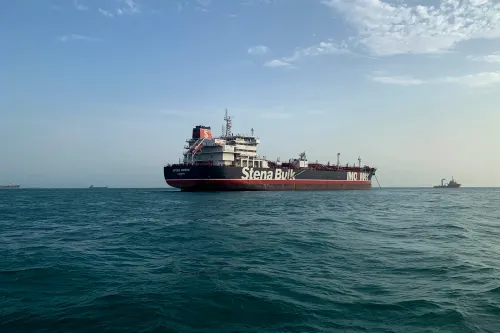
LPG tanker DISHA with 28 Indian crew attacked near Strait of Hormuz
Synopsis
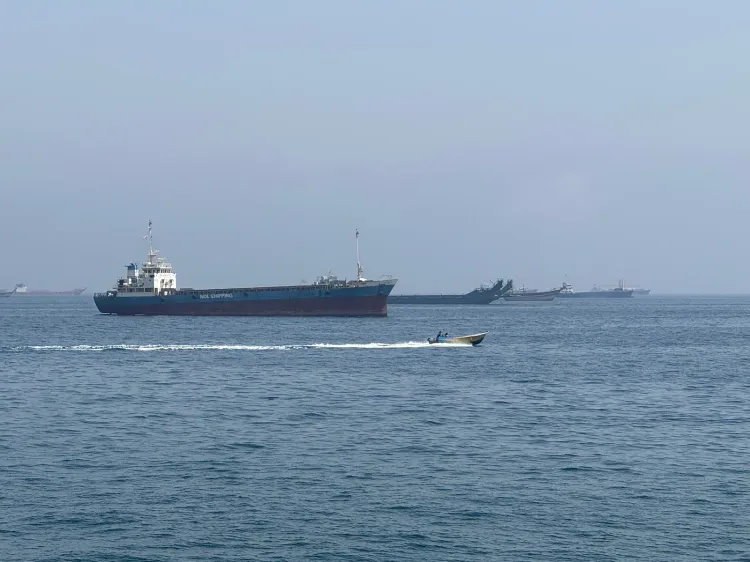
A Mozambique-flagged LPG tanker carrying 28 Indian crew was struck by what the vessel’s distress call described as ‘unknown missiles’ in Iranian territorial waters near the Strait of Hormuz — just days after India’s maritime regulator had explicitly warned ship operators against deploying Indian seafarers in the corridor. All crew are reportedly safe, but the incident marks a sharp escalation in Gulf maritime risk for Indian nationals.
Key Takeaways
LPG tanker DISHA (IMO No.
8818219 ), flying a Mozambique flag, was attacked in Iranian territorial waters near the Strait of Hormuz on 24 July .
The vessel had 28 Indian crew members on board; the Indian Embassy in Tehran confirmed all are safe.
A distress call from the vessel reported being ‘attacked by unknown missiles’ and listed 30 crew — a figure not yet reconciled with the Embassy’s count of 28.
Audio recordings captured what a seafarer identified as a US military operator warning the vessel it was ‘non-compliant’ before the attack.
The Directorate General of Maritime Administration (DGMA) had last week directed operators to stop deploying Indian seafarers on Hormuz-bound voyages until further notice.
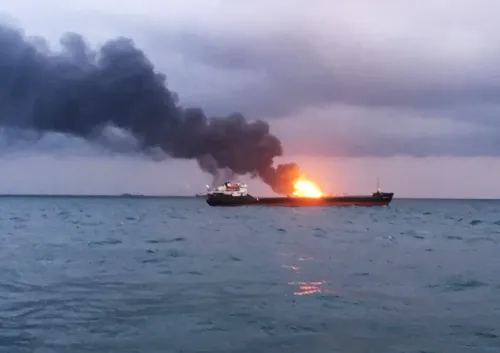
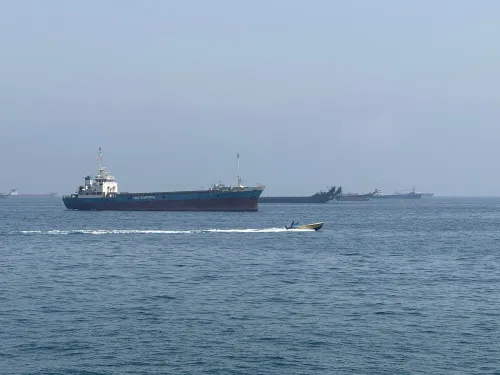
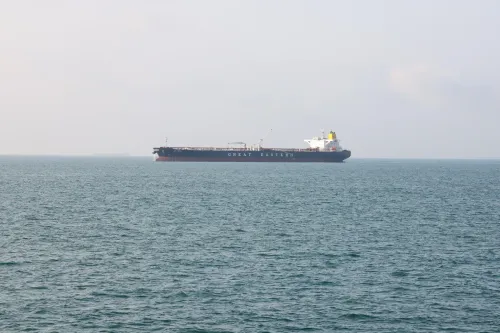
A Mozambique-flagged LPG tanker, DISHA (IMO No. 8818219), came under attack in Iranian territorial waters near the Strait of Hormuz on Friday, 24 July, with 28 Indian crew members on board, the Indian Embassy in Tehran confirmed. The Embassy stated that all Indian nationals aboard have been accounted for and are safe.
What the Embassy Said
In an official statement, the Indian Embassy in Tehran said it had been in close contact with relevant Iranian authorities following the incident. “The Embassy of India in Tehran is aware that the Mozambique-flagged LPG tanker DISHA (IMO No. 8818219) came under attack in Iranian territorial waters earlier today. The vessel has 28 Indian crew members on board. The Embassy has been in close contact with the relevant authorities and has confirmed that all Indian crew members are safe,” the statement read. The Embassy added that it continues to monitor the situation closely.
How the Attack Unfolded
Audio recordings from a public VHF maritime radio channel captured the sequence of events. In one recording, a caller identified by a seafarer as a US military operator repeatedly warned a merchant vessel that it was “non-compliant” for continuing toward Iranian waters. “You are non-compliant by continuing towards Iran. You have been warned several times. I am preparing to fire at your engine room,” the caller said, adding that the crew had 15 minutes to clear the engine room.
A subsequent recording captured a vessel identifying itself as Disha issuing a distress call: “This is Disha. We are attacked by unknown missiles. We require immediate assistance. We have 30 crew on board. We require immediate assistance,” the caller said, reporting the vessel’s position near the eastern entrance to the Strait of Hormuz. The discrepancy between the Embassy’s figure of 28 crew and the distress call’s mention of 30 has not been officially clarified.
India’s Prior Warning to Seafarers
The attack comes just days after the Directorate General of Maritime Administration (DGMA) directed ship owners, ship managers, and Recruitment and Placement Service Licence (RPSL) companies to avoid deploying Indian seafarers on vessels transiting the Strait of Hormuz until further notice. The regulator, posting on social media platform X, said the directive was aimed at safeguarding the safety, security, and welfare of Indian seafarers amid escalating attacks on merchant vessels in the conflict-affected Gulf region.
Broader Context and What Comes Next
The Strait of Hormuz — through which roughly 20% of the world’s oil supply transits — has seen a sharp rise in maritime security incidents in recent months, with multiple vessels reporting attacks or seizures. India, which has a significant seafaring workforce deployed globally, has faced growing pressure to protect its nationals operating in high-risk corridors. The DGMA advisory last week was among the most explicit restrictions issued to date. With the DISHA incident now confirmed, pressure on New Delhi to issue stronger diplomatic and protective measures is likely to intensify.
Point of View
Yet an Indian-crewed vessel was transiting the same corridor days later. New Delhi’s diplomatic response has so far been limited to welfare confirmation, with no public statement on accountability or escalation. With tens of thousands of Indian seafarers deployed globally and the Gulf corridor increasingly militarised, the absence of a proactive evacuation or rerouting protocol is a structural vulnerability. The crew count discrepancy between the Embassy statement and the vessel’s own distress call also raises questions about real-time information sharing between shipowners and Indian consular authorities.
NationPress
23 Oct 2026
Frequently Asked Questions
What happened to the LPG tanker DISHA near the Strait of Hormuz?
The Mozambique-flagged LPG tanker DISHA was attacked in Iranian territorial waters near the eastern entrance to the Strait of Hormuz on 24 July. The vessel issued a distress call reporting it had been struck by unknown missiles, with 28 to 30 crew on board.
Are the Indian crew members on board DISHA safe?
Yes, according to the Indian Embassy in Tehran, all 28 Indian crew members on board have been confirmed safe. The Embassy said it remains in close contact with Iranian authorities and is monitoring the situation.
What did India’s maritime regulator say before the attack?
The Directorate General of Maritime Administration (DGMA) last week directed ship owners, managers, and placement companies to avoid deploying Indian seafarers on vessels transiting the Strait of Hormuz until further orders, citing the heightened security situation in the Gulf.
Who warned the DISHA before it was attacked?
Audio recordings from a public VHF maritime channel captured what a seafarer identified as a US military operator warning the vessel it was ‘non-compliant’ for continuing toward Iranian waters, stating it was preparing to fire at the engine room and giving the crew 15 minutes to evacuate it.
Why is the Strait of Hormuz considered a high-risk zone?
The Strait of Hormuz is one of the world’s most critical maritime chokepoints, through which roughly 20% of global oil supply passes. The region has seen a sharp increase in attacks and seizures of merchant vessels in recent months amid broader geopolitical tensions in the Gulf.