Three Indian tankers home with 8.6 lakh MT crude after Hormuz transit
Synopsis
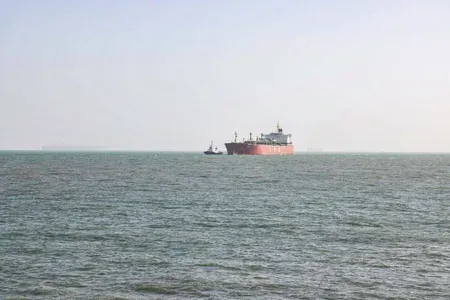
Three Indian-flagged crude oil tankers carrying over 8.6 lakh MT of cargo have cleared the Strait of Hormuz — a waterway blocked for months — and are now headed home. The transit follows a US-Iran diplomatic agreement signed on 18 June that reopened the corridor, handing India a direct energy security win as the vessels are due at Vadinar, Sikka, and Paradip ports by 1 July.
Key Takeaways
Desh Vaibhav , Desh Vibhor , and Sanmar Herald transited the Strait of Hormuz on 20-21 June carrying over 8.6 lakh MT of crude oil.
94 Indian crew members are on board across the three vessels.
Arrivals are scheduled at Vadinar Port and Sikka Port on 24 June , and Paradip Port on 1 July .
The US lifted Hormuz movement restrictions on 18 June after a tentative diplomatic agreement between Washington and Tehran .
The deal reportedly includes provisions for Iran to dilute its highly enriched uranium stockpile and easing of certain sanctions.
Union Minister Sarbananda Sonowal confirmed the safe passage and said inter-agency coordination to protect Indian seafarers remains ongoing.
Three Indian-flagged crude oil tankers — Desh Vaibhav, Desh Vibhor, and Sanmar Herald — have successfully transited the Strait of Hormuz and are now headed to Indian ports carrying over 8.6 lakh MT of cargo, with 94 Indian crew members on board. The milestone, announced on 21 June, comes after the strategic waterway reopened following weeks of disruption tied to regional security concerns.
What the Minister Said
Union Minister of Ports, Shipping and Waterways Sarbananda Sonowal confirmed the safe passage in a post on X, stating: 'Safe passage secured! 3 Indian-flagged crude oil tankers, Desh Vaibhav, Desh Vibhor and Sanmar Herald carrying over 8.6 Lakh MT of cargo with 94 Indian crew members have successfully transited the Strait of Hormuz today and are en route to India.' Sonowal added that the government is working 'on highest priority to secure India's maritime interests' and that his ministry is 'actively coordinating with all relevant agencies to guarantee the absolute safety of Bharat's seafarers and energy lifelines.'
Arrival Schedule and Port Details
According to officials, the three vessels are expected to reach Indian shores between 24 June and 1 July. Desh Vaibhav is scheduled to dock at Vadinar Port on 24 June, while Desh Vibhor is expected at Sikka Port on the same date. The Sanmar Herald, which crossed the Strait on 20 June, is slated to arrive at Paradip Port on 1 July.
Why the Strait of Hormuz Was Blocked
The Strait of Hormuz — through which roughly 20% of the world's traded oil passes — had been largely disrupted for months due to escalating security concerns in the Gulf region. On 18 June, the United States lifted restrictions on maritime movement through the waterway following a tentative diplomatic breakthrough. On the same day, US President Donald Trump signed an agreement with Iran that reportedly includes provisions for Tehran to dilute its stockpile of highly enriched uranium and for the easing of certain sanctions, effectively reopening the corridor for oil tanker traffic.
Why This Matters for India
India is among the world's largest importers of crude oil, and uninterrupted access to Gulf shipping lanes is central to its energy security. The disruption of the Strait had raised concerns about supply chain continuity and freight costs. This transit marks the resumption of a critical supply artery. Notably, the use of Indian-flagged vessels — rather than chartered foreign tonnage — also reflects a broader push to expand India's own maritime fleet capacity. Officials indicated that inter-agency coordination to monitor vessel safety in sensitive international waters remains ongoing.
Broader Geopolitical Context
The US-Iran agreement, while described as tentative, has contributed to easing global energy supply chain pressures. The deal's reported provision allowing Iranian oil exports to resume adds supply to an already-watched crude market. For India, which has historically balanced ties with both Washington and Tehran, the diplomatic thaw offers a degree of operational relief — though analysts caution that the agreement's durability remains to be seen.
Point of View
But it rests on a diplomatic agreement between Washington and Tehran that is, by all accounts, still tentative. India's energy planners cannot treat the Hormuz corridor as fully normalised until the US-Iran deal is ratified and durable. More structurally, the episode exposes how heavily India's crude import chain depends on a single chokepoint — one that hostile state or non-state actors can threaten with minimal effort. The use of Indian-flagged vessels is a step toward fleet sovereignty, but India's overall share of its own crude-carrying capacity remains thin. The real policy question is whether this episode accelerates investment in Indian maritime tonnage or remains a one-news-cycle moment.
NationPress
19 Sept 2026
Frequently Asked Questions
Which Indian tankers transited the Strait of Hormuz on 21 June?
The three Indian-flagged crude oil tankers are Desh Vaibhav, Desh Vibhor, and Sanmar Herald. Together they carry over 8.6 lakh MT of cargo and have 94 Indian crew members on board, and are now en route to Indian ports.
When will the Indian tankers arrive at their destination ports?
Desh Vaibhav is expected at Vadinar Port on 24 June, Desh Vibhor at Sikka Port on 24 June, and Sanmar Herald at Paradip Port on 1 July, according to officials.
Why was the Strait of Hormuz blocked for shipping?
The Strait of Hormuz had been largely disrupted for months due to escalating security concerns in the Gulf region. The US lifted movement restrictions on 18 June following a tentative diplomatic agreement with Iran aimed at de-escalating regional tensions.
What is the US-Iran agreement that reopened the Hormuz corridor?
On 18 June, US President Donald Trump signed an agreement with Iran that reportedly includes provisions for Tehran to dilute its stockpile of highly enriched uranium and for the easing of certain sanctions. The deal effectively reopened the Strait to oil tanker traffic, though its long-term durability remains uncertain.
Why is the Strait of Hormuz critical for India's energy security?
India is one of the world's largest crude oil importers and depends heavily on Gulf shipping lanes for supply. The Strait of Hormuz is the primary transit route for this cargo, making any disruption there a direct threat to India's energy supply chain and fuel prices.