NSA Doval, UK's Powell Hold Major India-UK Security Talks in Delhi
Synopsis
In a sweeping week of high-level diplomacy, NSA Ajit Doval, EAM Jaishankar, and CDS General Chauhan collectively engaged UK counterparts across defence, cyber, space, and Indo-Pacific domains — signalling that the India-UK Comprehensive Strategic Partnership is rapidly evolving into one of the most multidimensional bilateral ties India holds with any Western nation.
Key Takeaways
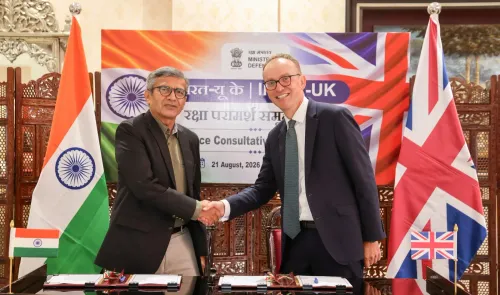
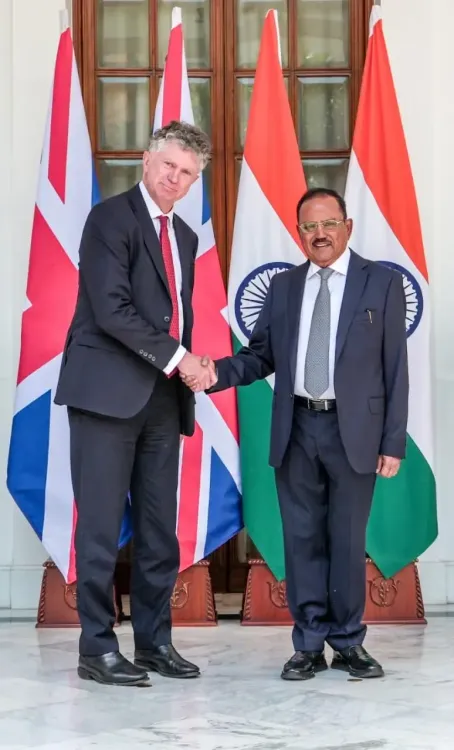
NSA Ajit Doval hosted UK NSA Jonathan Powell in New Delhi on April 23, 2026 for the annual India-UK Strategic Dialogue .
Jaishankar separately met Jonathan Powell the same day, focusing on regional, global security, and bilateral cooperation.
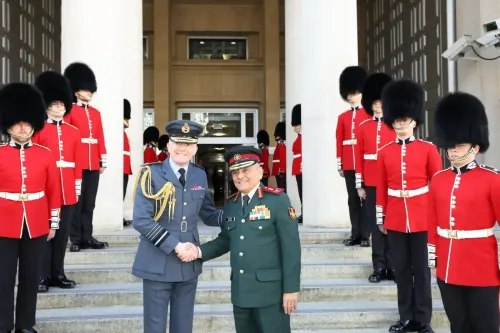
CDS General Anil Chauhan visited the United Kingdom , meeting Air Chief Marshal Sir Richard Knighton and reaffirming joint resolve on cyber threats and Indo-Pacific stability.
Both nations agreed to enhance cooperation in Cyber, Intelligence, and Space domains , including information resilience and specialised exchanges.
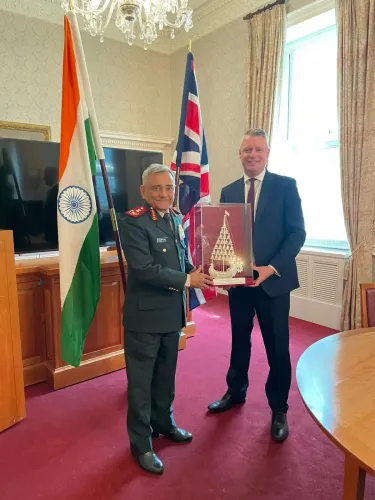
General Chauhan met UK Minister Seema Malhotra (Indo-Pacific) to advance the Defence Industrial Roadmap and tech-security initiatives.
The engagements signal a strategic shift in the India-UK Comprehensive Strategic Partnership towards future-ready, multi-domain defence and security collaboration.
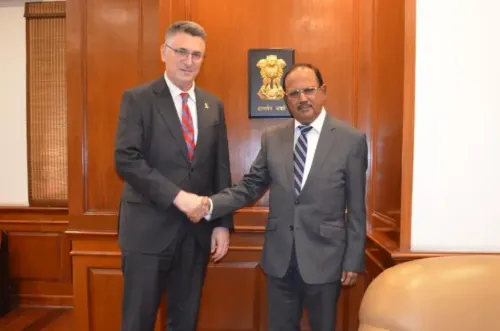
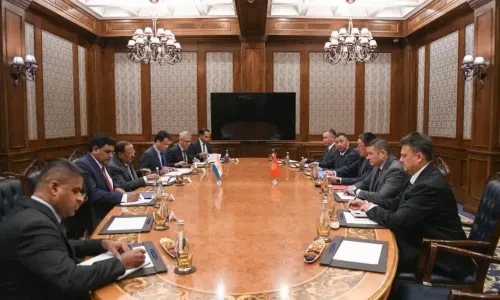
New Delhi, April 23, 2026 — National Security Advisor (NSA) Ajit Doval met his British counterpart Jonathan Powell in New Delhi on Thursday for the annual India-UK Strategic Dialogue, marking a significant deepening of bilateral ties under the India-UK Comprehensive Strategic Partnership. The high-level engagement covered a broad spectrum of defence, security, and geopolitical priorities, signalling a new phase of strategic convergence between the two democracies.
India-UK Strategic Dialogue: Key Discussions
The Ministry of External Affairs (MEA) confirmed the meeting via an official post on X (formerly Twitter), stating that the two NSAs held "wide-ranging discussions on advancing the India-UK Comprehensive Strategic Partnership, including strengthening defence and security cooperation." The dialogue also covered pressing regional and global security challenges, reflecting shared concerns over an increasingly volatile geopolitical landscape.
This annual dialogue serves as the apex-level mechanism for strategic coordination between India and the United Kingdom, covering intelligence-sharing frameworks, counterterrorism cooperation, and emerging threats in cyberspace and outer space.
Jaishankar Meets UK NSA Powell
Earlier on the same day, External Affairs Minister (EAM) S. Jaishankar held a separate meeting with Jonathan Powell in New Delhi. The discussions centred on regional and global security issues and the trajectory of deepening India-UK bilateral cooperation.
"Glad to meet UK NSA Jonathan Powell in New Delhi this afternoon. Our discussion focused on regional and global security issues, as well as the deepening India-UK cooperation," EAM Jaishankar posted on X. The dual-track engagement — with both the NSA and the Foreign Minister — underscores how seriously both sides are treating this round of talks.
CDS General Chauhan's UK Visit: Defence Cooperation in Focus
The diplomatic momentum had been building since Wednesday, April 22, when Chief of Defence Staff (CDS) General Anil Chauhan met his UK counterpart, Air Chief Marshal Sir Richard Knighton, during an official visit to the United Kingdom. The two sides reaffirmed a shared resolve to address contemporary challenges — from global trade imbalances to emerging cyber threats — while working towards a peaceful and prosperous Indo-Pacific.
The Headquarters of Integrated Defence Staff (IDS) noted that the visit would "strengthen Defence Cooperation and strategic convergence, underscoring a shared commitment to Global Security, stability and resilience." General Chauhan also engaged with the Commandant and faculty of the Royal College of Defence Studies (RCDS), discussing evolving global security trends and their strategic implications.
Defence Industry, Indo-Pacific, and Cyber Domains
On Tuesday, April 21, CDS General Chauhan met senior UK defence industry leaders, emphasising that enhanced economic integration would enable smoother collaboration in defence manufacturing, technology transfer, and supply chain resilience — areas that have gained urgency amid global disruptions.
He also held talks with UK Minister of State for Defence Readiness and Industry Luke Pollard, focusing on the evolving nature of modern conflict and deepening military-to-military cooperation. In a separate high-impact meeting, General Chauhan met UK Minister of State for Indo-Pacific Seema Malhotra, where both sides discussed the Defence Industrial Roadmap and tech-security initiatives to counter emerging challenges in the Indo-Pacific.
"Both sides emphasised enhancing cooperation in Cyber, Intelligence and Space domains, including information resilience and specialised exchanges," the HQ IDS stated. The talks reaffirmed a shared commitment to building "resilient, Future Ready forces" under a strengthened India-UK strategic partnership.
Why This Matters: The Bigger Strategic Picture
This flurry of high-level engagements comes at a critical juncture. The India-UK Free Trade Agreement (FTA), long under negotiation, has been a backdrop to these security talks — reflecting how both nations are integrating economic and security architectures. Notably, the emphasis on cyber, space, and intelligence cooperation signals that the partnership is evolving well beyond traditional defence procurement into next-generation strategic domains.
The focus on the Indo-Pacific is particularly significant given China's growing assertiveness in the region. Both India and the UK — as members of multilateral groupings including the G20 and partners in the Five Eyes-adjacent intelligence architecture — share a vested interest in a rules-based Indo-Pacific order. India's simultaneous engagement with Western partners while maintaining strategic autonomy reflects its maturing role as a global swing state.
As both nations gear up for further rounds of the Comprehensive Strategic Partnership review, the outcomes of this week's intensive diplomatic calendar are expected to feed directly into upcoming bilateral summits and defence procurement decisions in the months ahead.
Point of View
The Foreign Minister, and the Chief of Defence Staff simultaneously — is not routine diplomacy; it is a deliberate signalling exercise by both New Delhi and London. As the India-UK FTA negotiations inch forward and China's Indo-Pacific footprint expands, both nations are rushing to lock in a strategic architecture that goes beyond arms deals into cyber, space, and intelligence — domains that will define the next decade of geopolitical competition. What the mainstream narrative misses is that India is not simply deepening ties with the UK out of goodwill; it is strategically diversifying its Western partnerships to maximise leverage, particularly as it navigates complex relationships with both Washington and Beijing. The UK, post-Brexit, needs India as much as India needs it — and that mutual dependency is quietly reshaping the global security order.
NationPress
29 Sept 2026
Frequently Asked Questions
What was discussed at the India-UK Strategic Dialogue on April 23, 2026?
NSA Ajit Doval and UK NSA Jonathan Powell held the annual India-UK Strategic Dialogue in New Delhi on April 23, 2026, discussing the Comprehensive Strategic Partnership, defence and security cooperation, and regional and global security challenges. The meeting also addressed cyber threats, Indo-Pacific stability, and intelligence-sharing frameworks.
Did EAM Jaishankar meet UK NSA Jonathan Powell?
Yes, External Affairs Minister S. Jaishankar met UK NSA Jonathan Powell in New Delhi on April 23, 2026. Their discussions focused on regional and global security issues and the deepening of India-UK bilateral cooperation.
What did CDS General Anil Chauhan discuss during his UK visit?
CDS General Anil Chauhan met UK CDS Air Chief Marshal Sir Richard Knighton, UK defence industry leaders, and ministers including Luke Pollard and Seema Malhotra during his UK visit. Key topics included defence manufacturing, technology transfer, cyber and space cooperation, and Indo-Pacific security.
Why is the India-UK Strategic Dialogue important in 2026?
The 2026 India-UK Strategic Dialogue is significant because it advances cooperation in next-generation domains like cyber, space, and artificial intelligence, alongside traditional defence ties. It also comes amid ongoing India-UK Free Trade Agreement negotiations and growing geopolitical competition in the Indo-Pacific.
What is the India-UK Comprehensive Strategic Partnership?
The India-UK Comprehensive Strategic Partnership is a bilateral framework that covers defence, trade, technology, education, and people-to-people ties between India and the United Kingdom. It was elevated to a comprehensive level to reflect the growing depth and breadth of the two countries' strategic relationship.