Africa CDC warns Bundibugyo Ebola spread unchecked, 11,100 cases and 5,400 dead
Synopsis
Six months into the Bundibugyo Ebola outbreak, Africa CDC's numbers tell a grim story: 11,100 confirmed cases, 5,400 deaths, 400–500 new infections every week, and seven in ten children under five who contract the disease are dying — all while no licensed vaccine exists for this specific strain and over 80 attacks on healthcare workers have gutted the response.
Key Takeaways
The Bundibugyo Ebola outbreak in the DRC has surpassed 11,100 confirmed cases and 5,400 deaths at the six-month mark .
An average of 400–500 new cases are reported every week; the virus has spread to 67 health zones across 8 provinces .
Children account for over a quarter of confirmed cases and one-third of deaths ; 7 in 10 children under five with Ebola have died.
More than 80 attacks on healthcare facilities have been recorded in six months, severely hampering the response.
Imported cases detected in Kenya and Nigeria signal growing cross-border risk.
There is no licensed vaccine for the Bundibugyo strain; sustained funding through 2027 and political commitment are urgently needed, Africa CDC said.
The Africa Centers for Disease Control and Prevention (Africa CDC) has sounded a stark alarm over six months of the ongoing Bundibugyo Ebola outbreak, warning that 'immense challenges' continue to drive the disease's spread — particularly in the Democratic Republic of the Congo (DRC) — where cumulative confirmed cases have surpassed 11,100 and fatalities have exceeded 5,400. The warning came in a statement issued on Sunday, 16 November 2026, which marked exactly six months since the DRC formally declared the outbreak on 15 May 2026.
Scale of the Outbreak
The pace of transmission remains deeply concerning. According to the Africa CDC, an average of 400 to 500 new cases are still being reported every week in the DRC alone. The virus has expanded far beyond its origins — from just three health zones in a single province to approximately 67 health zones across eight provinces, illustrating the scale of containment failures driven by conflict and displacement.
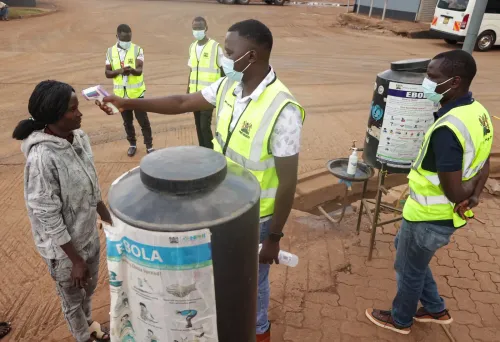
Notably, recent imported cases in Kenya and Nigeria have underscored the risk of cross-border spread, raising the spectre of a wider regional emergency. The Africa CDC warned that the current low contact follow-up rate and a high number of community deaths indicate that infections are still being detected far too late.
Children Bear a Disproportionate Burden
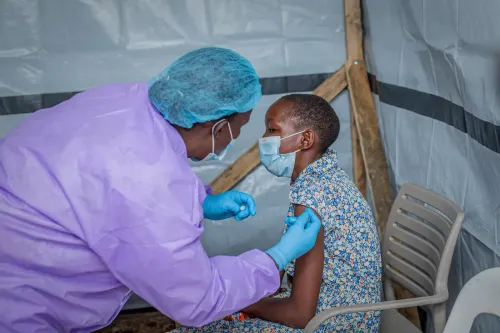
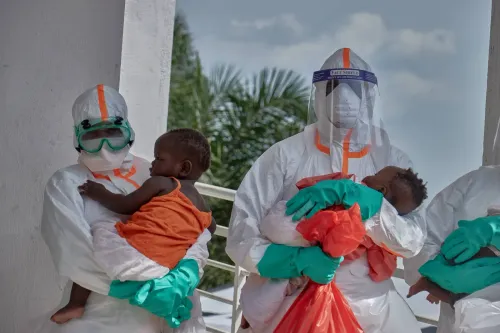
Among the most alarming findings is the outbreak's impact on children. Africa CDC data reveals that children account for more than a quarter of all confirmed cases and one-third of all deaths. The mortality rate among the youngest patients is devastating: seven out of every ten children under five with a confirmed Ebola diagnosis have died, according to the agency's figures.
This demographic toll points to critical gaps in community-level detection and paediatric care infrastructure, particularly in conflict-affected zones where health worker access is severely restricted.
Security Attacks Hamper the Response
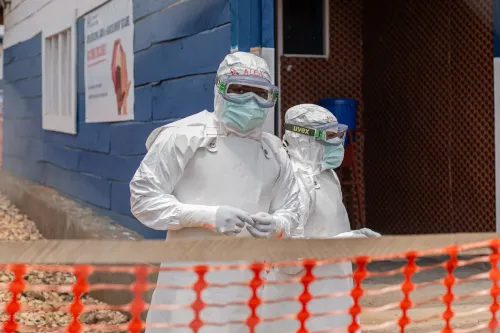
Insecurity has emerged as one of the central obstacles to controlling the outbreak. The Africa CDC documented more than 80 attacks on healthcare facilities and workers over the six-month period, hampering treatment, vaccination trials, and contact tracing alike. Ongoing armed conflict, mass displacement, and movement restrictions have compounded the already formidable logistical challenges of reaching affected communities.
The absence of a licensed vaccine or approved targeted treatment for the Bundibugyo strain of Ebola — distinct from the more extensively researched Zaire strain — has further constrained the response. The agency noted that scientific research is advancing, including evaluation of candidate treatments and vaccines, but no approved countermeasures are yet available.
Fragile Progress Made So Far
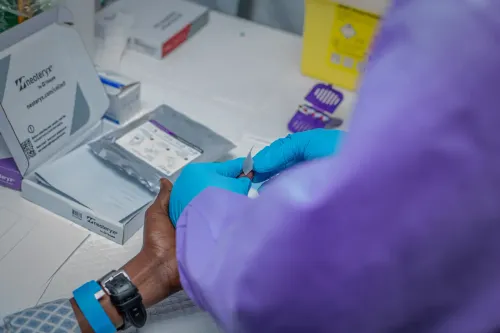
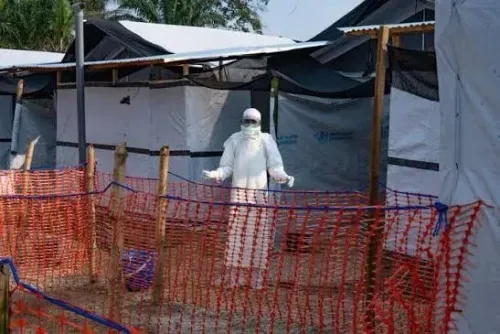
Despite the bleak picture, the Africa CDC acknowledged meaningful gains. Most of the outbreak's early epicentres have been brought under control, and rapid transmission in those areas has been halted. Close to 3,000 patients have recovered from Ebola. Diagnostic capacity has grown from just two laboratories at the outset to more than two dozen, and nearly 2,000 treatment beds are now operational across 104 treatment and transit centres.
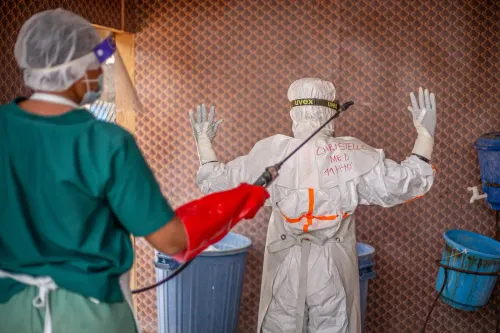
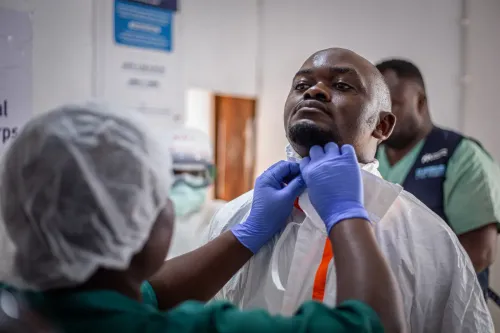
Safe and dignified burial practices — a critical factor in breaking transmission chains — now cover almost 90 per cent of registered deaths. Enhanced cross-border surveillance and coordination have also improved information-sharing among at-risk countries.
What the Agency Is Calling For
'These successes remain fragile, however, and must be protected and scaled up across the affected and at-risk areas,' the Africa CDC said in its statement. The agency stressed that fast and flexible funding must be sustained through 2027, alongside sustained political commitment, safe humanitarian access, protection of healthcare workers, and meaningful community participation.
With imported cases already detected beyond the DRC's borders and no licensed vaccine for the Bundibugyo strain, the coming months will test whether the international community can convert fragile early gains into durable containment.
Point of View
Inflexible, and conditional in ways that are lethal in conflict zones. What is frequently missing from the coverage is the Bundibugyo strain specificity: unlike the Zaire strain that dominated the 2014–2016 West African epidemic and spurred vaccine development, Bundibugyo remains largely outside the licensed-countermeasure pipeline. The child mortality rate — seven in ten under-fives dying — is not incidental; it reflects a detection system built around adult presentation patterns. Without a Bundibugyo-specific vaccine on an accelerated pathway and predictable funding through 2027, the 'fragile gains' the Africa CDC describes will almost certainly erode.
NationPress
16 Nov 2026
Frequently Asked Questions
How many Ebola cases and deaths have been recorded in the DRC outbreak?
As of the six-month mark on 16 November 2026, cumulative confirmed cases have surpassed 11,100 and deaths have exceeded 5,400, according to Africa CDC. An average of 400 to 500 new cases continue to be reported every week.
What is the Bundibugyo Ebola strain and why is it significant?
The Bundibugyo strain is a distinct species of Ebola virus for which there is currently no licensed vaccine or approved targeted treatment. Unlike the more widely researched Zaire strain, the Bundibugyo strain has limited medical countermeasures, making the ongoing DRC outbreak particularly difficult to control.
Why are children dying at such high rates in this Ebola outbreak?
Africa CDC data shows that children account for more than a quarter of confirmed cases and one-third of deaths. Seven out of ten children under five with confirmed Ebola have died, a rate that reflects late detection, constrained paediatric care in conflict zones, and a response system not optimised for identifying the disease in young children.
Has Ebola spread beyond the DRC?
Yes. Africa CDC has flagged imported cases in both Kenya and Nigeria, underscoring the risk of the outbreak crossing national borders. Enhanced cross-border surveillance and coordination are in place, but the agency has warned that containment remains fragile.
What does Africa CDC say needs to happen to end the outbreak?
The Africa CDC is calling for fast and flexible funding sustained through 2027, strong political commitment, safe humanitarian access, protection of healthcare workers, and meaningful community engagement. It also stresses the need to scale up the gains made in early epicentres to all affected and at-risk areas.