Bundibugyo Ebola outbreak: Cases top 11,000 at six-month mark, DRC remains epicentre
Synopsis
Six months into the Bundibugyo Ebola outbreak, confirmed cases have crossed 11,145 with nearly half of all patients dead. The DRC, the epicentre, is tracing only 11% of new cases back to known contacts — against a 95% target — while insecurity blocks responders. Kenya and Nigeria offer a rare counterpoint, having effectively contained their imported cases.
Key Takeaways
Confirmed Bundibugyo Ebola cases have reached 11,145 with 5,437 deaths (a 48.8% case fatality rate) at the six-month mark .
Only 3,058 patients have recovered across the multi-country outbreak.
Contact tracing in the DRC is critically deficient — just 11% of new cases linked to known contacts, against a 95% target.
Kenya has reported no new cases since 19 October and discharged its last patient and final 11 contacts on Wednesday .
Nigeria has monitored and discharged 59 of 62 identified contacts; three remain under observation.
10 additional African countries remain designated as high-risk, including South Sudan, Rwanda, Ethiopia , and Somalia .
The confirmed case count in the Bundibugyo Ebola outbreak has crossed 11,000 at the six-month mark, with the death toll continuing to climb and the Democratic Republic of the Congo (DRC) remaining the hardest-hit zone, according to the Africa Centres for Disease Control and Prevention (Africa CDC). The organisation described the outbreak as a defining test of health security across the continent.
Key Figures at the Six-Month Mark
The latest data from Africa CDC puts the total number of confirmed cases across the multi-country outbreak at 11,145, with 5,437 deaths — a case fatality rate of 48.8 per cent. Only 3,058 patients have recovered so far. The grim milestone was highlighted during an online media briefing where officials laid out both the scale of the crisis and the operational hurdles still undermining the response.
DRC Challenges: Insecurity, Healthcare Workers at Risk
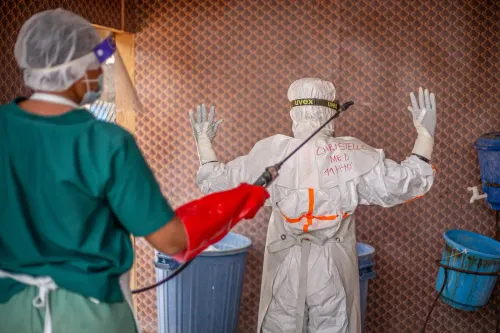
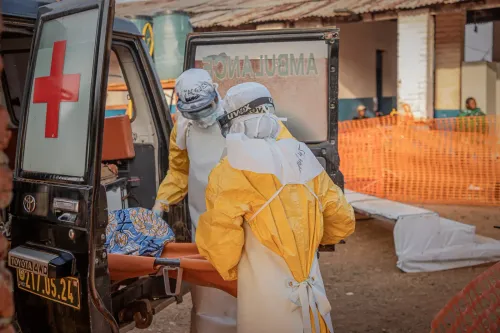
Wessam Mankoula, an Africa CDC official, identified the DRC as the concentrated epicentre of the outbreak, citing a convergence of problems that are slowing containment. These include climbing community cases and deaths, active insecurity in outbreak zones, and infections and deaths among frontline healthcare workers.
A particularly alarming gap: only about 11 per cent of new cases are currently linked to known contacts, against an international standard target of 95 per cent. That shortfall in contact tracing and listing, compounded by insecurity, represents a major operational breakdown. Africa CDC also warned that the Ebola outbreak is piling additional strain on a health system already stretched by conflict, displacement, and concurrent disease emergencies.
Relative Successes: Kenya and Nigeria Contain Spread
Not all the news from the six-month review was bleak. Africa CDC acknowledged meaningful containment progress in Kenya and Nigeria. Kenya, which reported its first imported Ebola case on 6 October, has recorded a total of nine confirmed cases and two deaths, but has reported no new cases since 19 October. On Wednesday, Kenyan health authorities announced the discharge of the country's last Ebola patient, with the final 11 contacts completing their mandatory 21-day monitoring period in good health.
In Nigeria, of 62 identified contacts, 59 have completed monitoring and been discharged, with the remaining three currently under mandatory observation, according to Mankoula.
High-Risk Countries Beyond the Four Affected Nations
Beyond the four directly affected African countries, 10 additional nations across the continent have been designated high-risk: South Sudan, Rwanda, Zambia, the Central African Republic, Tanzania, Ethiopia, Angola, the Republic of the Congo, Burundi, and Somalia. The breadth of this risk perimeter underscores how quickly a single outbreak can threaten regional health architecture.
Background: When the Emergency Was Declared
Africa CDC formally declared the Bundibugyo Ebola outbreak a public health emergency of continental security on 18 May, one day after the World Health Organisation (WHO) declared the situation a public health emergency of international concern. Six months on, the continent is still grappling with the same structural gaps the declaration was meant to mobilise resources to address.
How quickly the DRC can shore up contact tracing capacity — and whether international support can reach outbreak zones despite active insecurity — will likely determine the outbreak's trajectory in the weeks ahead.
Point of View
Yet the same structural gaps persist: insecurity, overstretched health systems, and inadequate surveillance. Kenya and Nigeria's containment shows the outbreak is not unbeatable, but those successes happened in countries with relatively functional health infrastructure and no active conflict zones. The harder question is whether the international response will scale to the DRC's reality, or whether the six-month mark will be remembered as the point where the window for control quietly closed.
NationPress
14 Nov 2026
Frequently Asked Questions
How many Ebola cases have been confirmed in the Bundibugyo outbreak?
As of the six-month mark, Africa CDC has confirmed 11,145 Bundibugyo Ebola cases across multiple African countries, with 5,437 deaths representing a case fatality rate of 48.8 per cent . Only 3,058 patients have recovered.
Why is the DRC considered the epicentre of the Ebola outbreak?
The Democratic Republic of the Congo has the highest concentration of cases and faces compounding challenges including community spread, insecurity in outbreak zones, and infections among healthcare workers. Critically, only 11 per cent of new cases are being linked to known contacts, far short of the 95 per cent standard required for effective containment.
Has any country successfully contained the Ebola outbreak?
Kenya and Nigeria have both made significant progress. Kenya reported no new Ebola cases since 19 October and discharged its last patient along with the final 11 contacts as of Wednesday . In Nigeria, 59 of 62 identified contacts have been monitored and discharged, with three still under observation.
When was the Bundibugyo Ebola outbreak declared a public health emergency?
Africa CDC declared the outbreak a public health emergency of continental security on 18 May , one day after the World Health Organisation (WHO) declared it a public health emergency of international concern.
Which countries are considered high-risk for Ebola spread beyond the directly affected nations?
Ten additional African countries have been designated as high-risk: South Sudan, Rwanda, Zambia, the Central African Republic, Tanzania, Ethiopia, Angola, the Republic of the Congo, Burundi , and Somalia . These designations reflect geographic proximity and cross-border movement patterns.