El Niño and Atlantic warming may predict Amazon heat 7 months early: Study
Synopsis
A new study has found that El Niño and tropical Atlantic warming can flag extreme Amazon heat events up to seven months before they strike — a potential game-changer for wildfire preparedness, food security, and carbon sink protection across one of the planet's most vital ecosystems.
Key Takeaways
A study published in Earth's Future found that El Niño and tropical Atlantic warming can predict extreme Amazon heat up to seven months in advance.
The clearest predictive signal occurs from March to May , tied to climate conditions observed months earlier in the Pacific and Atlantic.
Researchers from the Australian Research Council Centre of Excellence for the Weather of the 21st Century and Brazil's National Institute of Space Research led the study.
Machine learning was used to examine compound hot-dry events, which are harder to predict using conventional models.
Compound hot-dry events increase wildfire risk , threaten food security and water supplies , and reduce the Amazon's ability to absorb carbon dioxide .
Further research is needed to convert the findings into operational early-warning systems for communities and governments.
A new study published in the journal Earth's Future has found that El Niño and warming in the tropical Atlantic Ocean could serve as early-warning indicators of extreme heat events in the Amazon Basin, with some predictive signals detectable as many as seven months in advance. The finding could have significant implications for disaster preparedness across one of the world's most ecologically critical regions.
How the Research Was Conducted
The study was carried out by researchers from the Australian Research Council Centre of Excellence for the Weather of the 21st Century and Brazil's National Institute of Space Research. The team examined how major patterns of natural climate variability — particularly those in the tropical Pacific and Atlantic oceans — influence temperature and rainfall extremes across the Amazon Basin. Researchers also employed machine learning techniques to study compound extreme events, which are harder to model through conventional methods.
Key Findings on Heat Extremes
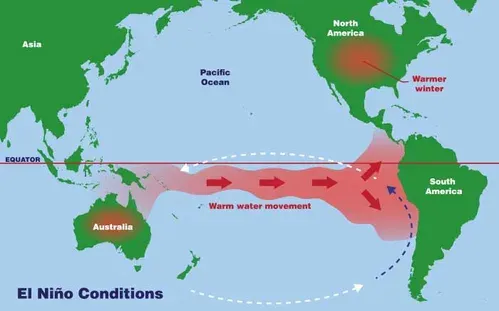
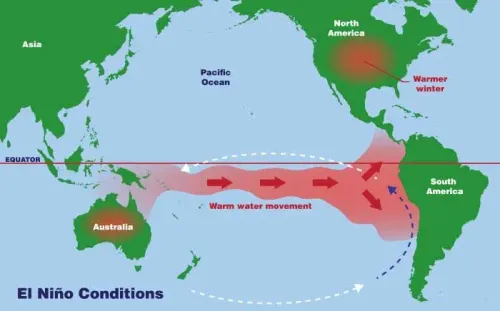
According to the study, Amazon heat extremes were more likely to occur following unusually warm conditions linked to El Niño in the tropical Pacific and warming in parts of the tropical Atlantic. The strongest long-range signal was identified during the March to May window, when extreme heat across much of the Amazon was associated with climate conditions recorded up to seven months earlier. Early-warning potential was also found for compound hot-dry events, particularly in the northern and lower central Amazon, though predictability was reportedly weaker in other sub-regions.
Why This Matters for the Amazon
Compound hot-dry events pose a serious threat to the Amazon ecosystem and the communities that depend on it. According to the researchers, such events can increase wildfire risk, damage ecosystems, and threaten human health, food security, and water supplies. Critically, they also weaken the Amazon's capacity to absorb carbon dioxide — a function central to global climate regulation. The researchers noted that hot-dry events have grown more frequent and intense in recent years, making early warning systems increasingly urgent.
Limitations and Next Steps
While the study identifies specific regions and seasons where Pacific and Atlantic climate signals could serve as predictors, the authors cautioned that further research is needed to translate these relationships into practical, operational warning systems. The use of machine learning opens new avenues for examining compound extremes, but the researchers acknowledged that predictability remains considerably weaker in certain parts of the basin. Collaborative efforts between climate scientists, governments, and local communities will be essential to convert these findings into on-the-ground preparedness tools.
Point of View
Smallholder farmers, and fire-response agencies on the ground. The Amazon's carbon-sink function is already under stress from deforestation and rising temperatures; compound hot-dry events are one of the mechanisms by which the basin risks tipping from carbon absorber to carbon emitter. This study adds scientific weight to a case that policymakers — particularly in Brazil — have been slow to act on.
NationPress
6 Oct 2026
Frequently Asked Questions
What did the new Amazon heat study find?
The study found that El Niño conditions in the tropical Pacific and warming in the tropical Atlantic can serve as early indicators of extreme heat in the Amazon Basin, with predictive signals detectable up to seven months in advance. The findings were published in the journal Earth's Future.
Who conducted the Amazon climate research?
The research was conducted jointly by scientists from the Australian Research Council Centre of Excellence for the Weather of the 21st Century and Brazil's National Institute of Space Research. Machine learning tools were used to analyse compound extreme events.
What are compound hot-dry events and why are they dangerous?
Compound hot-dry events occur when extreme heat and drought happen simultaneously, amplifying their combined impact. They increase wildfire risk, damage ecosystems, threaten food and water security, harm human health, and weaken the Amazon's capacity to absorb carbon dioxide.
When is the strongest early-warning signal for Amazon heat?
The clearest long-range signal was found during the March to May period, when extreme heat across much of the Amazon was linked to climate conditions observed as far as seven months earlier. Predictability was strongest in the northern and lower central Amazon.
Can these findings be used for real-world disaster preparedness now?
Not immediately. The study identifies regions and seasons where Pacific and Atlantic climate patterns offer predictive value, but the authors noted that further research is needed before these relationships can be turned into practical early-warning systems for communities and governments.