El Nino 2025: Drought and wildfire risk threaten New Zealand through 2027
Synopsis
Earth Sciences New Zealand warns that a potentially record-strength El Nino is taking shape in the Pacific, with dry conditions and elevated wildfire risk expected to hit northern and eastern New Zealand from September — and the effects could linger well into 2027. For a country whose agriculture and water supply are heavily weather-dependent, the stakes are significant.
Key Takeaways
Earth Sciences New Zealand confirmed on 2 July that El Nino conditions are established and could become one of the strongest on record.
Impacts are expected to be felt from September onwards , potentially persisting through 2027 .
Northern and eastern New Zealand face drier-than-usual conditions; western South Island is likely to see increased rainfall.
Wind combined with low rainfall will raise wildfire risk , particularly in eastern and northern regions under hot, low-humidity conditions.
Reduced rainfall could limit groundwater recharge, creating stress for water-reliant sectors including agriculture.
Professor Anita Wreford of Lincoln University recommends flexible, adaptive planning for at-risk industries.
A strong El Nino event building in the tropical Pacific is expected to deliver dry conditions and elevated wildfire risks across parts of New Zealand in the months ahead, according to Earth Sciences New Zealand. The agency warned on Thursday, 2 July that El Nino conditions are now established and could intensify into one of the strongest episodes on record, with potential weather impacts stretching through 2027.
What the Models Are Showing
The overwhelming majority of long-range climate models, according to Earth Sciences NZ and MetService meteorologist Jon Tunster, are pointing toward drier-than-normal conditions for northern and eastern New Zealand. At the same time, western regions — particularly on the South Island — are likely to see above-average rainfall, creating a sharply split national picture.
Tunster noted that the El Nino signal is expected to become a major influence on New Zealand's weather, 'potentially from September onwards.' He cautioned, however, that other climate drivers — including shifting temperatures in the Indian Ocean, occasional influences from Antarctica, and the broader effects of climate change — could complicate the picture beyond what El Nino alone would suggest.
Wildfire and Water Risks on the Horizon
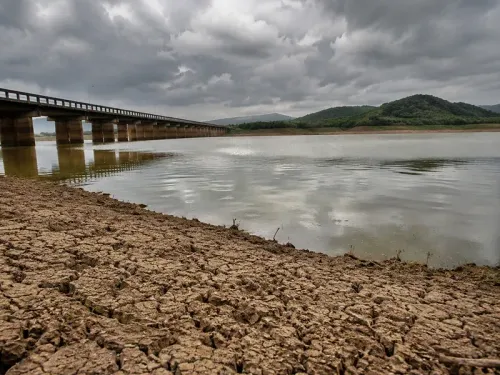
The combination of lower rainfall and stronger winds is expected to dry out soils significantly, raising wildfire danger — especially in the eastern and possibly northern parts of the country where hot, low-humidity conditions are most likely. Tunster also flagged that reduced precipitation could limit groundwater recharge, 'creating challenges for water-reliant sectors' including agriculture and municipal supply.
This comes amid a broader global pattern: 2023–24 already saw a significant El Nino cycle that disrupted weather across the Asia-Pacific region. A renewed intensification would mark back-to-back disruptions for New Zealand's climate-sensitive industries.
Expert Advice: Plan for Flexibility
Professor Anita Wreford, an applied economist at Lincoln University in New Zealand, said that while the precise impacts remain uncertain, sectors facing exposure can reduce their vulnerability by maintaining 'robust and flexible plans to adjust their practices as the impacts unfold.' Her comments reflect a growing consensus among climate economists that adaptive management — rather than fixed mitigation — offers the most practical near-term shield against El Nino variability.
Sectors Most at Risk
Agriculture, horticulture, forestry, and tourism are among the industries most exposed to the projected conditions. Farmers in eastern regions may face irrigation stress and crop losses if the dry spell materialises as forecast. Fire authorities are also expected to move to elevated readiness postures ahead of the austral summer season.
With formal impact assessments still evolving, Earth Sciences New Zealand is expected to issue updated seasonal outlooks in the coming weeks as the event's intensity becomes clearer.
Point of View
Western regions may simultaneously deal with flooding, straining civil response capacity in opposite directions at once. New Zealand's agricultural export economy — already navigating global commodity headwinds — has limited buffer against a prolonged El Nino cycle. The call for 'flexible plans' from Lincoln University is sensible but understates the structural vulnerability of small-scale farmers who lack the capital to pivot quickly.
NationPress
1 Oct 2026
Frequently Asked Questions
What is El Nino and why does it affect New Zealand?
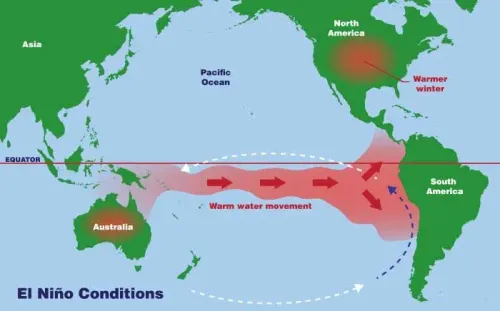
El Nino is a periodic warming of the central and eastern tropical Pacific Ocean that disrupts normal atmospheric circulation, altering rainfall and temperature patterns globally. For New Zealand, strong El Nino events typically bring drier-than-normal conditions to northern and eastern regions while increasing rainfall in western areas, particularly on the South Island.
When will El Nino impacts be felt in New Zealand?
According to Earth Sciences NZ meteorologist Jon Tunster, the El Nino event is expected to become a major influence on New Zealand's weather 'potentially from September onwards,' with effects that could extend through 2027 if the event intensifies as projected.
Which parts of New Zealand face the greatest risk?
Northern and eastern New Zealand are at highest risk of drier-than-usual conditions and elevated wildfire danger. Western regions, especially on the South Island, are more likely to experience above-average rainfall. Eastern areas are also most exposed to the hot, low-humidity conditions that increase fire risk.
Which sectors are most vulnerable to this El Nino event?
Agriculture, horticulture, forestry, and water-dependent industries face the greatest exposure. Reduced rainfall could limit groundwater recharge and increase irrigation demand, while wildfire risk threatens forestry and rural properties. Professor Anita Wreford of Lincoln University has advised affected sectors to develop flexible, adaptive management plans.
How does this El Nino compare to previous events?
Earth Sciences New Zealand has indicated this event could intensify into one of the strongest El Nino episodes on record. The 2023–24 El Nino cycle already caused significant disruption across the Asia-Pacific region, and a renewed intensification would represent back-to-back climate stress for New Zealand's weather-sensitive industries.