Ceuta migrant crisis: EU chief urges border barriers as death toll hits 72
Synopsis
With 60,000 migrants reportedly entering Ceuta in days and a death toll of 72, the EU is scrambling for a unified response — but the absence of France and Portugal from the 22-nation emergency letter reveals the bloc's deep divisions on migration solidarity. Von der Leyen's call for physical barriers marks a significant rhetorical shift for Brussels.
Key Takeaways
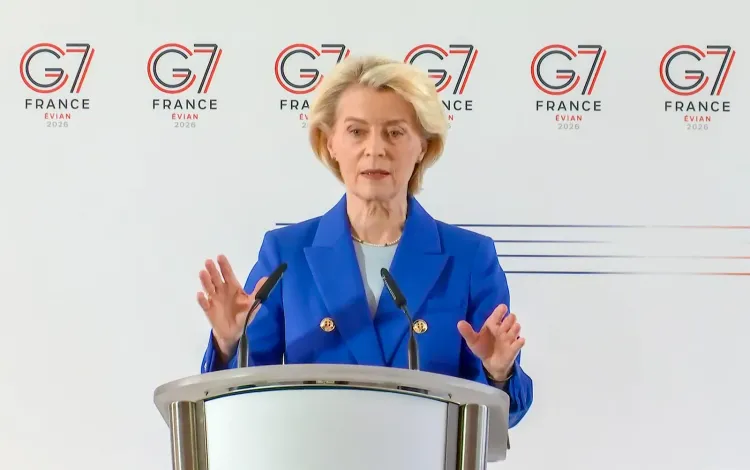
European Commission President Ursula von der Leyen called for physical border barriers and tighter controls at critical EU frontier points amid the Ceuta migrant crisis.
Local authorities reported approximately 60,000 migrants had entered Ceuta illegally in recent days by land and sea.
An emergency meeting of EU Interior Ministers was convened for 4 August , following a request signed by 22 European countries led by Italy and Denmark .
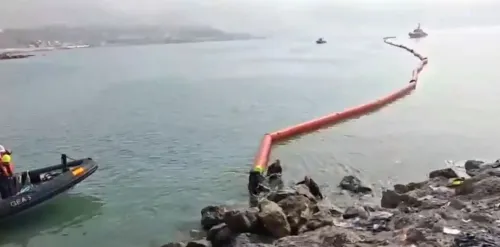
The death toll linked to the crisis rose to 72 , as Spain deployed a floating sea barrier along Ceuta's maritime border on Sunday .
Italy suspended the Schengen Agreement with Spain; France and Portugal were absent from the 22-nation letter despite bordering Spain.
Prime Minister Sanchez defended Spain's record, calling it the 'second safest external border of the EU' and demanding greater shared European responsibility.
European Commission President Ursula von der Leyen on Monday called for physical barriers and reinforced border controls at critical points along European Union (EU) frontiers, as a fast-escalating migrant crisis in Ceuta — Spain's autonomous enclave on the North African coast — pushed the bloc toward emergency action. According to local authorities, approximately 60,000 migrants had entered Ceuta illegally in recent days, by both land and sea, making it one of the most acute border emergencies the EU has faced in years.
Von der Leyen's Letter and Emergency Summit
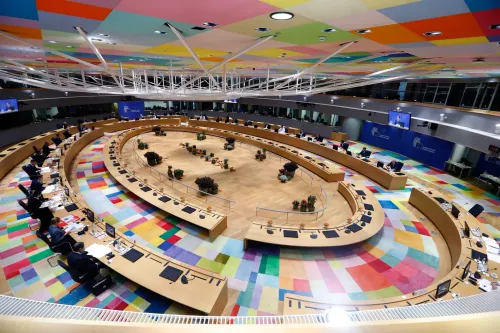
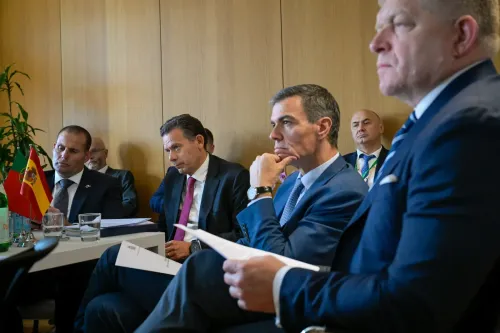
In a formal letter to Spanish Prime Minister Pedro Sanchez, von der Leyen pressed for tighter security measures at critical EU border points and referenced an ongoing EU-Morocco migration deal aimed at preventing such surges. The letter from von der Leyen followed a separate communication signed by 22 European countries, led by Italy and Denmark, though notably excluding France and Portugal — the two EU members sharing borders with Spain. An emergency meeting of EU Interior Ministers was convened for 4 August, after von der Leyen accepted the request for an urgent videoconference to assess the situation. She stressed that combating irregular migration demanded solidarity and a coordinated European response.
Spain's Position and Sanchez's Defence
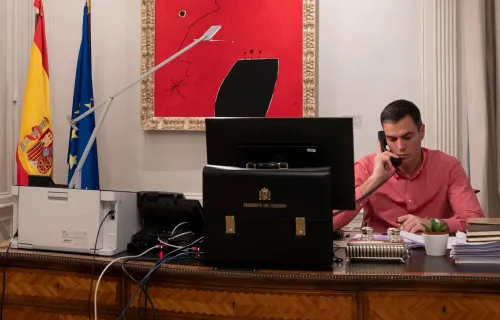
Prime Minister Sanchez used his own communication to the EU to criticise the stances of certain member states on the Ceuta crisis, while simultaneously requesting the emergency Interior Ministers' summit. He addressed the Irish Presidency directly, arguing that the security of external borders was a shared European responsibility — not Spain's burden alone. Sanchez asserted that Madrid had re-established border control, assisted arriving migrants, repatriated 'practically all' irregular arrivals, and prevented onward movement to other EU countries — all with what he described as minimal European support. He defended Spain's overall migration policy, claiming irregular entries had declined and positioning Spain as the 'second safest external border of the EU.'
Italy's Schengen Suspension and Diplomatic Friction
The crisis has exposed significant fault lines within the bloc. Italy's decision to suspend the Schengen Agreement with Spain added a layer of diplomatic tension to an already fraught situation. The absence of France and Portugal from the 22-nation letter — despite both sharing borders with Spain — was widely noted and underscored the uneven solidarity within the EU on migration matters. This is not the first time Ceuta has become a flashpoint; the enclave has historically been a key pressure point between European and North African migration routes.
Sea Barrier Deployed, Death Toll Rises
On Sunday, Spain fully deployed a floating sea barrier along the maritime border of Ceuta as authorities intensified controls. Officials also confirmed that the death toll linked to the crisis had risen to 72, underscoring the human cost of the surge. The combination of a physical sea barrier, accelerated repatriations, and the emergency EU summit signals that both Madrid and Brussels are treating this as a crisis requiring immediate, multi-pronged intervention.
What Comes Next
The 4 August emergency meeting of EU Interior Ministers is expected to determine whether the bloc moves toward a coordinated border reinforcement framework or remains divided along national interest lines. The EU-Morocco migration deal will likely be central to those discussions, with pressure mounting on Rabat to tighten controls on its side of the border. How the summit resolves — or fails to resolve — the question of shared responsibility will set the tone for EU migration policy in the months ahead.
Point of View
And the one most mainstream coverage has underplayed. Von der Leyen's call for physical barriers represents a rhetorical shift for a Commission that has historically favoured procedural over structural responses. Whether the 4 August summit produces binding commitments or another round of strongly worded communiqués will reveal whether EU migration solidarity is a principle or a talking point.
NationPress
4 Aug 2026
Frequently Asked Questions
What is the Ceuta migrant crisis?
The Ceuta migrant crisis refers to a rapid influx of approximately 60,000 migrants into Ceuta, Spain's autonomous city on the North African coast bordering Morocco, in recent days via land and sea routes. The crisis has prompted emergency EU-level discussions and a reported death toll of 72.
What did EU Commission President von der Leyen call for?
Von der Leyen called for physical barriers and stronger border controls at critical EU border points, in a letter addressed to Spanish Prime Minister Pedro Sanchez. She also accepted a request from 22 EU member states for an emergency videoconference of Interior Ministers on 4 August.
Why did Italy suspend the Schengen Agreement with Spain?
Italy suspended the Schengen Agreement with Spain in response to the Ceuta migrant crisis, citing concerns over irregular migrants potentially moving from Spain into Italian territory. The move added diplomatic tension to an already strained EU-wide debate on migration solidarity.
Which countries signed the emergency letter to von der Leyen?
Twenty-two European countries signed the letter requesting an emergency EU Interior Ministers' meeting, led by Italy and Denmark. Notably, France and Portugal — the two EU member states that share borders with Spain — did not sign the letter.
What steps has Spain taken to control the Ceuta border?
Spain deployed a floating sea barrier along Ceuta's maritime border on Sunday and tightened land controls. Prime Minister Sanchez stated that Madrid had re-established border control, assisted migrants, repatriated 'practically all' irregular arrivals, and prevented onward movement to other EU countries.