EU-India Trade and Tech Council: India joins US as Brussels' top partner
Synopsis
India has joined the US as the only countries with a formal EU Trade and Technology Council partnership — a status Brussels is using to lock in cooperation on semiconductors, AI, quantum tech, and EV charging. The move is less about trade alone and more about Europe's strategic bet that India can anchor its supply chains in a post-China-dependency world.
Key Takeaways
India is now only the second country after the United States to hold a formal EU Trade and Technology Council partnership.
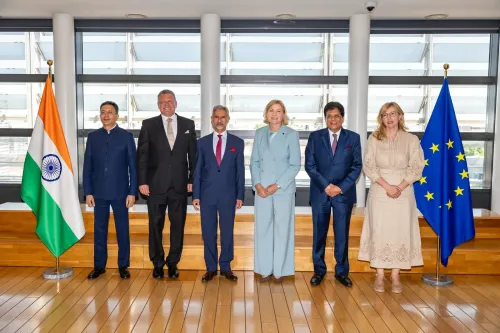
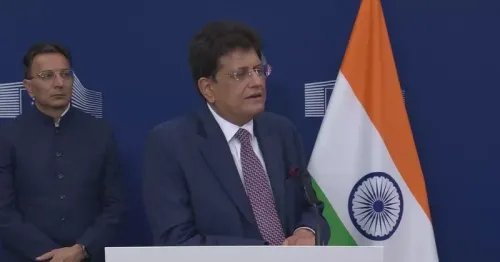
The third TTC meeting was held in Brussels on 16 July 2025 , with EAM S.
Jaishankar , Piyush Goyal , and Jitin Prasada representing India.
New cooperation areas include semiconductors , AI , 6G networks , quantum technology , supercomputers , and a joint EV charging technology centre .
India's potential participation in the Horizon Europe research programme is now on the table.
Both sides also agreed to strengthen pharmaceutical , food , and energy supply chain cooperation.
The council was first launched by Ursula von der Leyen and PM Narendra Modi in 2022 .
The European Union (EU) and India have agreed to significantly deepen their partnership on trade and technology, making India only the second country after the United States to hold this level of formal strategic engagement with Brussels, according to a report by The European Conservative. The development signals a clear shift in EU geopolitical calculus, with India now positioned as a central pillar of Europe's economic strategy beyond China.
Third EU-India Trade and Technology Council Meeting
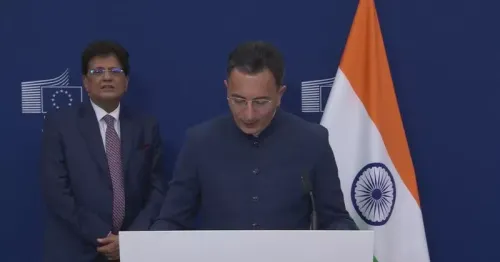
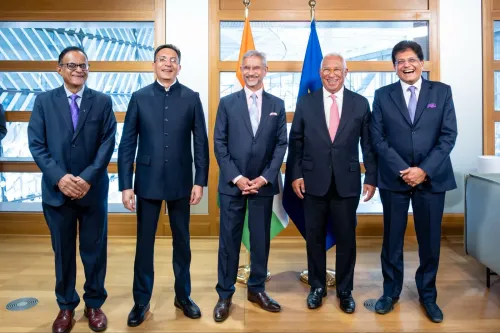
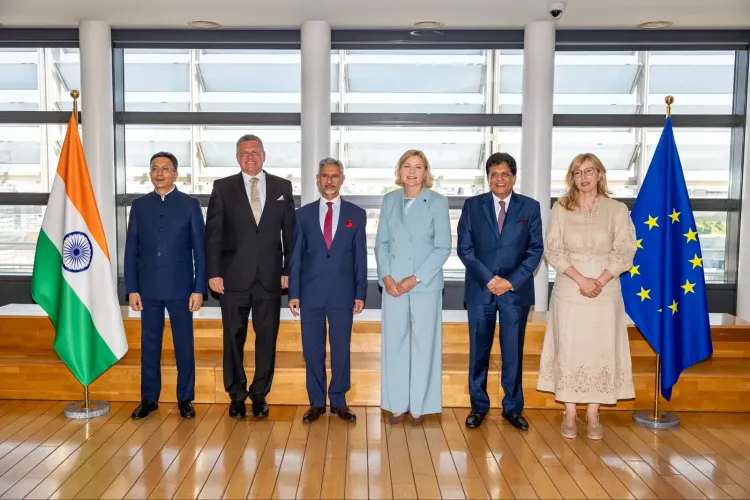
The third meeting of the EU-India Trade and Technology Council (TTC) convened in Brussels on Wednesday, 16 July 2025, bringing together senior ministers from both sides. India was represented by External Affairs Minister S. Jaishankar, Commerce and Industry Minister Piyush Goyal, and Minister of State for Electronics and Information Technology Jitin Prasada. The European Commission delegation was led by Henna Virkkunen, Maros Sefcovic, and Ekaterina Zaharieva.
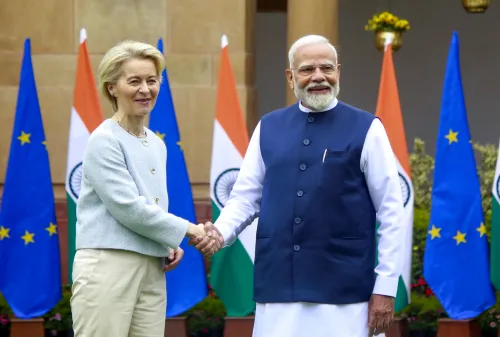
The council was originally launched in 2022 by European Commission President Ursula von der Leyen and Prime Minister Narendra Modi. Both sides agreed at Wednesday's meeting to expand its mandate before the end of the year.
What the Expanded Partnership Covers
The new agenda is broad and technology-heavy. Agreed areas include opening talks on India's participation in the Horizon Europe research programme, establishing a joint centre for electric vehicle (EV) charging technology, and launching an alliance of high-tech start-ups. Cooperation is also set to expand across semiconductors, artificial intelligence, supercomputers, quantum technology, and 6G networks.
Beyond technology, both sides committed to closer coordination on pharmaceutical, food, and energy supply chains — sectors where European dependence on single-source suppliers has drawn scrutiny since the Covid-19 pandemic and the Russia-Ukraine conflict.
Why Brussels Is Betting on India
According to the report, the EU is drawn to India's rapidly growing industrial base, its large consumer population, and its strategic autonomy — a foreign policy posture that keeps New Delhi independent of Washington, Beijing, and Moscow. This makes India a uniquely attractive partner for a Europe seeking supply chain diversification without full alignment with any single power.
Notably, the report by Javier Villamor in The European Conservative frames this as one of Brussels' most significant diplomatic and commercial investments in recent years. The EU's pivot toward India is widely read as part of a broader de-risking strategy that accelerated after Russia's invasion of Ukraine exposed the bloc's vulnerabilities in energy and defence supply chains.
India as a Peer, Not a Junior Partner
A key theme emerging from the meeting is the framing of India not as a subordinate ally but as a major power with independent interests. The report notes that how the two sides navigate their differing priorities — on trade barriers, data governance, and geopolitical alignments — will ultimately define the durability of this partnership.
This comes amid ongoing EU-India free trade agreement negotiations, which have seen repeated delays over market access and intellectual property disputes. The TTC framework is seen as a way to build trust and momentum on technology cooperation even as the broader trade talks remain complex. How both sides translate Wednesday's agreements into binding commitments will be closely watched by industry and policymakers alike.
Point of View
But the real test lies in execution. Brussels has a history of ambitious partnership frameworks that stall on market access disputes — and EU-India free trade talks have been deadlocked for years over precisely those fault lines. The technology cooperation agenda is genuinely expansive, but India's inclusion in Horizon Europe and semiconductor supply chains will require regulatory alignment that neither side has fully committed to. The EU's de-risking instinct is sound; whether India can absorb and deliver on this level of partnership without the institutional depth of a US or South Korea remains the unresolved question.
NationPress
16 Oct 2026
Frequently Asked Questions
What is the EU-India Trade and Technology Council?
The EU-India Trade and Technology Council (TTC) is a formal bilateral platform launched in 2022 by European Commission President Ursula von der Leyen and Prime Minister Narendra Modi to coordinate on trade, technology, and supply chain issues. India is only the second country after the United States to have this level of structured partnership with Brussels.
What was agreed at the third EU-India TTC meeting?
At the third TTC meeting in Brussels on 16 July 2025, both sides agreed to expand cooperation on semiconductors, AI, 6G, quantum technology, supercomputers, and EV charging infrastructure. They also agreed to explore India's participation in the Horizon Europe research programme and to strengthen pharmaceutical, food, and energy supply chains.
Why is the EU deepening ties with India now?
The EU is diversifying its strategic and economic partnerships amid concerns over over-dependence on China for supply chains and technology. India's growing industrial strength, large population, and independent foreign policy posture make it an attractive partner for Brussels as it seeks alternatives that do not require full alignment with Washington or Beijing.
Who represented India at the Brussels TTC meeting?
India was represented by External Affairs Minister S. Jaishankar, Commerce and Industry Minister Piyush Goyal, and Minister of State for Electronics and Information Technology Jitin Prasada at the third EU-India TTC meeting in Brussels.
How does India's EU partnership compare to that of the United States?
India is now only the second country after the United States to hold a formal Trade and Technology Council partnership with the EU. This places India in a unique diplomatic category, signalling that Brussels views New Delhi as a peer-level strategic partner rather than a developing-world beneficiary.