Should the EU Reevaluate Pakistan's GSP+ Status Due to Human Rights Violations?
Synopsis
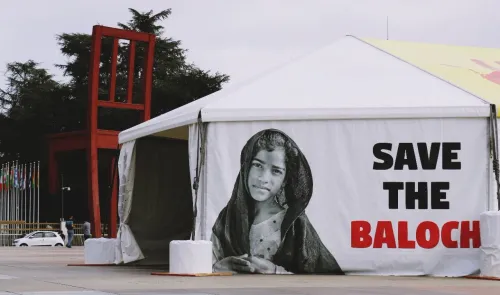
The Baloch National Movement urges the EU to reassess Pakistan's GSP+ status due to severe human rights abuses in Balochistan. With alarming evidence presented at a Brussels conference, the call for action highlights the urgent need for accountability and change.
Key Takeaways
BNM presents evidence of human rights abuses in Balochistan.
Call for EU reassessment of Pakistan's GSP+ status.
Documented cases of enforced disappearances and targeted violence.
Balochistan's plight reflects a broader issue of political repression .
Importance of international response to uphold human rights standards .
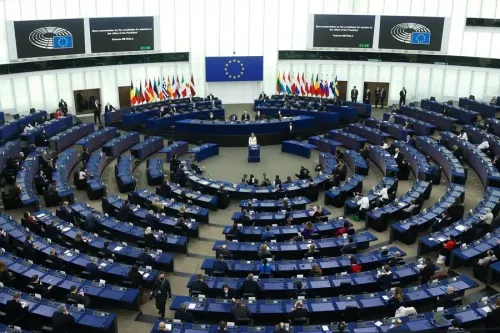
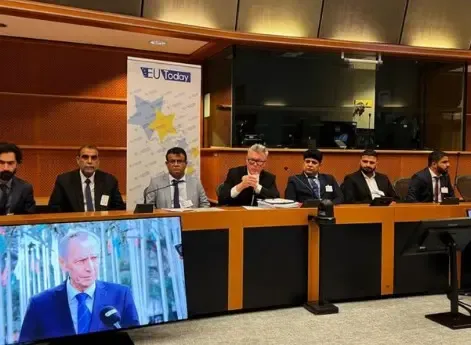
Brussels, Dec 6 (NationPress) The Baloch National Movement (BNM) participated in a conference at the European Parliament, where they presented compelling evidence of human rights violations occurring in Balochistan. They are calling for a reassessment of Pakistan's preferential trade status under the Generalised Scheme of Preferences Plus (GSP+) due to these serious abuses.
Hosted by the EU Today, this conference explored the future of Pakistan's access to the European market under GSP+.
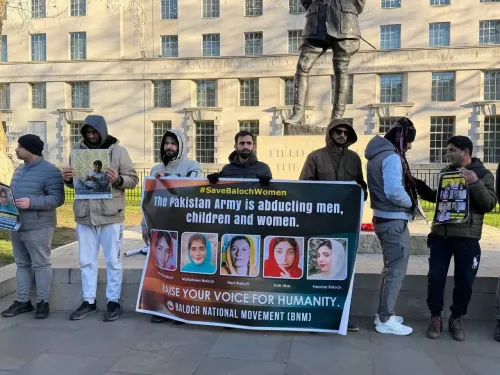
During the event, Naseem Baloch, Chairman of the BNM, remarked that the security establishment in Pakistan has stepped up its campaign of repression in Balochistan. Peaceful political leaders, students, human rights defenders, and activists have been violently targeted to silence an entire generation.
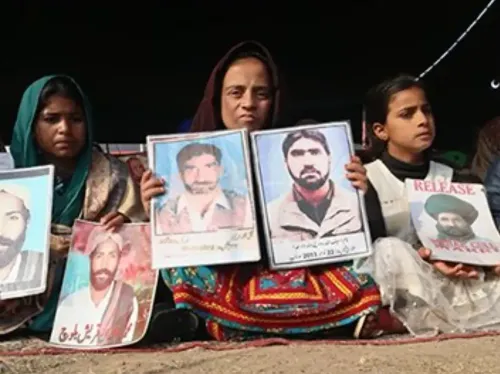
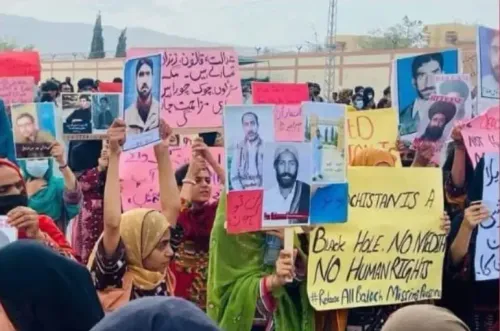
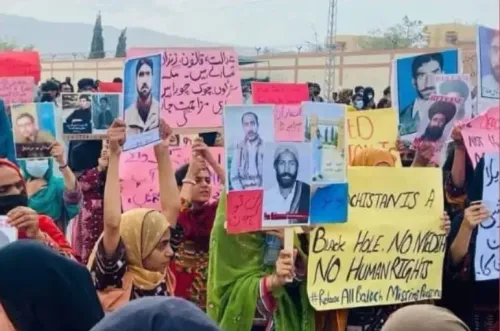
"In just the last three months of 2025, 234 new cases of enforced disappearances have been recorded. Women like Nasreena Baloch and Mahjabeen Baloch, who were abducted earlier this year, are still missing. Thousands of Baloch civilians have been forcibly disappeared over the past two decades, with many killed while in custody. Mass graves have been discovered in various regions over the last decade. In Dasht, near the provincial capital Quetta, a cemetery known as the 'cemetery of the unknowns' holds hundreds of unidentified bodies—sons, brothers, fathers who vanished and returned as nameless remains," Naseem stated.
He emphasized that this is "not merely a narrative constructed by political movements" but has also been documented by UN working groups, Amnesty International, frontline defenders, and major international media outlets.
"The world cannot claim ignorance—the evidence is irrefutable," he added.
The BNM chairperson further noted that the situation has escalated in recent months, with Pakistan deploying armed drones over Balochistan, targeting civilian areas. In Zehri district, drone strikes resulted in the deaths of four children and several other civilians.
"Villages that once feared checkpoints now fear the sky itself. This is not counterterrorism; it is the deployment of advanced weaponry against an unarmed population—this constitutes a war crime," Naseem asserted.
The Baloch leader also indicated that while Balochistan suffers the most, other marginalized groups—Pashtuns, Sindhis, Christians, Ahmadis, Hindus, and the people of Pakistan-occupied Gilgit-Baltistan and Pakistan-occupied Kashmir—are experiencing similar patterns of enforced disappearances, arbitrary detention, and political repression.
"This is not just a regional issue; it is structural," he stressed.
Highlighting the crucial role of the European Union, Naseem pointed out that Pakistan continues to benefit from GSP+, a mechanism intended to encourage adherence to human rights, labor standards, and effective governance, yet Pakistan has consistently violated these conditions.
"I urge this Parliament to take seriously the findings of UN working groups and the appeals from Amnesty International and Front Line Defenders. I implore you to reconsider Pakistan's GSP+ status based on the overwhelming evidence presented," he concluded.
Point of View
It is imperative to recognize the profound implications of the ongoing human rights violations in Balochistan. The evidence presented by the BNM serves as a critical reminder of the urgent need for accountability and the role of international bodies like the EU in promoting human rights globally.
NationPress
21 Sept 2026
Frequently Asked Questions
What is the Generalised Scheme of Preferences Plus (GSP+)?
The GSP+ is a trade mechanism that allows developing countries to benefit from reduced tariffs on exports to the EU, provided they adhere to specific human rights and labor standards.
What are the primary human rights violations reported in Balochistan?
Reports indicate widespread enforced disappearances, arbitrary detentions, and targeted violence against political leaders and activists in Balochistan.
Why is the EU's role significant in this context?
The EU has the power to influence trade relations and encourage compliance with human rights standards through mechanisms like GSP+.
What evidence supports the claims of human rights abuses in Balochistan?
The BNM has provided documentation, including testimonies and reports from UN working groups and human rights organizations such as Amnesty International.
What actions are being called for regarding Pakistan's trade status?
There is a call for the EU to reassess Pakistan's GSP+ status in light of the ongoing and systematic human rights violations.