EU's Pakistan outreach undermines its stance on cross-border terrorism
Synopsis
A geopolitical analyst writing in the Times of Israel argues that the EU's visit to Islamabad and its 'balance' framing at the 8th EU-Pakistan Strategic Dialogue handed Pakistan diplomatic legitimacy without accountability — directly contradicting Europe's stated counterterrorism values and risking a credibility deficit with India at a critical moment for EU-India ties.
Key Takeaways
Italian geopolitical expert Sergio Restelli argues the EU is undermining its own counterterrorism stance through its outreach to Pakistan .
The joint statement from the 8th EU-Pakistan Strategic Dialogue drew a parallel between Jammu and Kashmir and Ukraine , which critics say overlooks Pakistan's alleged support for cross-border terrorism.
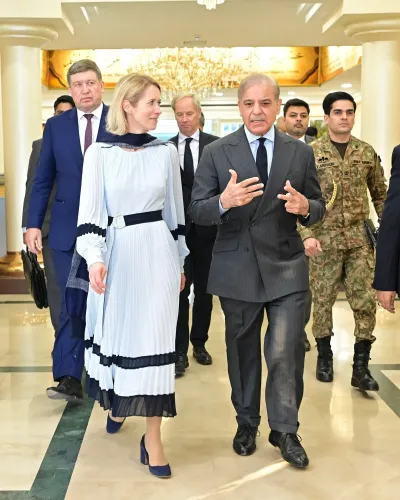
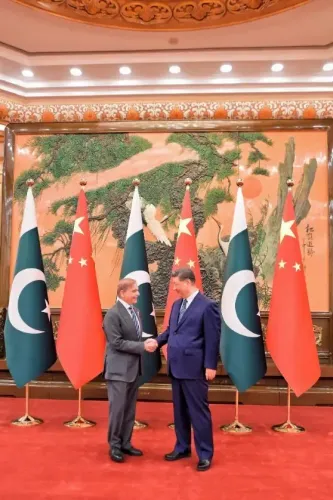
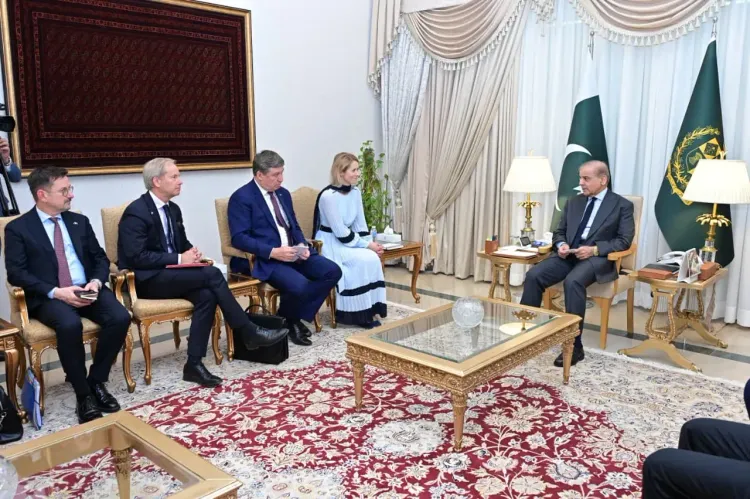
EU High Representative Kaja Kallas visited Islamabad without, according to Restelli, any visible insistence on accountability for Pakistan's alleged role in regional extremism.
The EU is simultaneously pursuing an EU-India Free Trade Agreement and a security and defence partnership with New Delhi , creating what analysts describe as a strategic contradiction.
Restelli argues a credible EU policy must first condemn terrorism and demand accountability before urging de-escalation — otherwise restraint becomes a burden on the victim.
Europe increasingly views India as a strategic partner, yet continues to engage Pakistan through a familiar crisis-management playbook it appears reluctant to abandon, according to a geopolitical analysis published in the Times of Israel. The report argues that the European Union's dual posture — emphasising security cooperation with New Delhi while reverting to the language of 'balance' and 'restraint' with Islamabad — is eroding the bloc's credibility on counterterrorism.
The Core Contradiction
Sergio Restelli, an Italian political advisor, author, and geopolitical expert, argues that the EU undermines its own moral stance on terrorism by drawing a parallel between the Indian Union Territory of Jammu and Kashmir and Ukraine in the joint statement issued after the 8th Pakistan-European Union Strategic Dialogue held in Islamabad. In doing so, critics argue, the EU overlooks Pakistan's alleged support for cross-border terrorism in pursuit of diplomatic optics.
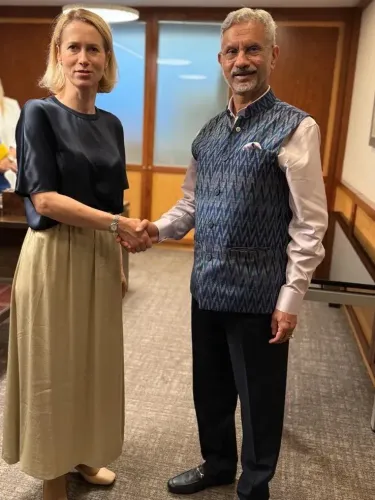
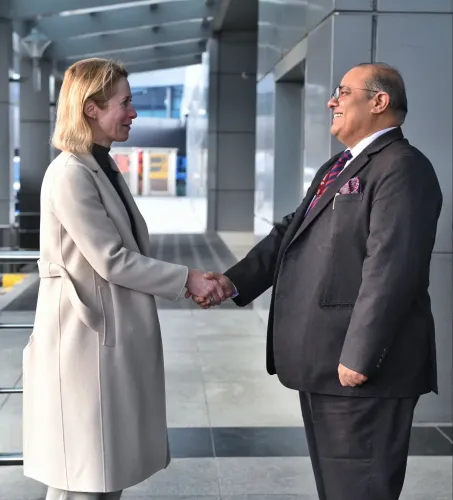
Restelli wrote that the recent visit of EU High Representative for Foreign Affairs and Security Policy and Vice-President Kaja Kallas to Islamabad risks reinforcing a damaging perception in New Delhi: that Europe seeks India's market access, geopolitical weight, and role in balancing China, but remains hesitant when it comes to addressing India's legitimate concerns on terrorism.
What the EU Wants From India
According to Restelli, Europe is simultaneously pursuing an EU-India Free Trade Agreement (FTA) — partly to offset potential losses from shifts in Washington — while instinctively reverting to the old Pakistan dossier whenever tensions on the subcontinent rise. This transactional approach, he argues, is strategically incoherent.
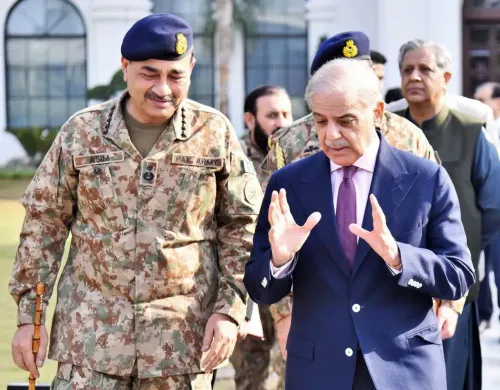
'Earlier this year, Kallas said the EU would proceed with a security and defence partnership with India, a significant step in Europe's Indo-Pacific posture. Yet on the subcontinent's most sensitive security question, the EU continues to behave as though India's counterterror concerns are merely one side of a bilateral quarrel. That is not strategic autonomy. It is strategic confusion. Europe is back again pacifying dictators like it once did. While verbally it tries to proclaim strategic autonomy, it panders to Asif Munir just because it must seem to have a seat at the Iran table,' Restelli stated.
The Kallas Visit: Legitimacy Without Cost
Restelli was pointed in his critique of the Kallas visit to Islamabad, arguing that the issue was not the engagement itself but the absence of visible accountability demands. 'A serious European message would have been clear: Pakistan cannot claim partnership with Europe while the infrastructure of extremism, denial and proxy violence remains a recurring feature of South Asian instability. Instead, the public choreography gave Pakistan what it most craves: legitimacy without cost,' he wrote.
This comes amid heightened tensions on the subcontinent following a series of cross-border incidents, making the EU's framing of the dialogue all the more consequential for regional security dynamics.
What a Credible EU Policy Would Look Like
Restelli outlined what he described as the correct sequencing for a serious European policy: 'condemn terrorism, demand accountability, call on Pakistan to dismantle terror networks, affirm India's right to protect its citizens within international law, and then urge de-escalation.' Without this structure, he warned, restraint risks becoming a burden borne primarily by the victim rather than a shared obligation.
Whether the EU recalibrates its South Asia posture in line with its stated values on counterterrorism will be a key test of its credibility as a strategic actor in the Indo-Pacific — and of the depth of its partnership with India.
Point of View
Its Indo-Pacific weight, and its role as a China counterbalance, but it keeps reaching for the old 'balance and restraint' script whenever Pakistan is in the room. That script may have had utility in a different era; today, it reads as moral inconsistency to New Delhi. The comparison of Jammu and Kashmir to Ukraine in a joint EU-Pakistan statement is not a diplomatic footnote — it is a signal about how seriously the EU takes India's security concerns. If Europe wants a genuine strategic partnership with India, it will need to retire the equivalence framing and make accountability for cross-border terrorism a non-negotiable precondition for engagement with Islamabad, not an afterthought.
NationPress
21 Oct 2026
Frequently Asked Questions
What did the 8th EU-Pakistan Strategic Dialogue conclude?
The dialogue, held in Islamabad, produced a joint statement that drew a parallel between the Indian Union Territory of Jammu and Kashmir and Ukraine — a framing that analysts argue overlooks Pakistan's alleged support for cross-border terrorism and undermines the EU's stated counterterrorism principles.
Why is Kaja Kallas's visit to Islamabad controversial?
EU High Representative Kaja Kallas visited Islamabad without, according to geopolitical analyst Sergio Restelli, any visible insistence on accountability for Pakistan's alleged role in regional extremism. Critics argue the visit granted Pakistan diplomatic legitimacy without any corresponding cost or conditionality.
How does this affect EU-India relations?
The EU is simultaneously pursuing an EU-India Free Trade Agreement and a security and defence partnership with New Delhi. Analysts warn that Europe's 'balance' framing on Pakistan risks reinforcing a perception in India that the EU prioritises market access and China-balancing over addressing India's legitimate counterterrorism concerns.
What does Sergio Restelli argue the EU should do differently?
Restelli argues the EU should follow a clear sequencing: condemn terrorism, demand accountability, call on Pakistan to dismantle terror networks, affirm India's right to protect its citizens under international law, and only then urge de-escalation. Without this order, he warns, restraint becomes a burden on the victim.
What is the broader strategic context of this debate?
The debate comes as Europe seeks to strengthen its Indo-Pacific presence and reduce dependence on Washington, making India a critical partner. Analysts argue that the EU's credibility as a strategic actor in the region depends on aligning its actions on counterterrorism with its stated values, particularly in its engagement with South Asia.