FAA orders SpaceX mishap probe after Starship Flight 12 booster failure
Synopsis
The FAA has grounded the Starship Super Heavy booster pending a formal mishap probe after Flight 12's boostback burn failed over the Gulf of Mexico. With Starship serving as NASA's Artemis Moon lander, the investigation's outcome could directly affect the timeline for returning American astronauts to the lunar surface.
Key Takeaways
The FAA has ordered SpaceX to conduct a mishap investigation into the Super Heavy booster following an anomaly on 22 May 2025 .
The booster's boostback burn failed to fully ignite after stage separation, resulting in a hard splashdown in the Gulf of Mexico .
A return to flight requires FAA approval of SpaceX's final report and all corrective actions.
No injuries or damage to public property were reported from the incident.
Starship's upper stage successfully completed its mission, splashing down in the Indian Ocean and deploying 22 payloads including Starlink simulators.
Starship is designated as the lunar landing system for NASA's Artemis programme , raising the stakes for any prolonged grounding.
The US Federal Aviation Administration (FAA) has ordered SpaceX to conduct a formal mishap investigation into the Super Heavy booster following an anomaly during the 12th flight test of the Starship rocket. The agency confirmed on Wednesday that the incident occurred during the booster's return flight over the Gulf of Mexico after stage separation on 22 May 2025.
What Went Wrong
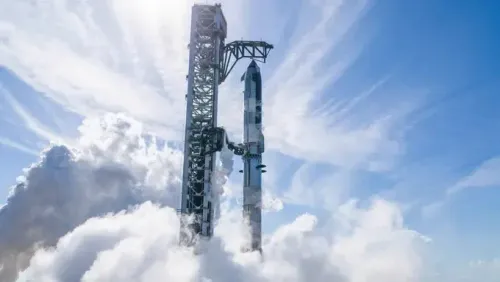
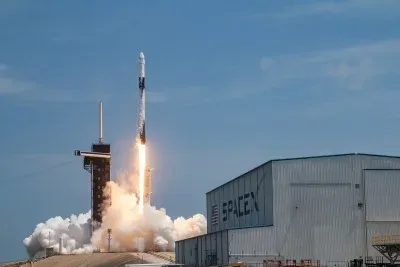
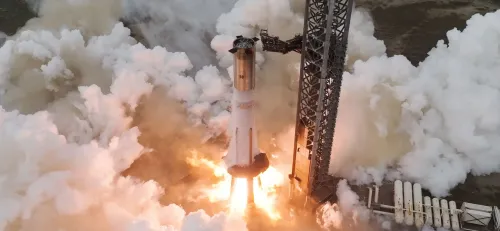
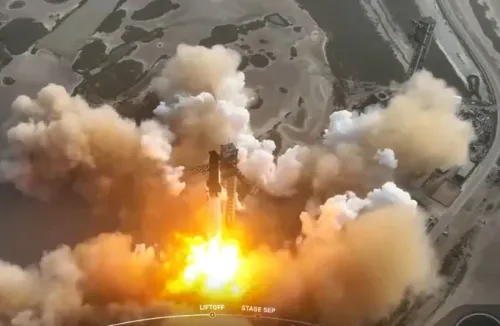
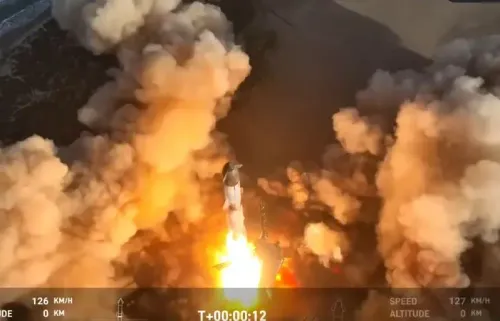
Starship lifted off from SpaceX's Starbase facility in Texas at 5:30 pm Central Time (2230 GMT) on 22 May. All 33 Raptor 3 engines on the Super Heavy booster ignited successfully at liftoff, though one engine shut down prematurely during ascent. After a successful first-stage climb, the upper stage ignited its six Raptor engines during the hot-staging manoeuvre and continued toward space.
The trouble began after stage separation. The Super Heavy booster executed a directional flip manoeuvre and attempted its boostback burn — but not all planned engines ignited, resulting in only a partial boostback burn that terminated prematurely. The booster later attempted to reignite engines for the landing burn before making a hard splashdown in the Gulf of Mexico.
FAA's Oversight Role
The FAA said the mishap investigation is designed to enhance public safety, determine the root cause of the booster anomaly, and identify corrective measures to prevent a recurrence. The agency will oversee the entire process and must approve SpaceX's final report along with any corrective actions before clearing the vehicle to fly again.
Critically, a return to flight for the Starship Super Heavy booster will depend on the FAA concluding that no system, process, or procedure linked to the mishap poses a threat to public safety. No injuries or damage to public property were reported from the incident, the FAA confirmed.
Upper Stage Successes
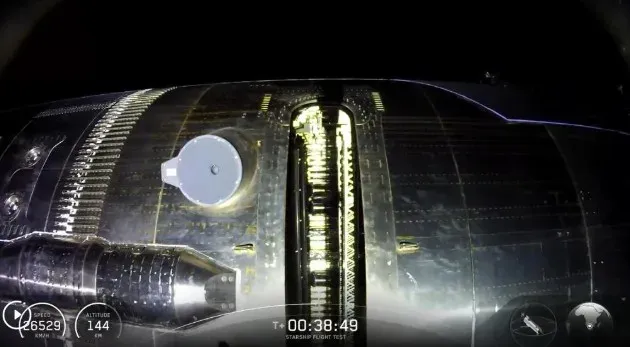
Despite the booster anomaly, Starship's upper stage performed largely as planned. It successfully entered its coast phase even after losing one of its six engines, demonstrating what SpaceX described as its engine-out capability. During the coast phase, the vehicle deployed 20 Starlink simulators and two modified Starlink satellites equipped to capture imagery of the vehicle in flight.
The two modified satellites transmitted images of Starship's thermal protection system back to mission controllers. All 22 payloads remained on the same suborbital trajectory and were expected to burn up during atmospheric reentry. Approximately one hour after liftoff, Starship re-entered Earth's atmosphere, collecting data on heatshield performance and structural integrity. The vehicle later splashed down in the Indian Ocean as planned, completing its landing flip manoeuvre and landing burn with two functioning Raptor engines.
Mission Context and What's at Stake
Flight 12 marked the debut of the next-generation Starship spacecraft and Super Heavy booster, featuring upgraded Raptor engines and a newly designed launch pad at Starbase. The primary objective was to evaluate, for the first time, the upgraded vehicle's performance across propulsion, structure, and ground infrastructure in a live-flight environment.
The original launch attempt, scheduled for 21 May, was scrubbed after a hydraulic pin holding the launch tower arm failed to retract. SpaceX founder Elon Musk confirmed the technical issue publicly.
The stakes are considerable: Starship is designated as the lunar landing system for NASA's Artemis programme, which aims to return astronauts to the Moon and lay the groundwork for eventual human missions to Mars. Any extended grounding tied to the FAA investigation could ripple into Artemis mission timelines.
Point of View
But its timing matters: Starship is NASA's only contracted lunar lander for Artemis, and each investigation cycle has historically added months to the programme's already-stretched schedule. What is notable in Flight 12 is the split outcome — the upper stage performed well while the booster failed on a core manoeuvre — suggesting that SpaceX's iterative development model is producing uneven maturity across vehicle subsystems. The boostback burn is not a peripheral function; it is central to the full-reusability model that makes Starship economically viable. Until that system demonstrates consistent reliability, the case for Starship as a routine launch platform remains aspirational rather than operational.
NationPress
21 Oct 2026
Frequently Asked Questions
What is the FAA mishap investigation into Starship Flight 12?
The FAA has ordered SpaceX to investigate an anomaly involving the Super Heavy booster during Starship's 12th flight test on 22 May 2025. The booster's boostback burn failed to fully ignite after stage separation, causing a hard splashdown in the Gulf of Mexico instead of a controlled landing.
Will Starship be grounded because of this investigation?
The Super Heavy booster cannot return to flight until the FAA approves SpaceX's final mishap report and any corrective actions. The FAA must determine that no system, process, or procedure linked to the anomaly poses a public safety risk before clearing the vehicle.
Was anyone hurt during the Starship Flight 12 incident?
No. The FAA confirmed that no injuries or damage to public property were reported following the booster mishap over the Gulf of Mexico.
What did Starship's upper stage achieve during Flight 12?
Despite losing one of its six Raptor engines, the upper stage completed its planned coast phase, deployed 20 Starlink simulators and two modified Starlink satellites, re-entered the atmosphere to collect heatshield data, and splashed down in the Indian Ocean as planned.
Why does the Starship investigation matter for NASA?
Starship is designated as the lunar landing system for NASA's Artemis programme, which aims to return astronauts to the Moon. Any extended grounding resulting from the FAA investigation could delay Artemis mission timelines.