Fazlur Rehman invokes 1971 surrender to warn Asim Munir on Pakistan's future
Synopsis
Maulana Fazlur Rehman did not merely criticise Asim Munir — he reached back to 1971, the day before 93,000 Pakistani troops surrendered in Dhaka, to argue that the army's current bravado sounds exactly like General Yahya Khan's final speech. His warning of 'geographical changes' and the alleged sidelining of Parliament make this one of the sharpest public challenges to Pakistan's military establishment in recent memory.
Key Takeaways
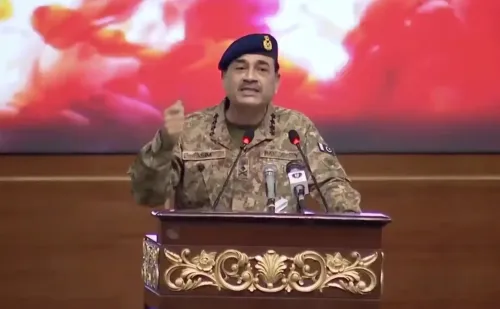
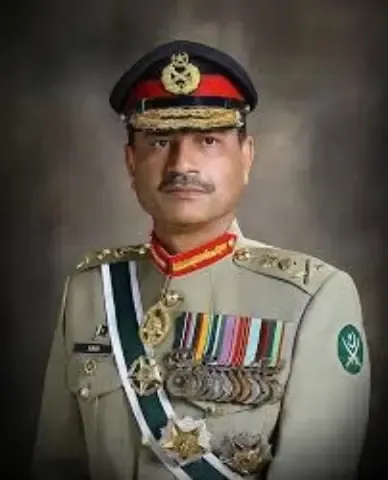
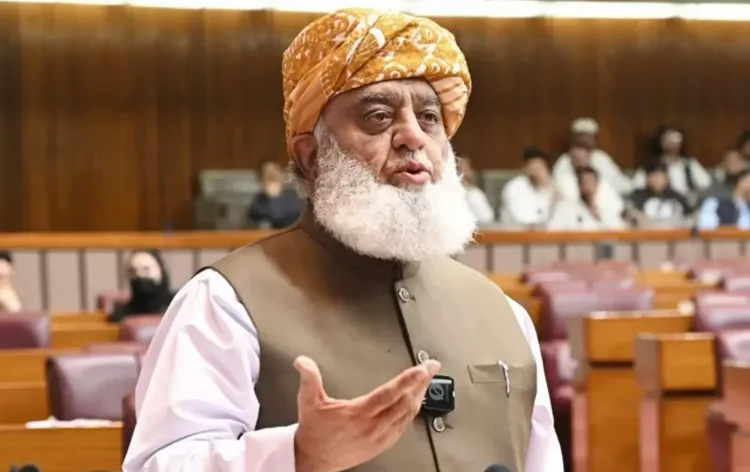
JUI-F chief Maulana Fazlur Rehman attacked Army Chief Field Marshal Asim Munir at a convention in Peshawar on 24 August .
He invoked General Yahya Khan's pre-surrender speech of December 1971 , warning that the current military's 'big words' echo that moment.
The 1971 war ended with approximately 93,000 Pakistani troops surrendering in Dhaka on 16 December 1971 , leading to the creation of Bangladesh .
Rehman warned that 45-46 years of bloodshed in the region is 'a sign of geographical changes.' He alleged that constitutional powers belonging to Parliament have been concentrated in the hands of a single individual in the military establishment.
Rehman called on the opposition to unite inside Parliament to resist what he called a fundamental shift in constitutional authority.
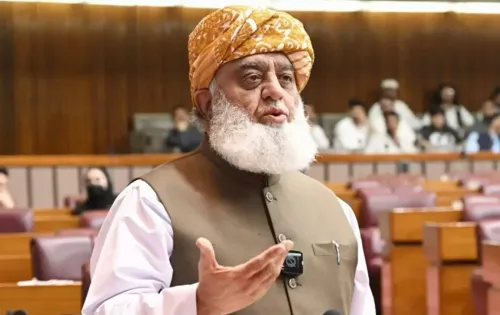
Jamiat Ulema-e-Islam (F) chief Maulana Fazlur Rehman delivered a stinging rebuke of Pakistan Army Chief Field Marshal Asim Munir on 24 August, invoking the country's catastrophic defeat in the 1971 war with India to warn that unchecked military power and prolonged internal oppression could once again trigger irreversible geographical consequences. Speaking at a JUI-F convention in Peshawar, Rehman drew a direct line between the army's current posture and the hollow declarations made by Pakistan's military establishment on the eve of its most humiliating surrender.
The 1971 Parallel
Rehman recalled how then President and military ruler General Yahya Khan had addressed the army just one day before the 16 December 1971 capitulation in Dhaka, vowing to fight in 'streets, deserts, fields, factories, mountains.' Within 24 hours, approximately 93,000 Pakistani troops had laid down their arms — the largest military surrender since World War II — and Pakistan's eastern wing had ceased to exist, giving birth to Bangladesh.
'We heard these big words then, too,' Rehman said pointedly, implying that the current military leadership's assertions of invincibility carry the same hollow ring. The comparison was unmistakable: a senior opposition leader publicly equating the present army chief's rhetoric with that of a commander who presided over national dismemberment.
Warning of Geographical Change
Rehman went further, connecting decades of regional bloodshed to the possibility of fresh territorial realignments. 'When the revolution came in Afghanistan in 1989, and the war started... It's been 45-46 years; blood has been flowing for about half a century. When blood flows like this, then it is a sign of geographical changes,' he said.
The warning carries weight given Pakistan's ongoing security crisis in Khyber Pakhtunkhwa and Balochistan, where militant activity and civil unrest have persisted for years. Rehman stopped short of specifying which geography he believed was at risk, but the implication — directed squarely at the military establishment — was clear.
Attack on Concentration of Power
Beyond the historical parallel, Rehman launched a constitutional broadside against Asim Munir, alleging that powers belonging to Parliament and the federal government have effectively been transferred to a single individual within the military establishment. 'You may be the Army Chief, Chief of Defence Forces, Field Marshal too — we have no objection to that — but the powers that should belong to Parliament have been handed over to a single individual in the establishment,' he said.
He further alleged that Parliament risks being sidelined from future lawmaking and constitutional amendments, warning: 'Bringing the government onto their path and keeping it under the boot may be easier for them.' Rehman called on the opposition to unite inside Parliament to resist what he described as a fundamental and dangerous shift in constitutional authority.
Public Distress at the Centre
Rehman also challenged the military's claim to be the nation's guardian, questioning whether projections of strength served the ordinary Pakistani. 'Why are you putting the country and the people to the test? Why are you having fun when your public is suffering?' he asked the convention.
His remarks come at a moment of acute economic strain in Pakistan, with inflation, unemployment, and energy costs continuing to squeeze households across the country. Critics argue that the military's political dominance has crowded out civilian accountability mechanisms that might otherwise address these pressures.
What Happens Next
Rehman's speech signals a hardening of opposition rhetoric ahead of what many Pakistani political observers see as a critical period for civil-military relations. Whether the broader opposition — including the Pakistan Tehreek-e-Insaf (PTI) and other parties — coalesces around this line of resistance remains to be seen. The military establishment has not publicly responded to Rehman's remarks.
Point of View
He is deploying Pakistan's deepest national trauma as a political weapon. What mainstream coverage underplays is the constitutional argument: the allegation that Parliament has been structurally hollowed out is more consequential than the historical jab, because it frames the military's role not as overreach but as a deliberate institutional redesign. If credible opposition figures are openly saying Parliament is under the boot, the civil-military compact that Pakistani democracy nominally rests on is under serious strain — and the international community has been largely silent on it.
NationPress
8 Oct 2026
Frequently Asked Questions
What did Fazlur Rehman say about the 1971 Pakistan-India war?
Fazlur Rehman recalled that General Yahya Khan had delivered a rousing speech vowing to fight 'in streets, deserts, fields, factories and mountains' just one day before Pakistan's military surrendered in Dhaka on 16 December 1971. He drew a direct parallel to current Army Chief Asim Munir's assertions of strength, saying 'we heard these big words then, too.'
What happened in the 1971 India-Pakistan war?
The 13-day war in December 1971 ended with approximately 93,000 Pakistani troops surrendering in Dhaka, one of the largest military capitulations since World War II. The defeat caused the collapse of Pakistan's eastern wing and led directly to the creation of Bangladesh.
What did Fazlur Rehman allege about Pakistan's Parliament?
Rehman alleged that constitutional powers belonging to Parliament and the federal government have been transferred to a single individual within the military establishment. He warned that Parliament could be sidelined from future lawmaking and constitutional amendments, and called on the opposition to unite inside Parliament to resist this shift.
What was Fazlur Rehman's warning about geographical changes?
Rehman warned that nearly half a century of bloodshed — referencing conflict since the 1989 Afghan revolution — is historically a precursor to geographical changes, implying that continued oppression and instability in Pakistan could eventually alter the country's territorial reality, as happened in 1971.
Where and when did Fazlur Rehman make these remarks?
Rehman made the remarks at a JUI-F convention in Peshawar on 24 August, addressing party supporters and directing his criticism squarely at Army Chief Field Marshal Asim Munir and the broader military establishment.