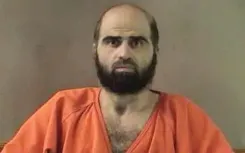
Fort Hood gunman Nidal Hasan seeks stay of 3 December execution
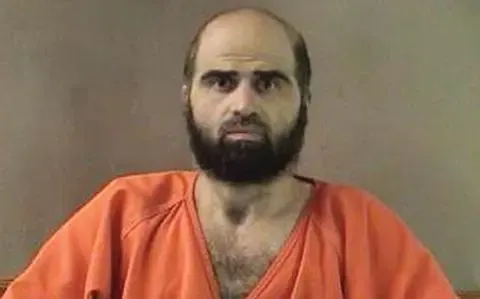
Synopsis
The US military is days away from its first execution in more than 60 years, but Fort Hood gunman Nidal Hasan's lawyers say he never had a fair shot at federal review. A Kansas court hearing on 30 November will decide whether the 3 December firing squad execution goes ahead.
Key Takeaways
Lawyers for Nidal Hasan seek to postpone his 3 December execution by firing squad at Fort Hood, Texas .
They argue federal habeas review could not begin until President Trump approved the death sentence on 2 October .
Federal prosecutors opposed the stay in a 25-page filing, citing victims' families' interest in finality.
A public hearing is set for 30 November at the Robert J.
Dole US Courthouse in Kansas City, Kansas.
The ACLU says it would be the first US military execution in more than 60 years .
Hasan was convicted of 13 counts of premeditated murder and 32 counts of attempted premeditated murder over the 5 November 2009 attack.
Lawyers for convicted Fort Hood gunman Nidal Hasan have renewed their bid to postpone his 3 December execution. They are contesting the US government's claim that he waited too long to seek federal review of his conviction and death sentence. The legal battle reaches a public hearing in Kansas City, Kansas, on Monday, 30 November, just three days before the Army plans to carry out the sentence by firing squad.
According to the American Civil Liberties Union (ACLU), the execution would be the first carried out by the US military in more than 60 years.
Key Developments in the Stay Request
In a reply reported on Saturday by Texas broadcaster KXXV, Hasan's lawyers argued that he could not begin federal habeas proceedings until President Donald Trump approved his death sentence on 2 October. Hasan sought a stay on 24 November, roughly seven weeks after he was notified of that approval.
The defence asked for time so that Hasan could receive meaningful legal assistance. They said he needed to prepare his first federal habeas corpus petition challenging his court-martial and death sentence, the broadcaster reported.
The court has ordered Hasan to attend Monday's hearing in person at the Robert J. Dole US Courthouse. He will be brought from the US Disciplinary Barracks under secure transport coordinated with the US Marshals Service.
What the Government Said
Federal prosecutors opposed the stay in a 25-page response filed on Friday in the US District Court for Kansas. They argued that Hasan had not filed the underlying habeas petition. They also said he had not shown that his anticipated claims were likely to succeed.
“The victims’ families—and the public as a whole—have an overwhelming interest in implementing the capital sentence in this case,” the government wrote. Prosecutors added that some victims were preparing to travel to Texas to witness the execution.
The Execution Timeline
The Army announced in October that Hasan would be executed by firing squad at Fort Hood, Texas, at 1 pm Central Standard Time on 3 December. It said Trump approved the death sentence on 2 October. Acting Army Secretary Adam Telle issued the execution direction four days later.
Hasan was convicted of 13 counts of premeditated murder and 32 counts of attempted premeditated murder over the 5 November 2009 attack.
ACLU Steps In as Standby Counsel
The ACLU and its Kansas affiliate entered the case as standby counsel on 24 November, the same day the stay was sought.
“Mr. Hasan, like every person facing an irreversible punishment, must have a chance to pursue federal review of his case,” said Anna Arceneaux, deputy director of the ACLU's Capital Punishment Project.
Impact on Survivors
For survivors, the proceedings have brought another stretch of uncertainty, 17 years after the attack. Alonzo Lunsford, who was shot by Hasan, told Texas broadcaster KWTX that he had been preparing himself to attend the execution.
“It’s upsetting because I’m mentally prepared to make the trip,” he said. According to KWTX, Lunsford and fellow survivor Julia Wilson said they hoped the request would be denied. Both said they would accept the outcome as the legal process continues.
The Kansas court's ruling after Monday's hearing will decide whether the US military carries out its first execution in more than six decades on schedule, or whether Hasan's case enters a new phase of federal review.
Point of View
Before filing a single federal habeas petition? The government's finality argument carries real moral weight for survivors who have waited 17 years. But a first military execution in six decades will set precedent, and a compressed timeline invites the charge that speed is being prioritised over scrutiny. How the Kansas court balances closure for victims against due process will shape every military capital case that follows.
NationPress
29 Nov 2026
Frequently Asked Questions
Why is Nidal Hasan seeking to delay his execution?
His lawyers say he needs time to get meaningful legal help and file his first federal habeas corpus petition. They argue he could not begin that process until President Trump approved his death sentence on 2 October.
When is Nidal Hasan scheduled to be executed?
The Army has scheduled the execution by firing squad for 1 pm Central Standard Time on 3 December at Fort Hood, Texas. A court hearing on the stay request is set for 30 November in Kansas City, Kansas.
Why are prosecutors opposing the stay?
Federal prosecutors argue that Hasan has not filed the underlying habeas petition. They also say he has not shown his claims are likely to succeed, and that victims' families have an overwhelming interest in carrying out the sentence.
Would this be the first US military execution in decades?
Yes, according to the ACLU, it would be the first execution carried out by the US military in more than 60 years.
What crimes was Nidal Hasan convicted of?
Hasan was convicted of 13 counts of premeditated murder and 32 counts of attempted premeditated murder over the 5 November 2009 attack at Fort Hood.