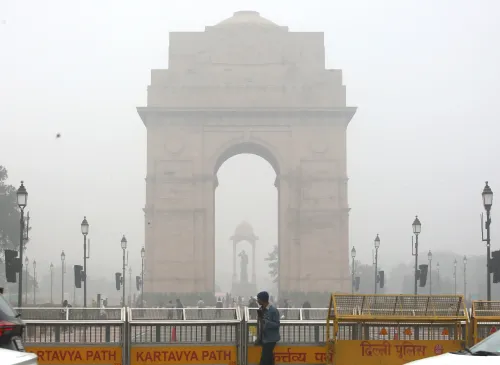
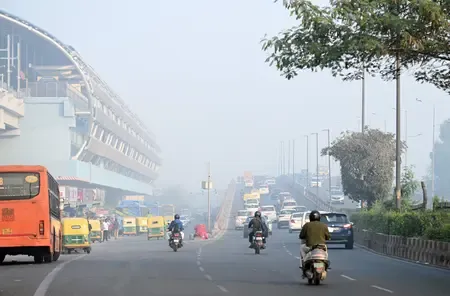
Delhi AQI hits 329 'very poor', Chandni Chowk at severe 428
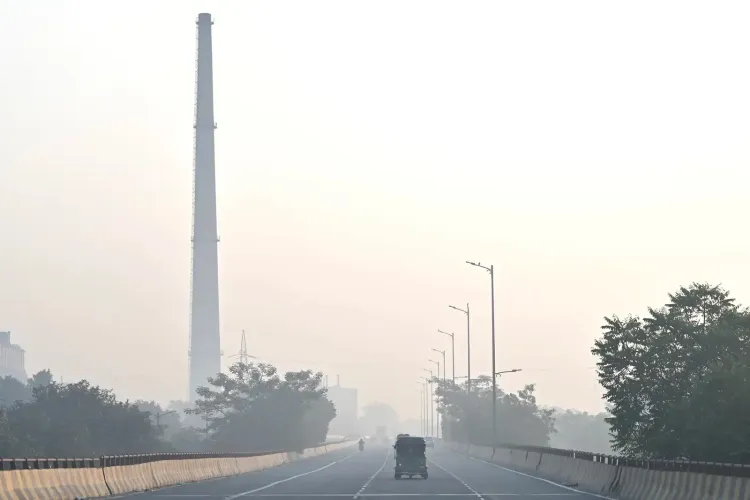
Synopsis
Delhi's air took a sharp turn for the worse overnight: the city-wide AQI jumped from 279 to 329, and Chandni Chowk crossed into 'severe' at 428. With PM2.5 leading at 49 stations and temperatures dipping, the capital has already logged 15 'poor' days this month.
Key Takeaways
Delhi's overall AQI was 329 ('very poor') on Sunday, 29 November 2026 , up from 279 on Saturday.
Chandni Chowk was the most polluted station at 428 ('severe'), followed by Sirifort at 405 and North Campus at 400 .
PM2.5 was the leading pollutant at 49 of the 58 stations reporting data at 8 am .
Delhi recorded 15 days in the 'poor' category up to 27 November , the highest in the comparison period.
The city's coldest morning of the season came on Wednesday, with Safdarjung at 10°C , 1.3 degrees below normal.
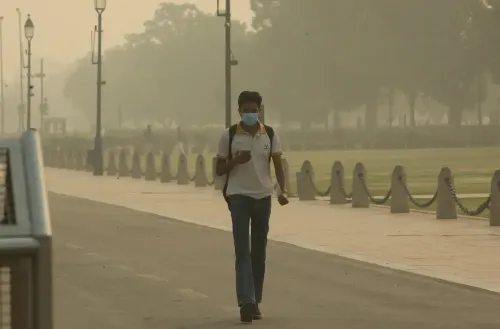
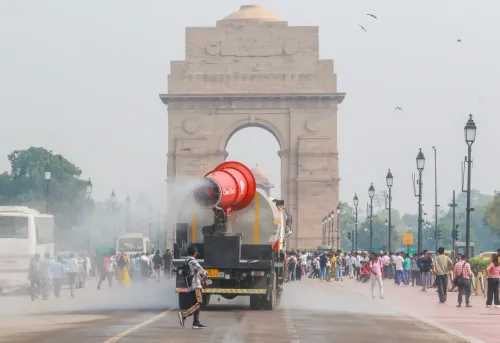
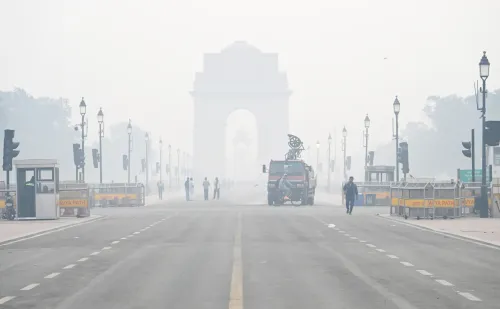
Delhi's air quality slipped into the 'very poor' category on Sunday, 29 November 2026, with the overall Air Quality Index (AQI) recorded at 329, according to the Department of Environment, Government of the National Capital Territory of Delhi. Chandni Chowk was the most polluted spot in the national capital, posting a 'severe' AQI of 428. The reading marks a clear worsening from Saturday, when the city's AQI stood at 279 in the 'poor' band.
Key Developments
As of 8 am IST, 58 of Delhi's 59 air quality monitoring stations were reporting data. PM2.5 was the leading pollutant at 49 of those stations, underlining the continued dominance of fine particulate matter in the city's air.
After Chandni Chowk, Sirifort recorded the second-highest reading at 405, followed by North Campus at 400. DTU registered 395, while CRRI Mathura Road logged 394. On the official scale, both Chandni Chowk and Sirifort fell within the 'severe' range, while North Campus sat at the upper edge of 'very poor'.
The morning temperature in Delhi was recorded at 12 degrees Celsius.
How Saturday Compared
The jump to 329 follows a day on which several stations had already reported elevated levels. On Saturday, CRRI Mathura Road recorded 335, Pusa 308 and Sirifort 304. IGI Airport (T3) logged 312, Chandni Chowk 317 and DTU 312.
Other stations with high readings that day included Aya Nagar at 303, ITO at 300, North Campus at 299, Shadipur at 294, Chhawla at 291, Nangloi at 289 and Anand Vihar at 279.
Notably, Chandni Chowk's reading climbed by more than 100 points in a single day, from 317 to 428, while North Campus rose from 299 to 400.
Understanding the AQI Scale
According to the Central Pollution Control Board (CPCB), an AQI between 0 and 50 is classified as 'good', 51-100 as 'satisfactory', 101-200 as 'moderate', 201-300 as 'poor', 301-400 as 'very poor', and 401-500 as 'severe'. Readings in the 'very poor' band can cause respiratory discomfort on prolonged exposure, particularly for children, the elderly and those with existing health conditions.
A Season of Persistent Pollution
Data indicates that, despite a lower monthly average and no 'severe' air quality days for the city overall, Delhi recorded 15 days in the 'poor' category up to 27 November, the highest in the comparison period. This points to a pattern of sustained, moderate-to-high pollution rather than short, extreme spikes.
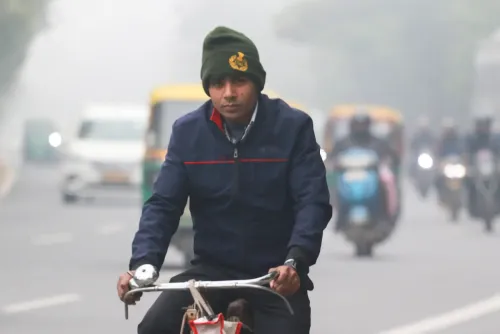
The pollution concerns come alongside a dip in temperatures. On Wednesday, Delhi recorded its coldest morning of the season so far, with the minimum temperature at Safdarjung, the city's base weather station, falling to 10 degrees Celsius. This was 1.3 degrees below the seasonal average and 1.2 degrees lower than Tuesday.
With winter tightening its grip and fine particulate matter dominating readings across most stations, the coming days will indicate whether Delhi's air stabilises or slides further towards the 'severe' threshold.
Point of View
Which means residents are breathing chronically bad air rather than enduring brief crises. Emergency curbs are typically triggered by spikes, so a long plateau of 'poor' and 'very poor' air can slip under the policy radar. Hyperlocal hotspots like Chandni Chowk already touching 428 show that averages understate exposure for millions. Until action targets sustained exposure rather than only peak readings, Delhi will keep treating a chronic problem as an episodic one.
NationPress
29 Nov 2026
Frequently Asked Questions
What was Delhi's AQI on 29 November 2026?
Delhi's overall AQI was 329 on Sunday, 29 November 2026, placing it in the 'very poor' category. The data was released by the Department of Environment, Government of NCT of Delhi.
Which area in Delhi had the worst air quality?
Chandni Chowk was the most polluted monitoring station, with an AQI of 428 in the 'severe' category. Sirifort (405), North Campus (400), DTU (395) and CRRI Mathura Road (394) followed.
What is the main pollutant in Delhi's air right now?
PM2.5, or fine particulate matter, was the leading pollutant at 49 of the 58 stations reporting data at 8 am. It indicates the continued dominance of fine particles in the city's air.
What does a 'very poor' AQI mean?
Under the CPCB scale, an AQI between 301 and 400 is classified as 'very poor'. Readings from 401 to 500 are 'severe', while 201 to 300 is 'poor'.
How has Delhi's air quality been this November?
Delhi recorded 15 days in the 'poor' category up to 27 November, the highest in the comparison period, despite a lower monthly average and no 'severe' days. The AQI rose from 279 on Saturday to 329 on Sunday.