France curfews extended as PM Lecornu warns more cities face restrictions
Synopsis
France is entering its second night of city-wide curfews as Prime Minister Lecornu extends targeted restrictions to wherever prefects judge the situation demands it — a stark response to Saturday's inflation protests that left over 2,000 people arrested, shops looted, and a tourist office torched in Lyon.
Key Takeaways
PM Sébastien Lecornu announced on 20 October that fresh curfews will be imposed wherever prefects deem it necessary.
Paris curfew ran from 11 pm Monday to 6 am Tuesday in the République and Châtelet-les-Halles zones.
Lyon's central zone faced a curfew after a tourist office was torched on Saturday.
Curfews in Nice , Lille , Douai , Wattignies , and Denain applied specifically to unaccompanied minors .
Interior Minister Laurent Nunez said more than 2,000 people were arrested during Saturday's protests against rising inflation.
French Prime Minister Sébastien Lecornu on Tuesday, 20 October announced that France will impose fresh curfews wherever 'the situation requires it', a day after targeted restrictions in several cities helped contain overnight unrest following violent protests over the weekend. The development marks a significant escalation of public-order measures as the government scrambles to restore calm across the country.
What Lecornu Said
'Targeted curfews have contributed to the calm of this night. I thank the police officers and gendarmes who ensured their enforcement, as well as the prefects for their mobilisation. Tonight, new curfews will be decided where the situation requires it. These decisions will be made on the ground, by the prefects, in coordination with the mayors,' Lecornu wrote in a post on X.
The prime minister credited police personnel, Gendarmes, and prefects for their role in keeping the night calm, signalling that the decentralised, prefecture-driven approach would continue.
Curfew Zones in Paris, Lyon, Nice and Northern Cities
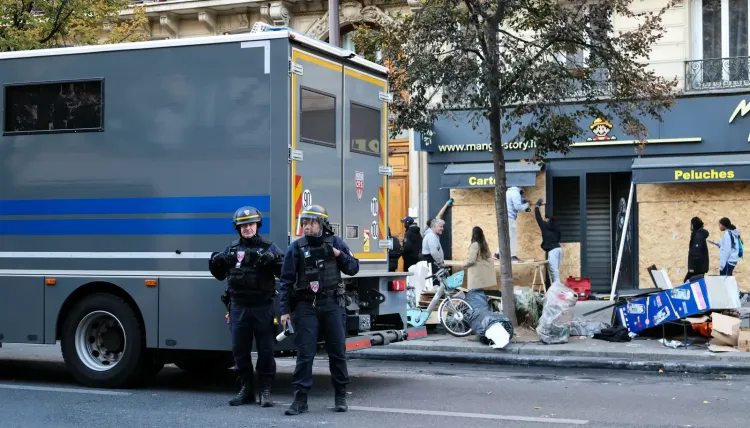
In Paris, a curfew was enforced from 11 pm Monday to 6 am Tuesday (local time) in two areas that saw looting over the weekend — the République square in the centre-east of the city and the Châtelet-les-Halles zone. Authorities had also banned public gatherings in both zones from 8 pm on Monday.
In Lyon, a curfew covered the central zone where a tourist office was torched during Saturday's protests. A ban on public gatherings in parts of the city took effect from 6 pm on Monday.
In Nice, a curfew ran from 9 pm Monday to 6 am Tuesday, though it applied only to unaccompanied minors. Similarly, curfews for unaccompanied minors were imposed in Lille and the towns of Douai, Wattignies, and Denain from 8 pm Monday to 6 am Tuesday, restricted to certain areas within those localities.
Background: Weekend Violence and Mass Arrests
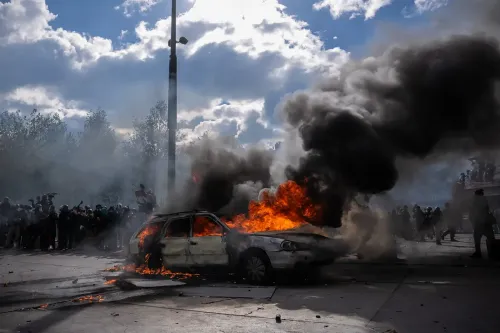
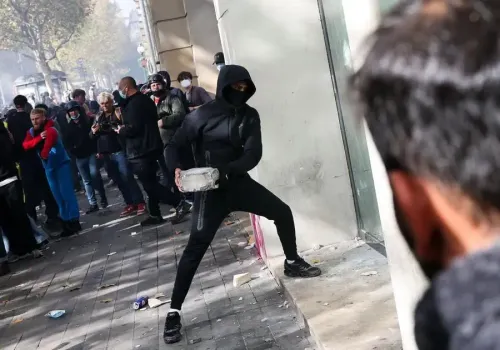
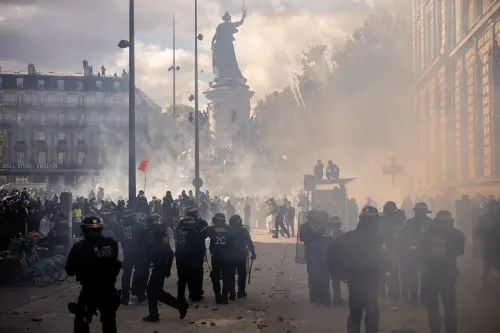
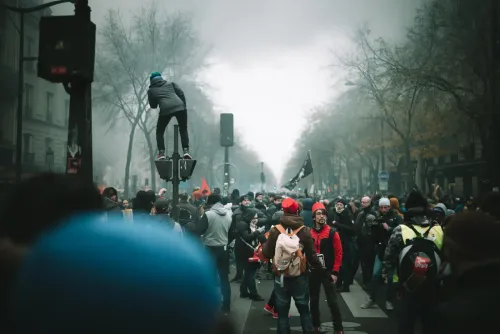
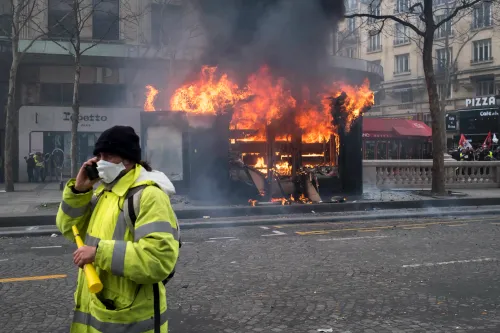
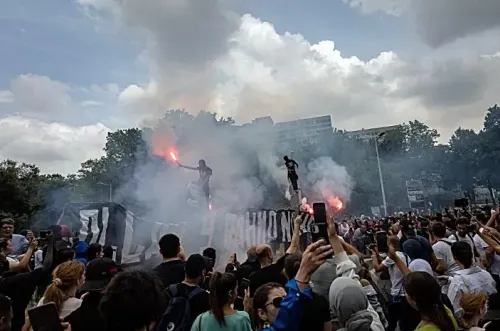
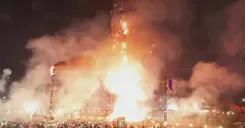
The curfew measures follow some of the most intense civil unrest France has seen in recent years. Violent clashes erupted between police and protesters in Paris and other cities on Saturday, on the sidelines of nationwide marches against rising inflation. Demonstrators set fire to multiple locations while looters ransacked dozens of shops.
French Interior Minister Laurent Nunez announced on Sunday that more than 2,000 people were arrested during Saturday's violence — a scale of detentions that underscores the severity of the disorder. This is reportedly one of the largest single-day arrest tallies in France in recent memory tied to civil unrest.
What Comes Next
With prefects empowered to impose fresh curfews on a case-by-case basis, the scope and duration of restrictions could expand through the week depending on how the situation evolves on the ground. The government's ability to contain further unrest while addressing the underlying economic grievances around inflation will be closely watched by European partners and domestic critics alike.
Point of View
Full night-time bans in Paris and Lyon — which suggests the government is calibrating visibility over reach. But curfews address symptom, not cause: the inflation that triggered Saturday's marches has not eased. With prefects now holding decentralised authority to impose restrictions nightly, the risk is that uneven enforcement across cities creates fresh flashpoints rather than defusing them. The 2,000-arrest figure is politically useful for Lecornu but will face scrutiny on whether mass detentions are papering over a deeper fiscal policy failure.
NationPress
20 Oct 2026
Frequently Asked Questions
Why has France imposed curfews in multiple cities?
France imposed curfews following violent protests on Saturday against rising inflation, during which demonstrators clashed with police, set fire to buildings, and looted dozens of shops. The measures aim to restore public order while authorities assess the situation city by city.
Which cities are under curfew in France?
As of Tuesday 20 October, curfew zones include parts of Paris (République square and Châtelet-les-Halles), Lyon's central zone, Nice, Lille, Douai, Wattignies, and Denain. Nice and the northern cities applied restrictions specifically to unaccompanied minors, while Paris and Lyon had broader overnight bans.
Who decides where new curfews will be imposed?
PM Lecornu confirmed that decisions will be made on the ground by prefects, in coordination with mayors — a decentralised approach that allows authorities to tailor restrictions to local conditions rather than applying a national blanket curfew.
How many people were arrested during the France protests?
Interior Minister Laurent Nunez announced on Sunday that more than 2,000 people were arrested during Saturday's violent protests across France. The clashes occurred on the sidelines of nationwide marches against rising inflation.
What triggered the protests and unrest in France?
The nationwide marches on Saturday were organised against rising inflation, which has strained household budgets across France. The demonstrations turned violent in Paris and other cities, with protesters setting fires and looters breaking into shops, prompting the government to impose emergency curfew measures.