G20 nations split at UNGA 2026 over how to fix a fracturing world order
Synopsis
At UNGA 2026, all 19 G20 nations agreed the world order is fracturing — but offered clashing cures. Trump attacked UN bureaucracy; China defended multilateralism; Milei called the UN 'useless'; and Jaishankar warned that the powerless pay for wars they never started. The split is not just rhetorical — it is structural, and it may define global governance for a generation.
Key Takeaways
G20 leaders at UNGA 2026 agreed the international order is under stress but sharply disagreed on remedies, from multilateral reform to assertive nationalism.
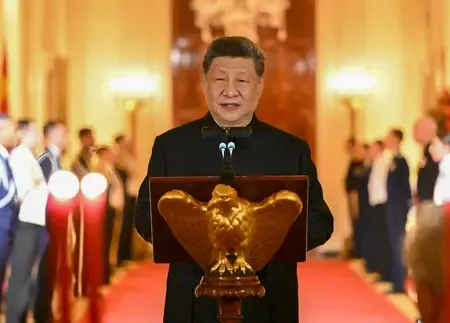
US President Donald Trump attacked international institutions and defended an 'America First' posture, calling on the UN to stop imposing what he called a 'far-left globalist agenda.' Chinese Vice President Han Zheng defended the post-war order and warned that 'protectionism produces no winners,' opposing supply-chain decoupling.
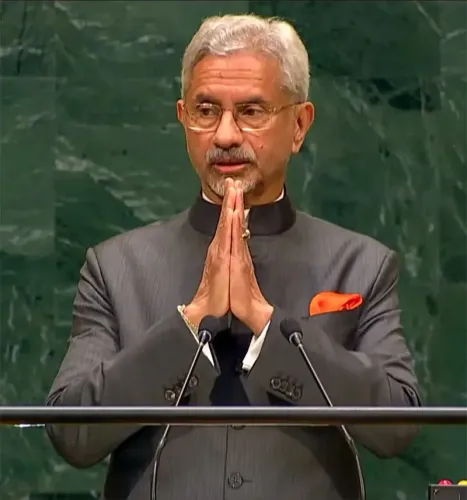
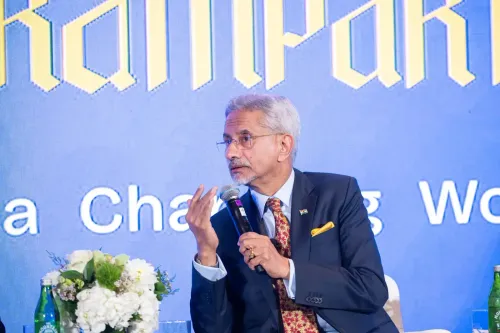
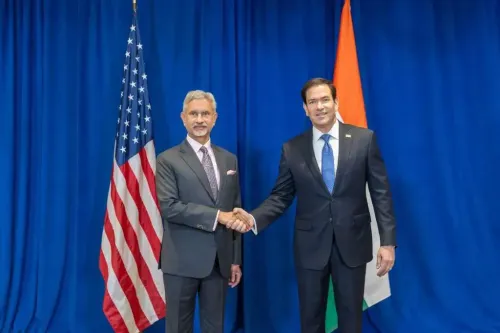
Jaishankar said countries far from battlefields were paying the price — in food, fuel, fertiliser, finance and trade — for wars they did not start.
Argentine President Javier Milei delivered the harshest institutional critique, calling the UN a 'useless organization' sustaining an arrogant bureaucracy.
The G20 represents roughly 85% of global GDP, over 75% of world trade, and about two-thirds of the global population — making the depth of this divide geopolitically consequential.
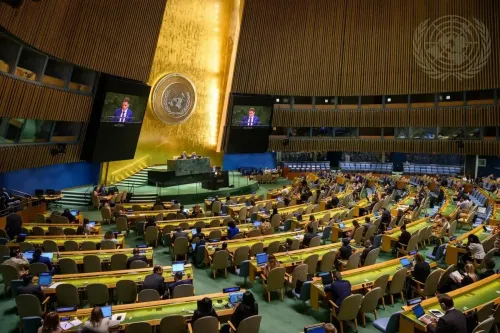
Five days of debate at the UN General Assembly (UNGA) in New York laid bare a stark paradox among the world's most powerful economies: all 19 G20 member-states agreed that the post-war international order is under severe stress, yet their proposed remedies ranged from deeper multilateralism to muscular nationalism — and almost everything in between. The speeches, delivered through the final week of September 2026, amounted to a collective diagnosis with no agreed prescription.
The United States: America First, International Institutions Last
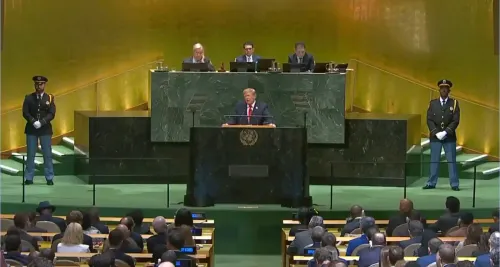
US President Donald Trump offered the most combative posture, defending military action and an 'America First' foreign policy. He levelled pointed criticism at international organisations, declaring that the United Nations must 'stop imposing the far-left agenda of globalist bureaucrats who nobody ever elected.' The remarks signalled continued US scepticism toward multilateral governance frameworks, a stance that has shaped — and at times paralysed — Security Council diplomacy in recent years.
China, Russia and the Counter-Narrative
Chinese Vice President Han Zheng offered a sharply contrasting vision, calling for the post-war international order to be preserved and disputes resolved through dialogue. 'The world wants peace, not war,' Han said, adding a pointed warning that 'protectionism produces no winners' and opposing the decoupling of global supply chains. Russian Foreign Minister Sergei Lavrov framed the moment differently, describing the rise of the Global South and East as the emergence of sovereign centres of power, and accusing Western nations of attempting to retain privileges built over centuries of dominance.
European Voices: Reform, Not Retreat
France, Germany, Italy, and Britain formed a loose chorus in defence of international cooperation, though each acknowledged that existing institutions need fundamental reform. French President Emmanuel Macron posed the sharpest rhetorical question, asking whether nations wished to see 'a return to the law of the jungle' or preferred 'a civilized international society.' German Foreign Minister Johann Wadephul called for a UN capable of 'resolving conflicts — rather than merely managing them,' while Italian Deputy Prime Minister Antonio Tajani argued that alliances should function as bridges, not walls. British Prime Minister Andy Burnham focused on the emerging threats of disinformation, cybersecurity and the unchecked concentration of power in artificial intelligence.
Global South: Inequality, Debt and the Cost of Other People's Wars
Indian External Affairs Minister S. Jaishankar delivered one of the session's most pointed indictments of the current geopolitical moment, warning that countries far removed from active battlefields were nonetheless bearing the economic cost. 'Those most impacted often have the least say,' Jaishankar said. India called for de-escalation, uninterrupted energy and trade flows, and an end to protracted conflicts — framing the issue as one of basic fairness between powerful and vulnerable states.
Brazilian President Luiz Inácio Lula da Silva argued that the UN Security Council's paralysis had directly damaged the organisation's credibility. 'We all know that there will be no winners on the battlefield. Diplomacy is the only option,' he said. Mexican Foreign Minister Roberto Velasco Álvarez linked durable peace to social justice: 'Peace cannot be decreed or imposed; it is built with social justice.' South Africa placed inequality at the heart of its remarks, noting that the richest 10 per cent of the global population controls roughly three-quarters of global wealth, while developing nations remain constrained by debt burdens and an unequal climate-finance architecture.
Argentine President Javier Milei offered the most radical rupture, calling the UN a 'useless organization' sustaining an arrogant bureaucracy, and arguing that international cooperation must never become subordination — the strongest institutional critique from any head of government at this session.
Middle Powers and What Comes Next
Australia, Canada, Indonesia, and South Korea positioned themselves as stabilisers between competing blocs. Australian Prime Minister Anthony Albanese said the UN's mission could not be 'left solely to great powers, wealthy countries or technology companies.' Canadian Foreign Minister Anita Anand was among the bluntest, stating: 'We are facing a rupture, not a transition,' and warning against over-dependence on any single partner. Indonesian Foreign Minister Sugiono encapsulated the middle-power argument most concisely: 'The answer to imperfect multilateralism is not less multilateralism; it is a stronger and better multilateralism.' South Korean President Lee Jae Myung called for peaceful coexistence on the Korean Peninsula and renewed dialogue between North Korea and the United States, while Japan stressed resilient Indo-Pacific supply chains and nuclear disarmament. Saudi Arabia linked Gulf stability to global energy security, and Türkiye insisted that international law must not be applied selectively based on a country's power.
The G20 — comprising 19 countries, the European Union, and the African Union — accounts for roughly 85 per cent of global economic output, more than 75 per cent of international trade, and approximately two-thirds of the world's population. That so much of the world's weight is split this deeply over the architecture of global governance is itself the defining story of the 2026 UNGA. How — or whether — these divisions narrow will shape the international system well beyond this week's speeches.
Point of View
One from a libertarian fringe — while China defends the multilateral order it once resisted, the ideological map has been redrawn. India's framing is the most strategically coherent: if those most impacted have the least say, the system's legitimacy is already gone. The real question UNGA left unanswered is not who is right about multilateralism, but whether there is still enough trust between the major powers to build anything new before the old architecture fully collapses.
NationPress
28 Sept 2026
Frequently Asked Questions
What did G20 leaders say at the UN General Assembly in September 2026?
All 19 G20 member-states acknowledged at UNGA 2026 that the international order is under severe strain, citing wars, economic coercion, fractured supply chains and declining trust in global institutions. However, their proposed solutions diverged sharply — from deeper multilateralism (China, Indonesia, Canada) to assertive national sovereignty (US, Argentina) and structural UN reform (France, Germany, Britain).
What did India's External Affairs Minister Jaishankar say at UNGA 2026?
EAM S. Jaishankar warned that countries far removed from active conflicts were bearing the economic consequences — in food, fuel, fertiliser, finance and commerce — of wars they did not start. 'Those most impacted often have the least say,' he said, calling for de-escalation, uninterrupted energy and trade flows, and an end to prolonged conflicts.
Why did Argentina's President Milei call the UN a 'useless organization'?
Argentine President Javier Milei argued that the UN sustains an arrogant bureaucracy and that international cooperation must not become subordination. His remarks were the most extreme institutional critique at the session, reflecting his broader libertarian, anti-multilateral worldview.
How did China respond to US criticism of international institutions at UNGA?
Chinese Vice President Han Zheng called for the protection of the post-war international order and resolution of disputes through dialogue. He warned that 'protectionism produces no winners' and explicitly opposed supply-chain decoupling, offering a direct counter-narrative to the US position.
Why does the G20 split at UNGA 2026 matter?
The G20 accounts for roughly 85% of global economic output, over 75% of international trade, and about two-thirds of the world's population. A deep, structural disagreement among these nations over the basic architecture of global governance — multilateralism versus sovereignty — has direct consequences for conflict resolution, trade rules, climate finance and technological regulation worldwide.