China vs US at UN: Han Zheng flags trade, Iran, Cuba rifts after Trump-Xi summit
Synopsis
Just 48 hours after Trump gave Xi Jinping a personal airport welcome, China's Vice President Han Zheng used the UN General Assembly to publicly challenge Washington on trade, Iran, Cuba, and the UN's authority — without once naming the US. The contrast between summit optics and Beijing's entrenched positions reveals how little the diplomatic warmth has moved the structural fault lines.
Key Takeaways
China's Vice President Han Zheng addressed the UN General Assembly on 26 September 2026 , two days after the Trump-Xi summit .
Han challenged US positions on trade, multilateralism, Iran , and Cuba without naming Washington directly, calling it a 'relevant authority.' He defended the WTO -centred trading system and warned that 'protectionism produces no winners.' Han criticised 'unilateral military actions' violating the UN Charter , in an apparent reference to the February bombing of Iran by Israel and the US.
Observers flagged Beijing's double standards, citing its actions in the South China Sea , along the Line of Actual Control with India , and toward Taiwan .
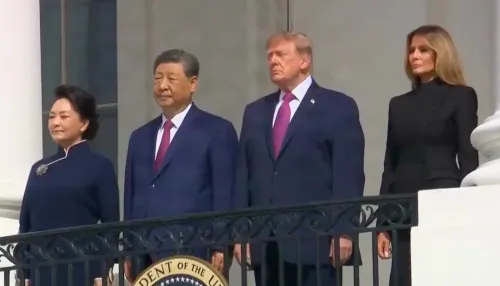
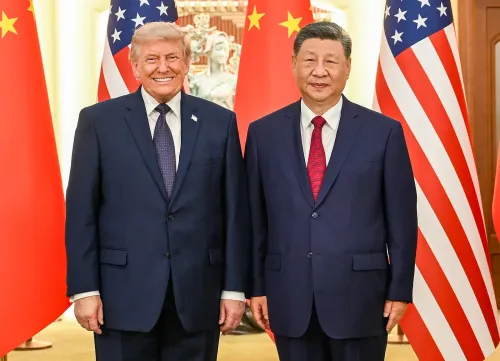
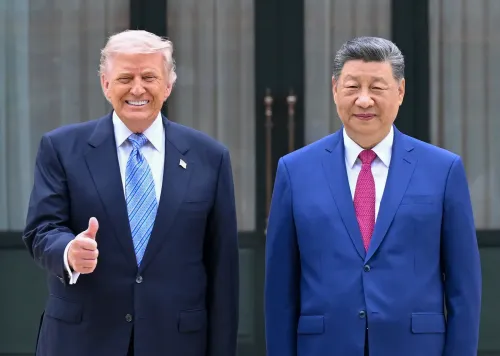
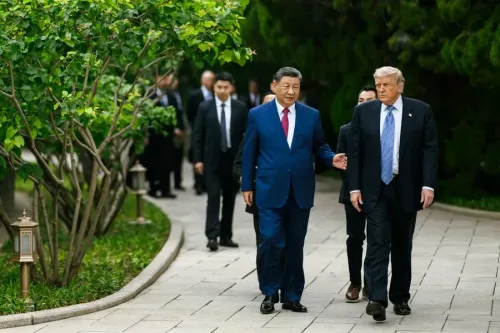
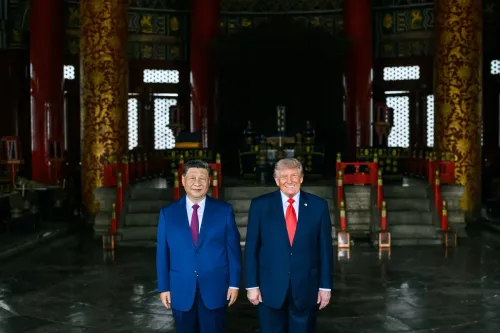
Two days after a high-profile summit between Presidents Donald Trump and Xi Jinping, deep divisions between Beijing and Washington surfaced at the United Nations General Assembly on Saturday, 26 September 2026, as China's Vice President Han Zheng laid out a starkly different worldview on trade, multilateralism, Iran, and Cuba.
Han, speaking before the General Assembly, did not name the United States directly — referring to it instead as a 'relevant authority' — yet the thrust of his remarks left little ambiguity about Beijing's intended target.
The Diplomatic Backdrop
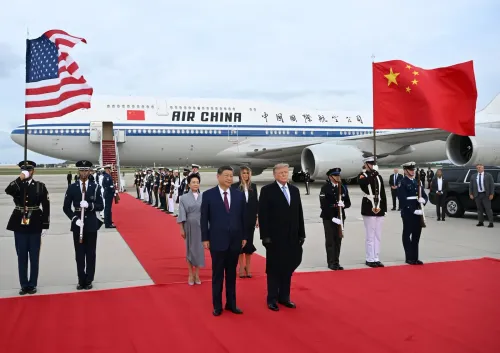
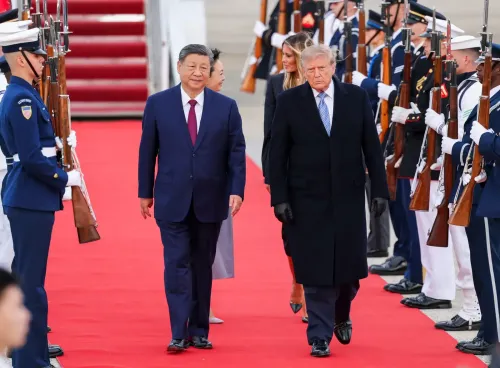
The timing of Han's speech was notable. On Thursday, Trump had offered Xi a lavish airport reception and personal welcome, a gesture widely read as a diplomatic thaw. Yet within 48 hours, China's position at the world body made clear that warmth at the bilateral level had not translated into convergence on global issues. Beijing appeared intent on projecting itself as an independent global power centre, capable of setting its own agenda.
Middle East, Iran, and the UN Charter
Han argued that the sovereignty and security of Middle Eastern nations, including those in the Gulf, must be respected — remarks widely interpreted as a reference to the February bombings of Iran by Israel and the US, which, according to reports, plunged the region into a sharp confrontation.
'We should settle differences and disputes through dialogue and consultation, and oppose unilateral military actions that violate the UN Charter and circumvent Security Council authorisation,' Han said.
Observers, however, noted what they described as Beijing's double standards, pointing to its conduct along the Line of Actual Control with India, its confrontations with the Philippines, Vietnam, and Malaysia in the South China Sea, and its repeated military threats toward Taiwan.
Trade Wars and the WTO
Responding to ongoing tariff disputes and US restrictions on trade, Han made an unambiguous pitch for the existing rules-based global trading order. 'We must firmly safeguard the WTO-centred, rules-based multilateral trading system, build an open world economy, jointly foster and strengthen new growth drivers, and see that economic globalisation is inclusive and delivers benefits to all,' he said.
'Protectionism produces no winners,' Han added, warning that decoupling and severing supply chains would harm all parties. The remarks are Beijing's sharpest public pushback yet against Washington's tariff escalations, which have affected Chinese exports across multiple sectors.
Cuba and the 'Condescension' Rebuke
On Cuba, Han urged the 'relevant country' — again, an unmistakable reference to the US — to end threats of force and lift the longstanding blockade and sanctions against Havana. In a line widely read as a direct rebuke to Trump's rhetoric toward smaller nations, Han said: 'Condescension and the self-centred mindset have no place in the interactions among different cultures.'
What Comes Next
China's UN address signals that despite the optics of the Trump-Xi summit, the structural fault lines between the world's two largest economies remain wide. The coming weeks will test whether the summit's goodwill produces any concrete movement on trade negotiations, or whether Beijing's UN posture becomes the dominant note. For India and other Indo-Pacific nations, China's self-positioning as a champion of multilateralism while maintaining pressure on its neighbours will continue to draw scrutiny.
Point of View
China's self-presentation as a champion of sovereign equality sits uneasily against the realities of the Line of Actual Control.
NationPress
26 Sept 2026
Frequently Asked Questions
What did China's Vice President Han Zheng say at the UN General Assembly?
Han Zheng, addressing the UN General Assembly on 26 September 2026, challenged US positions on trade protectionism, unilateral military actions, and sanctions on Cuba, without naming the US directly. He called for a WTO-centred trading system and dialogue-based resolution of disputes.
Why did China's UN speech come just after the Trump-Xi summit?
The speech came two days after Presidents Trump and Xi held a summit, during which Trump offered Xi a high-profile airport reception. Despite the diplomatic warmth, China used its UN platform to publicly restate entrenched differences on trade, Iran, and multilateralism, signalling that bilateral optics had not shifted Beijing's core positions.
What was China's position on the situation in Iran?
Han Zheng argued that the sovereignty and security of Middle Eastern nations must be respected, in an apparent reference to the February bombing of Iran by Israel and the US. He opposed 'unilateral military actions that violate the UN Charter and circumvent Security Council authorisation.'
What did China say about Cuba at the UN?
Han urged the 'relevant country' — widely understood to mean the US — to cease threats of force and lift its blockade and sanctions against Cuba, reiterating Beijing's longstanding position of support for Havana.
How do observers view China's call for multilateralism given its own conduct?
Multiple observers noted what they described as a contradiction: China's invocation of UN principles and sovereign equality sits in tension with its assertive actions in the South China Sea against the Philippines, Vietnam, and Malaysia, its border pressure on India along the Line of Actual Control, and its military threats toward Taiwan.