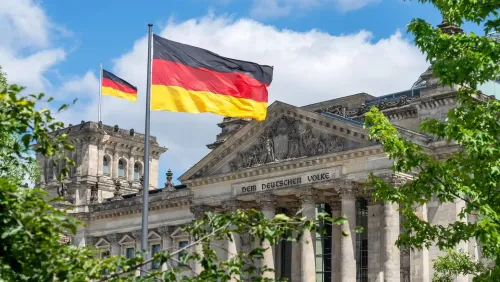
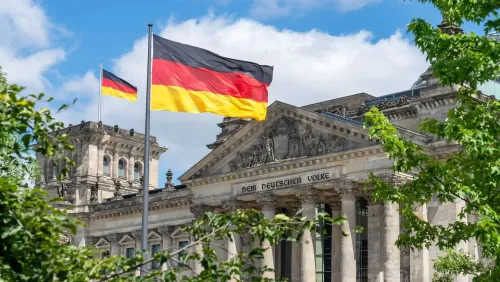
Germany names India top source for skilled workers, 180,000 in 2025

Synopsis
Germany's top multilateral affairs official has publicly named India its preferred source for skilled migration — and the numbers back it up. With 180,000 Indians in Germany's workforce in 2025 alone, a 656% surge over a decade, and 60,000-plus students making Indians the largest international student group in the country, the India-Germany migration partnership is quietly becoming one of the most consequential bilateral labour arrangements in the world.
Key Takeaways
Germany has named India its "country of choice" for skilled worker migration under its country-specific migration policy.
180,000 Indians contributed to Germany's workforce in 2025 alone — a 656% increase over the last 10 years .
The Migration and Mobility Partnership Agreement (MMPA) was signed between India and Germany in 2022 , covering skilled workers, students, and researchers.
More than 60,000 Indian students have enrolled in German universities for three consecutive years, making them the largest international student group in Germany.
Close to 10,000 Indian apprentices are currently training within Germany's vocational system.
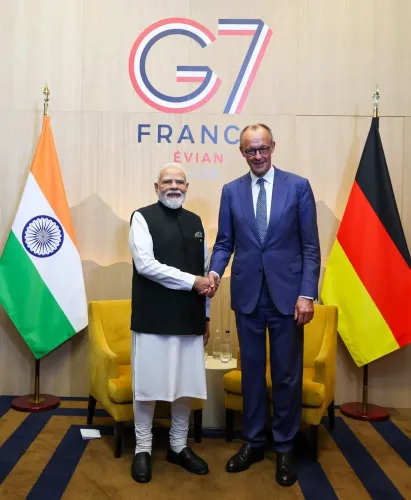
German Chancellor Friedrich Merz highlighted India's migration partnership role during his January 2025 visit to India.
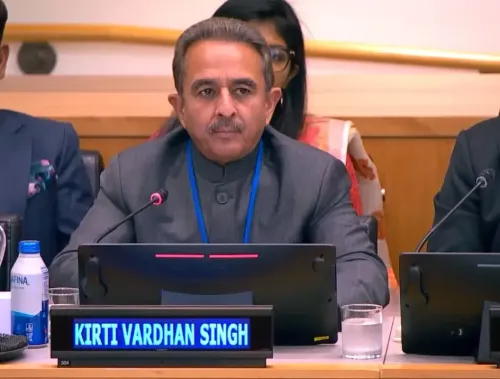
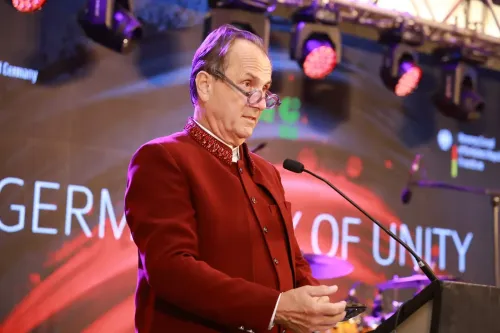
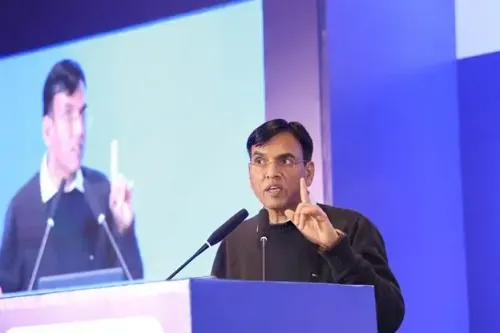
Germany has formally identified India as its "country of choice" for skilled worker migration, with 180,000 Indians contributing to the German workforce in 2025 alone — a 656% increase over the past decade. The declaration came from Florian Laudi, Germany's Commissioner for Multilateral Affairs, speaking at a United Nations event on 8 May in New York, organised by India's UN mission on the theme of "Leveraging Digital Innovation in Migration Governance".
A Triple Win Partnership
Laudi described the India-Germany migration relationship as an "unprecedented cooperation" and a "triple win" — benefiting Indian migrants, a Germany facing acute labour shortages, and an India with a labour surplus. "The win for the thousands of young Indian workers who came to Germany, I see it on the streets of Berlin every day," he said.
He noted that Indian migrants in Germany are "highly qualified, especially in science and technology," adding that their "extraordinary qualifications are mirrored in average incomes, which are above the German median." This positions Indian professionals not merely as a workforce supplement but as a high-value contributor to Germany's knowledge economy.
The Migration and Mobility Partnership Agreement
The foundation of this bilateral arrangement is the Migration and Mobility Partnership Agreement (MMPA), signed between India and Germany in 2022. The agreement created structured pathways for the migration of skilled workers, students, and researchers. Laudi noted that German Chancellor Friedrich Merz had specifically highlighted India's role as a key migration partner during his visit to India in January 2025.
To streamline the process, both countries are actively working on mutual recognition of professional qualifications, expanding availability of German language courses and examinations, and digitalising and accelerating visa procedures. "We keep on facilitating relevant processes for migrants, like degree recognitions or accelerating and digitalising visa processes," Laudi said.
Students and Apprentices Leading the Surge
Beyond professionals, India's presence in Germany's academic and vocational sectors has grown substantially. More than 60,000 Indian students have enrolled in German universities for three consecutive years, making them the largest group of international students in the country. Notably, more than half of these graduates find employment in Germany after completing their studies.
In addition, close to 10,000 Indian apprentices are currently working and acquiring skills within Germany's globally recognised vocational training system — a pipeline that feeds directly into sectors facing chronic shortages.
Shared Values Anchoring the Relationship
Laudi framed the migration partnership within a broader strategic alignment, stating that "India has become one of Germany's key political and economic partners" as both nations "share core values and interests — freedom, democracy, and the upholding of the rules-based international order." He emphasised that migration cooperation is the dimension that makes the bilateral relationship "very special."
This comes amid a wider European push to attract skilled workers from outside the bloc, with Germany among the most proactive in formalising country-specific migration frameworks. India's demographic dividend — a young, technically trained workforce — positions it as a natural long-term partner for ageing economies across Europe.
What Comes Next
With the MMPA framework already operational, both governments are expected to deepen institutional linkages, including expanding German language infrastructure in India and broadening sectoral coverage under mutual qualification recognition. As Germany's labour gap widens and India's skilled workforce continues to grow, the partnership is likely to scale further in the years ahead.
Point of View
From the 2022 MMPA to active investment in language infrastructure and visa digitalisation. What mainstream coverage misses is the structural logic: Germany's ageing population and chronic labour gap make India's young, technically trained workforce not just convenient but strategically indispensable. The real question is whether India is extracting commensurate value — in technology transfer, research collaboration, and remittances — or whether this remains primarily a one-way demographic dividend flowing to Europe. The MMPA's mutual qualification recognition provisions are promising, but their implementation pace will determine whether this is a genuine triple win or a well-packaged talent export.
NationPress
20 Sept 2026
Frequently Asked Questions
Why has Germany named India its 'country of choice' for skilled migration?
Germany designated India as its preferred source for skilled workers under its country-specific migration policy due to India's large pool of highly qualified professionals, particularly in science and technology. Indian migrants in Germany earn above the German median wage, and 180,000 Indians joined Germany's workforce in 2025 alone — a 656% increase over the past decade.
What is the India-Germany Migration and Mobility Partnership Agreement (MMPA)?
The MMPA is a bilateral agreement signed in 2022 that creates structured pathways for Indian skilled workers, students, and researchers to migrate to Germany. It covers degree recognition, visa facilitation, and mutual recognition of professional qualifications.
How many Indian students are studying in Germany?
More than 60,000 Indian students have enrolled in German universities for three consecutive years, making Indians the largest group of international students in Germany. Over half of them find employment in Germany after completing their studies.
What role did German Chancellor Friedrich Merz play in the India-Germany migration partnership?
Chancellor Friedrich Merz highlighted India as one of Germany's most important partners for skilled worker migration during his visit to India in January 2025, underscoring the political priority both governments place on the bilateral migration framework.
Who is Florian Laudi and where did he make these remarks?
Florian Laudi is Germany's Commissioner for Multilateral Affairs. He made these remarks on 8 May at a UN event titled 'Leveraging Digital Innovation in Migration Governance', organised by India's UN mission in New York.