Gul Plaza Fire: Allegations of Late Rescue Response and Evacuation Failures
Synopsis
In a shocking revelation, the management of Gul Plaza mall claims that rescue efforts during the January 17 fire were severely delayed, resulting in tragic losses. This report sheds light on the alleged failures of emergency services and the management's response during the disaster.
Key Takeaways
Rescue services reportedly delayed their response during the Gul Plaza fire.
Management asserts that all exits were functional during the incident.
Criticism of emergency services has led to public outrage.
Investigation continues to uncover the causes and failures related to the fire.
Accountability in emergency response is crucial to prevent future tragedies.
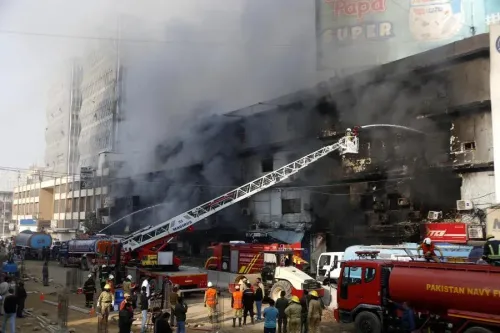
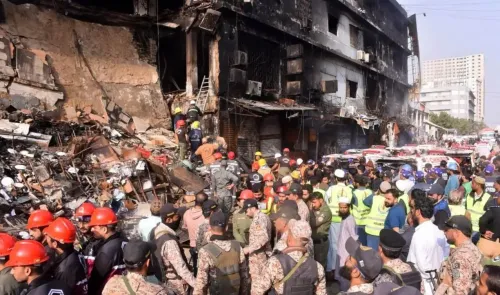
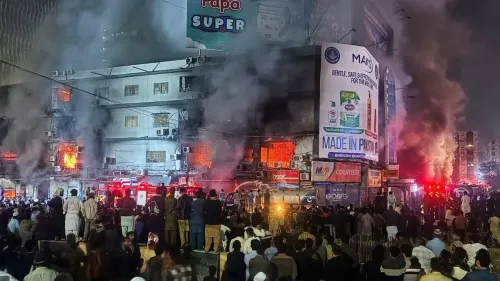
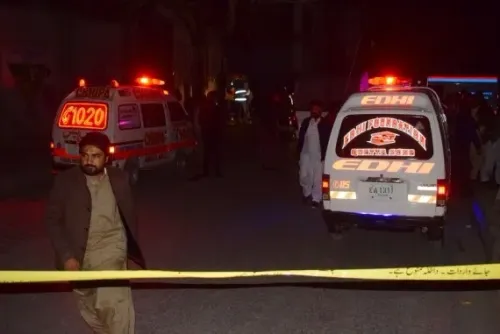
Islamabad, March 15 (NationPress) – The ongoing investigation by Pakistan's judicial commission into the catastrophic fire that occurred on January 17 at Gul Plaza mall in Karachi revealed serious concerns regarding the delayed response of rescue services. Reports indicate that rescuers arrived late and were unable to evacuate individuals trapped inside during the critical initial moments of the incident, according to local media.
Tanveer Pasta, the President of the Gul Plaza Mall Management Committee, presented these assertions in response to a questionnaire from the single-judge commission led by Justice Agha Faisal of the Sindh High Court. He emphasized that the mall's exits were operational and accessible during the fire.
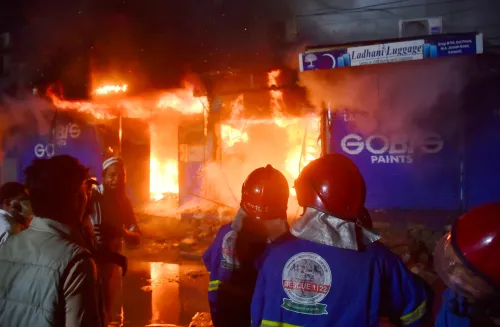
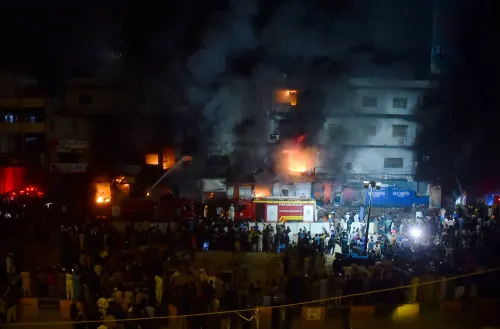
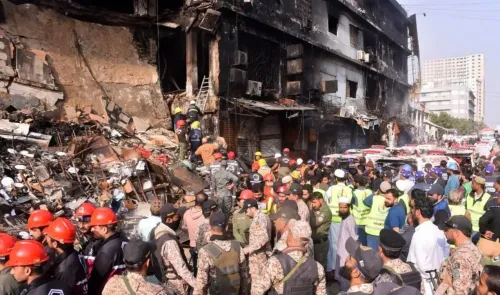
This tragic fire at Gul Plaza resulted in the loss of 80 lives and left numerous others injured. The event sparked widespread public outcry, with many criticizing the Sindh government and the mayor of Karachi for their slow response.
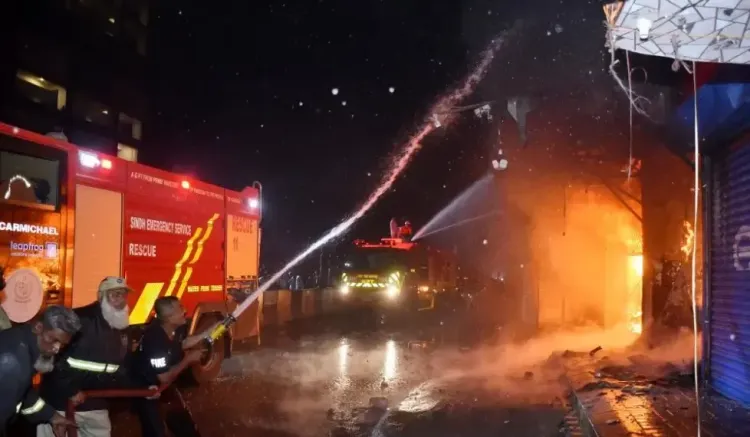
Pasta disputed the fire department's statement that the first fire engine arrived at 10:37 p.m. on January 17, asserting instead that it reached the site at 10:55 p.m. However, it quickly ran out of water within 20 minutes. Two additional fire engines arrived around 11:30 p.m., as reported by the Pakistani daily Dawn.
At the time of the incident, Pasta noted that the complex housed 1,153 shops and 3,456 shopkeepers and employees, along with approximately 250 to 300 customers present in the building.
He claimed that, thanks to the management committee's “intensive efforts,” most individuals were evacuated through the available exits, although those on the mezzanine floor could not be reached. According to Pasta, 72 victims perished on the upper floors, with 51 of them linked to Gul Plaza.
Pasta rejected assertions from fire and rescue services, as well as eyewitness testimonies, alleging that several exits were blocked. He stated that the building featured 16 exits—13 on the ground floor and three in the basement—all of which were open and functional at the time of the fire.
“It is important to note that during the post-fire inspection, only one shutter on the second floor was found closed, and no lock was detected near it,” Pasta was quoted as saying by Dawn.
In response to inquiries about distress calls made by individuals trapped inside, Pasta stated that several were rescued through the management's efforts based on their calls and shared locations. However, many could not be saved due to insufficient rescue resources from emergency services, including Rescue-1122 and the fire brigade.
Pasta criticized the rescue efforts as alarmingly sluggish, stating, “The rescue teams only became proactive after Fajr prayers, but by then, the fire had escalated beyond control.”
He alleged that responders lacked essential tools, masks, and equipment necessary for entering the building and rescuing survivors from the mezzanine floor. Furthermore, he noted that no fire-fighting foam was available and claimed no significant rescue attempts were made in the first few hours of the fire.
Pasta accused the rescue services of exhibiting “total failure and unprofessionalism,” mentioning that seven generators were installed on the roof for emergency lighting, five of which were operational.
Point of View
The ongoing investigation into the Gul Plaza tragedy underscores a pressing need for accountability in emergency response protocols. The claims made by mall management highlight systemic failures that warrant immediate attention to prevent future disasters. Public safety must be prioritized to ensure such tragedies do not recur.
NationPress
16 Oct 2026
Frequently Asked Questions
What caused the fire at Gul Plaza?
The exact cause of the fire is still under investigation by the judicial commission.
How many people were affected by the fire?
The fire resulted in 80 fatalities and numerous injuries, with many individuals trapped inside.
What were the allegations against rescue services?
The Gul Plaza management alleged that rescue services arrived late and failed to evacuate trapped individuals timely.
How many exits did Gul Plaza have?
Gul Plaza reportedly had 16 exits, all of which were claimed to be open and functional during the fire.
What measures were taken for rescue efforts?
The management of Gul Plaza stated they attempted to evacuate individuals based on distress calls, despite inadequate support from emergency services.