UN chief urges faster SDG progress as $4 trillion gap widens
Synopsis
With only five years left to the 2030 deadline, UN Secretary-General Guterres revealed that just 36 per cent of SDG targets are on track, 15 per cent have reversed, and the annual financing gap has ballooned to over $4 trillion. The warning, delivered at the UN's flagship sustainability forum, lays bare the gulf between global commitments and ground reality.
Key Takeaways
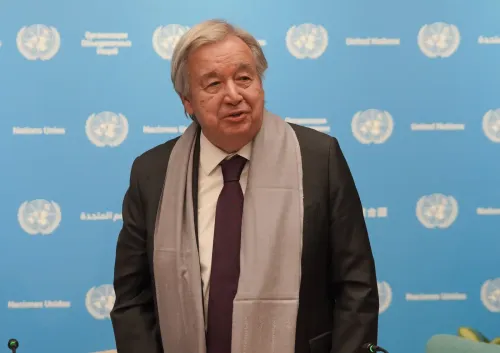
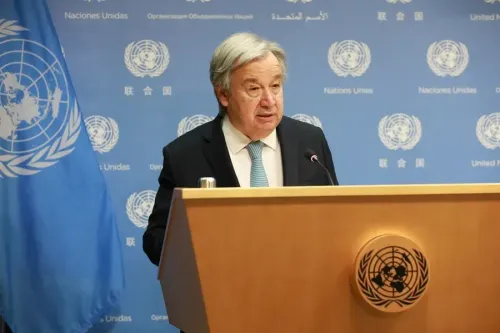
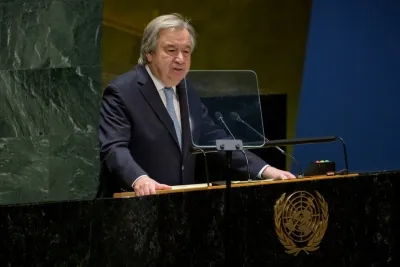
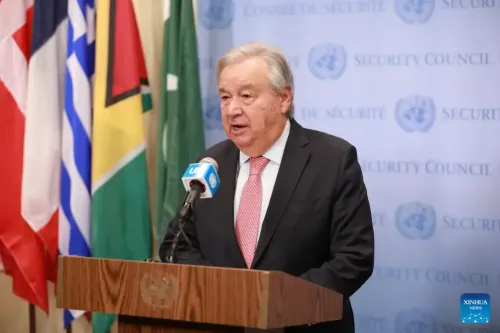
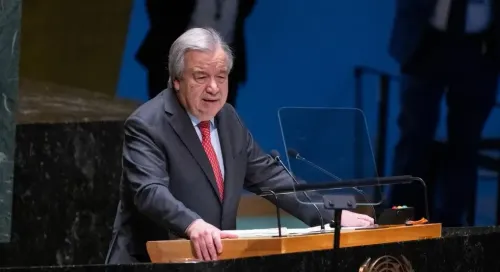
UN Secretary-General António Guterres addressed the High-Level Political Forum on Sustainable Development on 14 July .
Only 36 per cent of assessable SDG targets are on track; 15 per cent have gone into reverse.
The annual SDG financing gap stands at over $4 trillion , with developing nations facing borrowing costs far higher than advanced economies.
About 2.2 billion people still lack safely managed drinking water; 3.5 billion lack safely managed sanitation.
This year's forum focuses on five SDGs: clean water, affordable energy, industry and innovation, sustainable cities, and global partnerships.
Guterres cited recent multilateral agreements — including the Pact for the Future and the High Seas Treaty — as proof that cooperation remains achievable.
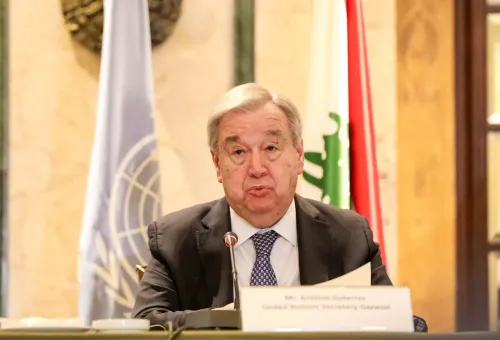
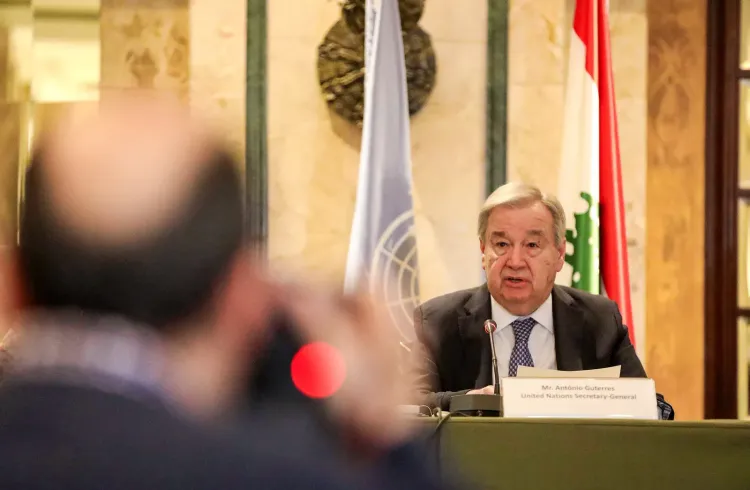
UN Secretary-General António Guterres on 14 July called on the international community to 'accelerate progress at scale and speed' in delivering the UN 2030 Agenda for Sustainable Development, warning that only 36 per cent of assessable Sustainable Development Goal (SDG) targets are on track — while 15 per cent have gone into reverse. Speaking at the ministerial segment of the High-Level Political Forum on Sustainable Development at the United Nations headquarters in New York, Guterres painted a stark picture of a world racing against compounding crises.
Progress Made, But Major Setbacks Loom
Guterres acknowledged that the decade since the 2030 Agenda was adopted has not been without gains. Child and maternal mortality have fallen, access to social protection, safe drinking water, sanitation, electricity, and the internet has expanded, harmful practices like child marriage have declined faster, and renewable energy has seen exponential growth.
Yet those gains are being eroded. 'But our journey has faced some major setbacks in recent years,' Guterres said, citing multiplying conflicts, deepening inequality, and the world edging closer to a temporary overshoot of the 1.5-degree climate limit. The conflict in the Middle East, he noted, sent the cost of fuel, fertilisers, and food skyrocketing while disrupting global trade, transportation, and tourism.
The SDG Financing Crisis
Developing nations are caught in what Guterres described as a 'whirlwind of financial woe' — crushing debt burdens, weakening currencies, scarce investment, rising borrowing costs, and limited fiscal space. The annual SDG financing gap now stands at over $4 trillion, and many developing countries spend more on debt servicing than on investing in their own people.
Compounding the problem, global development assistance has suffered its steepest recorded decline. Developing nations frequently face borrowing costs several times higher than those paid by advanced economies — a structural disadvantage that critics argue the current multilateral financial architecture has failed to correct.
Five SDG Focus Areas for 2025
This year's forum is centred on five specific goals: clean water and sanitation; affordable and clean energy; industry, innovation and infrastructure; sustainable cities and communities; and partnerships for the goals. Guterres highlighted the scale of the water and sanitation deficit — approximately 2.2 billion people still lack safely managed drinking water, and 3.5 billion lack safely managed sanitation, despite hundreds of millions gaining access over the past decade.
On energy, he underscored that renewables are now the cheapest, fastest, and most scalable source of new electricity in most of the world, but stressed the need to reduce the cost of capital and manage critical minerals responsibly to enable a just transition away from fossil fuels.
Technology, Cities, and Multilateral Cooperation
Guterres pointed to artificial intelligence and digital tools as carrying 'enormous opportunities' to drive development, create decent jobs, and extend public services — provided universal internet access and digital infrastructure are prioritised. 'Technology serving humanity — not the other way around,' he said.
He also called for urgent action on the global housing crisis, urging governments, the private sector, local authorities, and civil society to mobilise equitable financing for urban infrastructure. Notably, he cited a string of recent multilateral agreements — the Pact for the Future, the Sevilla Commitment, the Doha Political Declaration, the High Seas Treaty, and the Antigua and Barbuda Agenda for Small Island Development States — as evidence that international cooperation, even amid geopolitical division, remains possible.
With the 2030 deadline now just five years away, the secretary-general's address signals an intensifying push for governments, businesses, and civil society to close the gap between ambition and delivery.
Point of View
Yet the forum's outputs remain largely non-binding. The litany of cited agreements — Pact for the Future, Doha Declaration, Sevilla Commitment — risks becoming a catalogue of process rather than a record of outcomes. With five years left, the question is no longer whether the world will miss 2030; it is whether the post-2030 framework will be designed with the enforcement teeth its predecessor lacked.
NationPress
12 Oct 2026
Frequently Asked Questions
What is the UN 2030 Agenda for Sustainable Development?
The UN 2030 Agenda is a global framework adopted in 2015, comprising 17 Sustainable Development Goals (SDGs) and 169 targets aimed at ending poverty, protecting the planet, and ensuring prosperity for all by 2030. It was signed by all 193 UN member states and is reviewed annually at the High-Level Political Forum.
How many SDG targets are currently on track?
According to UN Secretary-General Guterres, only 36 per cent of the 139 assessable SDG targets are on track or making moderate progress, while 15 per cent have actually reversed since the agenda was launched. The figures were presented at the ministerial segment of the High-Level Political Forum on 14 July.
What is the SDG financing gap and why does it matter?
The SDG financing gap refers to the shortfall between what is needed and what is currently being invested to achieve the goals — now estimated at over $4 trillion annually. It matters because developing countries, which need the most investment, face borrowing costs several times higher than advanced economies and have seen development assistance fall to its lowest recorded level.
Which five SDGs is the 2025 UN forum focused on?
The 2025 High-Level Political Forum is focused on clean water and sanitation, affordable and clean energy, industry, innovation and infrastructure, sustainable cities and communities, and partnerships for the goals. These were identified as areas requiring urgent, scaled-up action before the 2030 deadline.
What did Guterres say about the global water and sanitation crisis?
Guterres highlighted that despite progress, approximately 2.2 billion people still lack safely managed drinking water and 3.5 billion lack safely managed sanitation. He called on governments, the private sector, and communities to close gaps in finance, innovation, infrastructure, and governance to ensure universal access.