Talha Saeed to head Lashkar-e-Taiba as ISI splits outfit into three regional commands
Synopsis
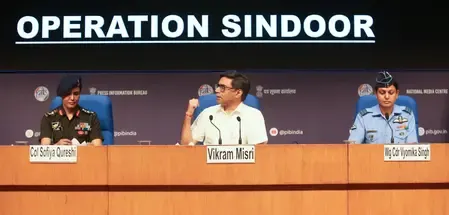
Post-Operation Sindoor, Lashkar-e-Taiba is not retreating — it is reorganising. With Talha Saeed taking operational command and the ISI splitting the outfit into three regional forces, the rebuild is structural, not cosmetic. The PoK command's reported mandate to stage attacks and blame India signals that the proxy playbook is alive and being upgraded.
Key Takeaways
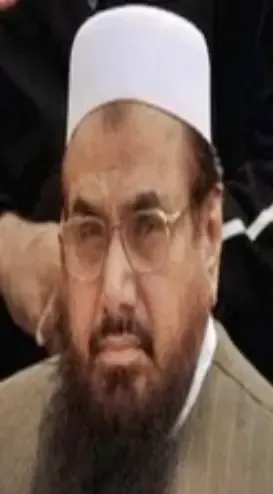
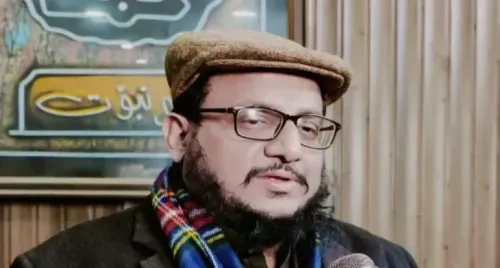
Talha Saeed , son of Hafiz Saeed , is set to take operational command of Lashkar-e-Taiba (LeT) following internal succession deliberations.
Hafiz Saeed will remain as the outfit's mentor and ideological head under the new arrangement.
The ISI is restructuring the Lashkar into three regional commands covering Balochistan , Khyber Pakhtunkhwa (KP) , and Pakistan-occupied Kashmir (PoK) .
The restructuring follows heavy losses during Operation Sindoor and repeated setbacks against the BLA and TTP .
The PoK command is reportedly tasked with carrying out attacks and staging incidents to blame India , while Jammu and Kashmir -focused operations remain under a single centralised command.
The Lashkar also plans covert infiltration of the BLA and TTP to improve intelligence gathering for Pakistan 's security forces.
Lashkar-e-Taiba (LeT), which suffered its heaviest operational losses during Operation Sindoor, is now restructuring under direct Inter-Services Intelligence (ISI) guidance — with Talha Saeed, son of founder Hafiz Saeed, set to assume operational leadership of the Pakistan-based terror outfit, according to intelligence officials. The reorganisation, finalised after weeks of internal deliberations, also splits the group into three separate regional commands spanning Balochistan, Khyber Pakhtunkhwa (KP), and Pakistan-occupied Kashmir (PoK).
Leadership Transition and Hafiz Saeed's Continued Role
The succession question had divided the outfit's old guard. While a faction within the group had pushed for Hafiz Saeed to step aside entirely, senior leaders resisted a complete sidelining of the ageing founder. The compromise, according to officials, sees Hafiz Saeed retained as the outfit's mentor and ideological figurehead, while Talha Saeed takes charge of day-to-day operational decisions.
The ISI is said to view this arrangement as strategically valuable. Both the Saeed names continue to carry significant influence among potential recruits, and maintaining that leadership image is considered critical for the Lashkar's mobilisation and fundraising efforts, officials noted.
The Three-Command Restructuring Plan
Under the new architecture, the Lashkar will operate through three geographically distinct commands — one each for Balochistan, KP, and PoK. Each command is expected to be staffed primarily by operatives native to the respective region, a deliberate shift aimed at improving local intelligence gathering and logistical efficiency.
According to officials, the ISI pushed for this region-specific structure after repeated setbacks for both the Lashkar and Pakistan's security forces at the hands of the Balochistan Liberation Army (BLA) and the Tehreek-e-Taliban Pakistan (TTP). Intelligence failures and logistical shortcomings have been identified as the primary reasons for those reverses. It is reportedly an open secret that LeT cadres have been deployed alongside Pakistani security forces against the TTP and BLA.
Covert Infiltration and Intelligence Operations
Beyond the overt command restructuring, the Lashkar is also planning a covert intelligence layer, according to officials. Operatives would be embedded within local communities across the three regions to gather ground-level information. Additionally, an Intelligence Bureau official said the outfit is expected to attempt infiltrating the BLA and the TTP by planting moles within both groups.
'If the outfit succeeds in establishing such an internal network, it could significantly strengthen the intelligence capabilities of Pakistan's security forces,' the official said.
PoK Strategy: Attacks, Intimidation, and India-Blame Operations
While the Balochistan and KP commands are oriented toward countering the BLA and TTP, the PoK command has an entirely different mandate, officials warned. The plan reportedly involves carrying out strikes at multiple locations using either fidayeen attackers or explosive devices, with the twin objectives of intimidating the local population and suppressing protest movements.
'Another key part of the strategy is to stage major terror attacks and then attempt to pin the blame on India,' an official said. Despite the restructuring, the strategy for Jammu and Kashmir reportedly remains unchanged — all India-centric operations will continue to be overseen by a single, centralised command, with major decisions taken at the top leadership level.
What This Means for Regional Security
The Lashkar's post-Operation Sindoor rebuild signals that Pakistan's security establishment is recalibrating its proxy network rather than dismantling it. The three-command model, if operationalised, would give the ISI a more granular and resilient structure — one harder to disrupt with a single targeted strike. Security analysts and Indian intelligence officials are expected to closely monitor the pace of this restructuring in the months ahead.
Point of View
The ISI is addressing the intelligence failures that have repeatedly embarrassed its proxy network against the BLA and TTP. What mainstream coverage underplays is the dual-use nature of this rebuild: the same command structure being positioned against domestic insurgents is also the one that will direct operations against India. The PoK command's reported mandate — stage attacks, blame India — is not a new tactic, but its formalisation into a command-level directive is a significant escalation. India's security establishment will need to account for a Lashkar that is simultaneously fighting Pakistan's internal wars and preparing to export violence across the Line of Control.
NationPress
4 Jul 2026
Frequently Asked Questions
Who is Talha Saeed and why is he taking over Lashkar-e-Taiba?
Talha Saeed is the son of Lashkar-e-Taiba founder Hafiz Saeed and is set to assume operational leadership of the outfit following weeks of internal succession deliberations. His elevation is a compromise — Hafiz Saeed will remain as mentor and ideological head while Talha handles day-to-day operations, with the ISI viewing the Saeed name as critical for recruitment and mobilisation.
What are the three regional commands Lashkar-e-Taiba is being split into?
According to officials, the Lashkar is being restructured into three separate operational commands covering Balochistan, Khyber Pakhtunkhwa (KP), and Pakistan-occupied Kashmir (PoK). Each command is expected to be staffed by operatives native to that region to improve local intelligence and logistics.
Why is the ISI restructuring Lashkar-e-Taiba into regional commands?
The ISI pushed for region-specific commands after repeated setbacks for both Lashkar and Pakistani security forces at the hands of the BLA and TTP, attributed to intelligence failures and logistical shortcomings. The new structure is also intended to give the ISI tighter operational control and embed the Lashkar more effectively in counter-insurgency roles.
What is the Lashkar's reported plan for Pakistan-occupied Kashmir?
Unlike the Balochistan and KP commands focused on countering the BLA and TTP, the PoK command is reportedly tasked with carrying out attacks using fidayeen or explosive devices to intimidate local populations and suppress protests. Officials also warned that a key part of the strategy involves staging major terror attacks and attempting to attribute them to India.
How does this restructuring affect Lashkar's operations against India?
Despite the broader three-command reorganisation, officials say the strategy for Jammu and Kashmir remains unchanged. All India-centric operations will continue to be managed by a single centralised command, with major decisions taken by the outfit's top leadership, which now includes Talha Saeed under the mentorship of Hafiz Saeed.