Hania Ahmed killing: Australian girl's grandfather demands justice after Pakistan police firing
Synopsis
A nine-year-old Australian girl visiting family in Pakistan was shot dead by police — struck by at least five bullets — after officers opened fire during a robbery response, killing her while her father and brother were injured. The case has put Pakistan's Crime Control Department under a global spotlight, with its own human rights body documenting 924 suspect deaths in 670 encounters over just eight months.
Key Takeaways
Hania Ahmed , a nine-year-old Australian girl , was killed by police firing in Chakwal district , Punjab, Pakistan , while visiting family.
Post-mortem notes indicate she was struck by at least five bullets and died immediately; her father and brother were injured.
Her grandfather Mazhar Hussain Chohan has demanded justice; Australian PM Anthony Albanese has called for a transparent investigation.
The Human Rights Commission of Pakistan (HRCP) documented at least 670 CCD encounters over eight months in 2025 , resulting in 924 suspect deaths .
The HRCP has called for an immediate province-wide moratorium on CCD encounter operations and a high-level judicial inquiry.
The grandfather of Hania Ahmed, a nine-year-old Australian girl killed in a police shooting in Chakwal district, Pakistan's Punjab province, has publicly demanded justice, as scrutiny intensifies over the conduct of the country's Crime Control Department (CCD). The incident has drawn diplomatic attention, with Australian Prime Minister Anthony Albanese previously calling for a transparent investigation into the child's death.
What Hania's Grandfather Said
Mazhar Hussain Chohan, speaking to ABC News, described the devastating sequence of events that unfolded on the night of the shooting. 'Whether we get justice because of him [Anthony Albanese], or police, we just want justice,' Chohan said.
Chohan recounted that he had left his granddaughter at a relative's home in Chakwal, where the family had gone for dinner during a visit from Australia to see relatives in Pakistan. Around three hours after leaving, he received a call telling him his son had been in an accident. 'I had no idea about the bullets,' he said. On reaching the hospital, he found Hania's body on a stretcher, with his son and grandson among the injured.
How the Shooting Unfolded
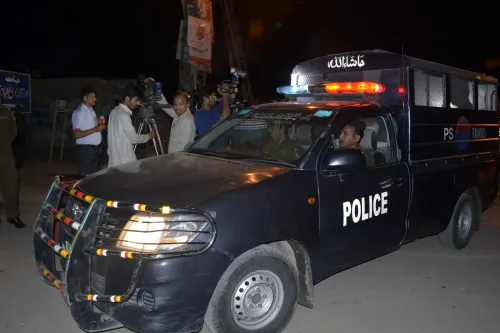
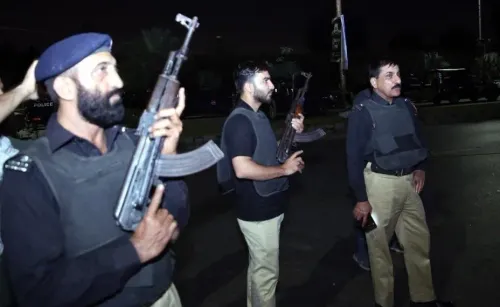
The incident began when two robbers held Hania's family at gunpoint outside their relative's home and demanded their jewellery. The CCD has claimed that the robbers opened fire first on an officer who responded to the scene. However, Hania's father, Ahmed, has disputed this, stating that police were the first to fire.
As the family attempted to flee the chaos in their vehicle, an officer continued firing at the car — reportedly believing the robbers were inside. Hania was killed in the gunfire. Her brother and father sustained injuries. Post-mortem medical notes indicate she was struck by at least five bullets and died immediately.
A Pattern of Lethal Force: The CCD's Record
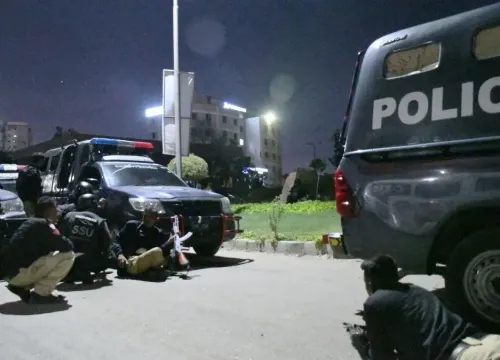
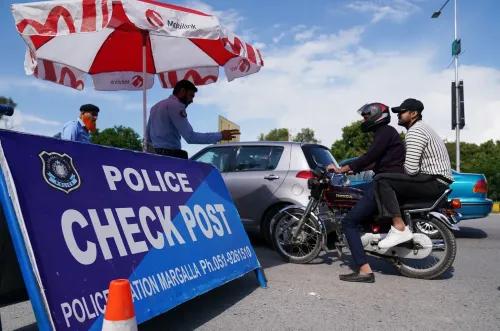
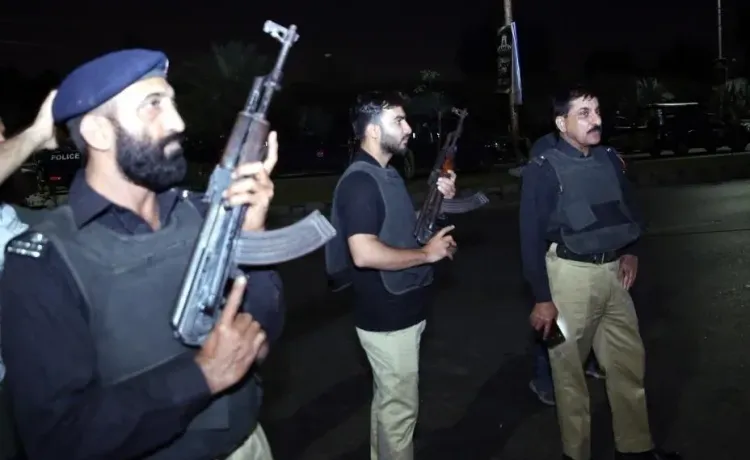
The CCD, established in 2025 to combat crime in Punjab, has faced sustained criticism from rights groups well before Hania's death. The Human Rights Commission of Pakistan (HRCP) had, as early as February, condemned the department for pursuing what it described as a deliberate policy of staged encounters resulting in extrajudicial killings.
According to HRCP findings, the CCD was involved in at least 670 encounters over eight months in 2025, resulting in the deaths of 924 suspects, compared to just two police officers killed during the same period. 'The extreme casualty imbalance — averaging more than two fatal encounters daily — combined with the uniformity of operational patterns across districts, indicates an institutionalised practice rather than isolated incidents of misconduct,' the HRCP stated.
The rights body also documented a pattern of intimidation against victims' families. One family reportedly faced pressure from police officials to bury the deceased immediately and was warned that other relatives could face harm if they pursued the case.
Rights Groups Call for Systemic Reform
The HRCP has called for an immediate province-wide moratorium on all encounter operations until independent oversight mechanisms are in place. The organisation found that CCD operations 'fail to comply with the UN Basic Principles on the Use of Force and Firearms by Law Enforcement Officials, which require that lethal force be absolutely necessary and proportionate.'
The commission also flagged a near-uniform narrative across CCD press releases and First Information Reports — that suspects fired first, that police acted in self-defence, and that those killed were 'hardened' criminals — which it said 'suggested orchestrated messaging rather than independent operational outcomes.'
'Without immediate corrective action — including the establishment of mandatory independent investigations, accountability for those responsible, and structural reforms to ensure compliance with constitutional and international human rights standards — the normalisation of state violence will permanently damage Pakistan's legal system, its democratic institutions and its standing in the international community,' the HRCP warned.
Diplomatic Pressure and What Comes Next
The case has placed Pakistan under rare international scrutiny over its policing methods. Australian Prime Minister Anthony Albanese has demanded a transparent probe, and Hania's family continues to seek accountability. The HRCP has called for a high-level judicial inquiry into CCD-related deaths across Punjab. Whether Pakistani authorities move toward independent oversight — or maintain the status quo — will determine not only justice for Hania's family, but the credibility of the province's law enforcement institutions.
Point of View
Against just two police fatalities, is a statistical indictment that no government statement about 'robbers firing first' can easily neutralise. What makes this case different is the diplomatic dimension: an Australian child, an Australian prime minister demanding answers, and a rights commission with documented evidence. Pakistan's Punjab administration faces a rare convergence of domestic accountability pressure and international scrutiny — and the response will signal whether the CCD's record is treated as a policy failure or a feature.
NationPress
23 Sept 2026
Frequently Asked Questions
Who was Hania Ahmed and how did she die?
Hania Ahmed was a nine-year-old Australian girl visiting family in Pakistan who was killed during a police shooting in Chakwal district, Punjab. She was struck by at least five bullets and died immediately after police fired at her family's vehicle during a robbery response, reportedly mistaking them for the robbers.
What has Australia's government said about the incident?
Australian Prime Minister Anthony Albanese has previously demanded a transparent investigation into Hania's death. Her grandfather Mazhar Hussain Chohan told ABC News the family simply wants justice, whether it comes through Albanese's pressure or through Pakistani police accountability.
What is Pakistan's Crime Control Department (CCD) and why is it under scrutiny?
The CCD is a Punjab police unit established in 2025 to combat crime. The Human Rights Commission of Pakistan has documented at least 670 CCD-led encounters over eight months in 2025, resulting in 924 suspect deaths — an average of more than two fatal encounters daily — and has condemned the department for what it calls a policy of staged, extrajudicial killings.
What does the HRCP want done about CCD encounter killings?
The HRCP has called for an immediate province-wide moratorium on all CCD encounter operations, mandatory independent investigations into deaths, and a high-level judicial inquiry. It has also urged structural reforms to bring CCD practices in line with Pakistan's constitutional guarantees and UN standards on the use of force.
What did the post-mortem examination reveal about Hania's injuries?
Medical notes from the post-mortem examination indicate that Hania Ahmed was hit by at least five bullets and died immediately. Her father and brother, who were in the same vehicle, sustained injuries but survived.