Houthis claim drone strikes on Najran airport and Aramco facility in Saudi Arabia

Synopsis
The Houthis have claimed drone strikes on both Najran airport and an Aramco facility in southern Saudi Arabia — the latest in a string of cross-border attacks since the group declared a maritime ban on Saudi shipping in July. With Saudi authorities silent and 81 Yemeni government operations launched in 24 hours, the Yemen conflict is entering a sharply escalatory phase with direct implications for regional energy security.
Key Takeaways
Houthi military spokesperson Yahya Saree claimed two drone strikes on Najran airport and an Aramco facility in Saudi Arabia on 20 August .
The group said the attacks were in retaliation for alleged Saudi drone incursions over Saada province, a Houthi stronghold.
Saudi authorities and Aramco had not confirmed or commented on the strikes at the time of reporting.
The Houthis declared a maritime ban on Saudi shipping on 20 July , followed by a series of attacks on tankers, energy sites, and airports.
Yemeni government forces reported 81 military operations against Houthi positions in the 24 hours prior, targeting fighters and field commanders.
Yemen's civil war has been ongoing since 2014 , with a Saudi-led coalition intervening in 2015 .
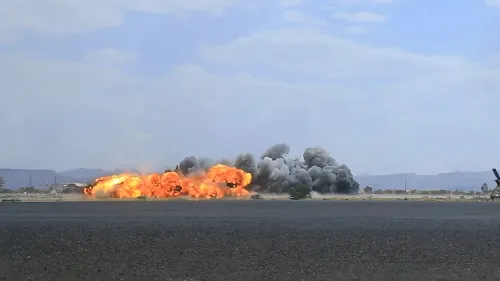
Yemen's Houthi group on Thursday, 20 August claimed responsibility for two drone attacks targeting Najran airport and a facility belonging to Saudi state oil giant Aramco in Saudi Arabia's southern region of Najran. The strikes, according to the group, were launched in retaliation for alleged Saudi drone incursions into Houthi-held airspace over Saada province.
What the Houthis Claimed
In a post on social media platform X, Houthi military spokesperson Yahya Saree stated that one drone struck a 'sensitive target' at Najran airport while the second hit an Aramco facility in the same region. Saree claimed both strikes 'achieved their objectives,' but provided no details on casualties or the extent of damage.
Neither Saudi authorities nor Aramco had issued any immediate response or confirmation of the claims as of the time of reporting.
Context: Escalating Houthi-Saudi Tensions
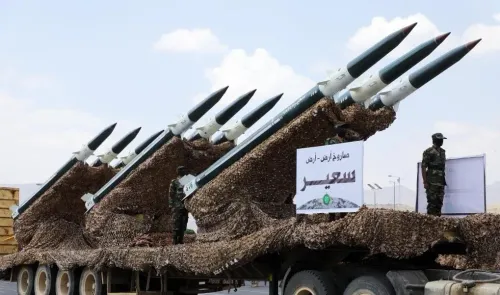
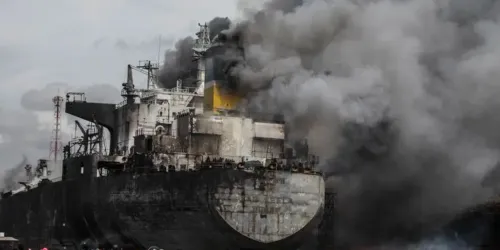
The strikes are the latest in a series of attacks the Houthis have claimed against Saudi targets since 20 July, when the group announced a maritime ban on Saudi shipping, alleging a Saudi blockade of Houthi-held territories. Since that declaration, the group has claimed multiple attacks on Saudi tankers, energy infrastructure, and airports.
Notably, this pattern of cross-border strikes mirrors earlier phases of the Yemen conflict, when Houthi drone and missile attacks on Saudi oil infrastructure — including the high-profile Abqaiq-Khurais strikes — drew global attention to the conflict's regional spillover risks.
Yemeni Government Forces Step Up Operations
Majid al-Nuzaili, spokesperson for the internationally recognised Yemeni government forces, said on Thursday that government troops had conducted 81 military operations against Houthi positions over the preceding 24 hours. The operations, he said, targeted Houthi fighters and field commanders along multiple frontlines, resulting in kills and injuries, though independent verification was not immediately available.
Al-Nuzaili stated the offensive was a direct response to repeated Houthi attacks on government forces and civilian infrastructure. The Houthis had not publicly commented on those claims as of the time of this report.
Background: A Decade of Conflict
Yemen has been engulfed in civil war since late 2014, when the Houthis seized large swathes of northern Yemen, including the capital Sanaa. A Saudi-led coalition intervened in 2015 in support of the internationally recognised government, triggering one of the world's most severe humanitarian crises. Despite intermittent ceasefire efforts, fighting has continued to intensify across multiple fronts.
What to Watch
With the Houthis escalating both maritime and aerial operations against Saudi targets, and government forces intensifying counter-offensives, the conflict shows no sign of de-escalation. Any confirmed damage to Aramco infrastructure could have implications for regional oil supply and global energy markets. A formal response from Riyadh is anticipated.
Point of View
Unverified by Riyadh or Aramco, follows a deliberate escalatory script the group has used before — announce the strike, assert success, and let the silence from the other side do the strategic work. What is new is the July maritime ban, which has given the Houthis a stated legal-political framework for sustained attacks on Saudi economic targets. If Aramco infrastructure is genuinely hit, the ripple effects on oil markets will force the conflict back onto the global agenda at a time when attention has drifted. Yemeni government forces' 81 operations in 24 hours signals that the ground war is also intensifying — a two-front pressure that the internationally recognised government, already fragile, may struggle to sustain without renewed coalition support.
NationPress
21 Aug 2026
Frequently Asked Questions
What did the Houthis claim to have attacked in Saudi Arabia?
The Houthis claimed two drone strikes on 20 August — one targeting a 'sensitive target' at Najran airport and another hitting an Aramco facility in Saudi Arabia's southern Najran region. Spokesperson Yahya Saree said both attacks 'achieved their objectives,' without specifying casualties or damage.
Why did the Houthis say they carried out the drone strikes?
The group said the strikes were in direct retaliation for alleged Saudi drone incursions into the airspace over Saada province, a Houthi-controlled area in northern Yemen bordering Saudi Arabia. The Houthis have framed recent attacks as defensive responses to Saudi actions.
Has Saudi Arabia confirmed the Houthi drone attacks?
No. As of the time of reporting, neither Saudi authorities nor Aramco had issued any comment or confirmation of the Houthi claims. Independent verification of the strikes had not been established.
What is the Houthi maritime ban on Saudi shipping?
On 20 July, the Houthi group announced a ban on Saudi shipping, alleging a Saudi blockade of Houthi-held areas in Yemen. Since then, the group has claimed a series of attacks on Saudi tankers, energy facilities, and airports as part of this declared campaign.
How long has the Yemen conflict been going on?
Yemen has been in conflict since late 2014, when the Houthis seized much of northern Yemen including the capital Sanaa. A Saudi-led coalition intervened in 2015 to support the internationally recognised government, and fighting has continued across multiple fronts since then.