Balochistan abuses: HRCB documents 77 killings, 63 disappearances in June
Synopsis
A detailed monthly report by the Human Rights Council of Balochistan has put hard numbers to what critics call a systematic campaign: 77 killings, 63 enforced disappearances, and Pakistan's Frontier Corps named as the leading perpetrator in both — all within a single month. The documentation of teenagers and women among the disappeared, and the targeting of a named human rights defender's home, adds a dimension that goes beyond aggregate statistics.
Key Takeaways
The Human Rights Council of Balochistan (HRCB) recorded 77 killings and 63 enforced disappearances in Balochistan in June 2025 .
Pakistan's Frontier Corps (FC) was linked to 53 killing incidents and 36 enforced disappearance cases — the highest of any identified perpetrator.
19 of those killed had previously been subjected to enforced disappearance; 4 were abducted and killed within June itself.
Among the disappeared, two were women and three were teenagers ; only 17 were released during the month.
Human rights defender Sammi Deen Baloch's home was subjected to a prolonged night raid in Kech district, the report noted.
The Human Rights Council of Balochistan (HRCB) has documented 77 killings and 63 enforced disappearances in Balochistan during June 2025, in a report that accuses Pakistani security forces of escalating abuses against civilians in the restive province. The findings represent one of the most detailed monthly tallies of alleged state violence in the region.
Scale of Killings
Of the 77 people killed, 76 were men and one was a woman. The identities of 42 victims could not be independently verified, according to the HRCB. Notably, 19 of those killed had previously been subjected to enforced disappearance — four were abducted in June and killed within the same month, while the remaining 15 had been forcibly disappeared in prior months.
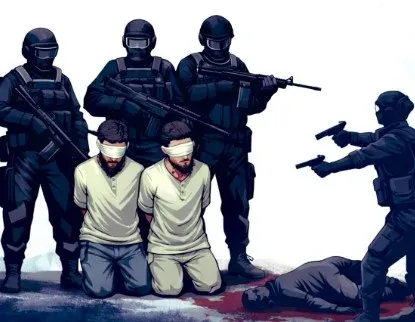
Alleged encounters were the most frequently documented mode of killing, accounting for 39 cases — more than half of all recorded incidents. Target killings accounted for 12 cases, followed by fake encounters (10 cases), custodial killings (9 cases), body discoveries (3 cases), and honour killings and indiscriminate firing accounting for two deaths each, the HRCB stated.
Frontier Corps Named as Primary Perpetrator
Pakistan's Frontier Corps (FC) was identified as responsible for the highest number of incidents, linked to 53 cases of killing. Unknown perpetrators accounted for 14 cases, while state-backed death squads and the Counter-Terrorism Department (CTD) were each linked to five cases.
In enforced disappearances, the FC again topped the list with 36 cases, followed by Pakistani intelligence agencies with 16 cases, state-backed death squads with six cases, and the CTD with five cases.
Enforced Disappearances: Methods and Victims
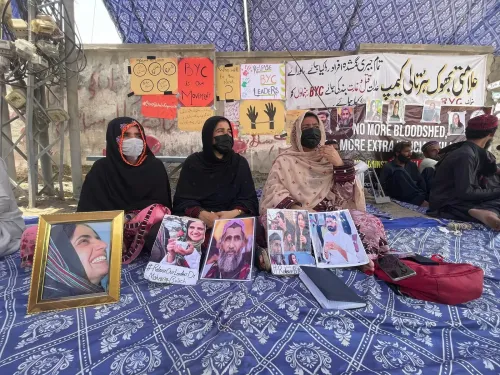
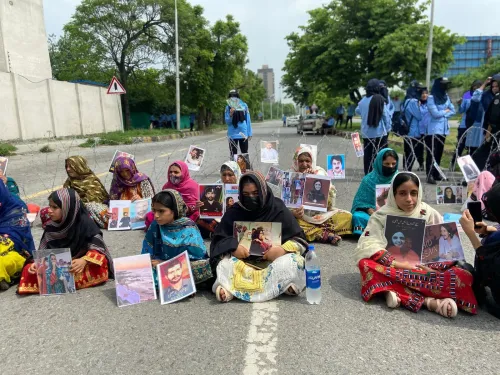
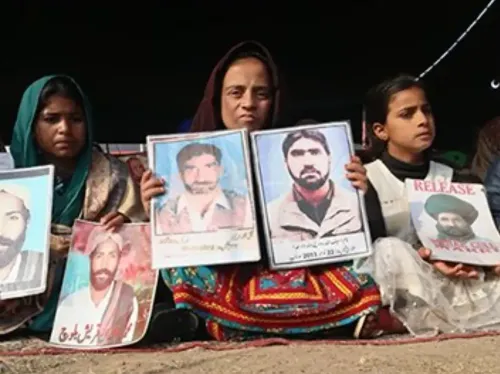
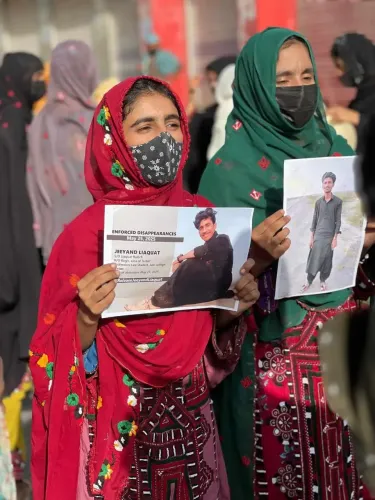
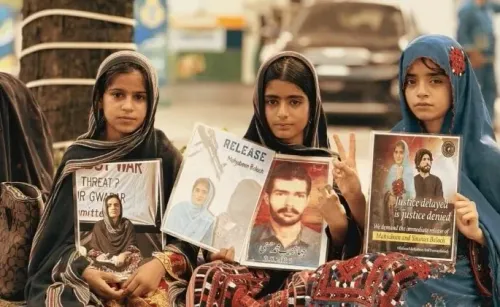
Among the 63 documented victims of enforced disappearance, two were women and three were teenagers. Only 17 of those forcibly disappeared were released during June; the remaining victims continue to be held incommunicado, according to the HRCB.
House raids were the primary method used to carry out disappearances, accounting for 27 cases (42.86%). Detentions accounted for 20 cases (31.75%), while 10 victims (15.87%) were forcibly disappeared during military operations. Three victims disappeared after being summoned to an FC camp, and another three were detained at a security checkpoint.
Military Operations and Civilian Impact
The HRCB alleged that Pakistani forces conducted a series of military operations across Balochistan during June, resulting in the destruction of civilian property, prolonged restrictions on movement, and intimidation of civilians and human rights defenders. Repeated night raids across Kech district reportedly involved assault, intimidation of women and children, and looting of property.
Among those targeted, the report cited a prolonged raid on the home of human rights defender Sammi Deen Baloch as a particularly documented incident. The HRCB's findings come against a backdrop of long-standing international concern over the human rights situation in Balochistan, where Pakistani authorities have consistently denied systematic abuses.
With the HRCB's monthly documentation now drawing renewed international attention, pressure on Islamabad over accountability in Balochistan is unlikely to ease in the coming weeks.
Point of View
Or that four people were abducted and killed within the same calendar month, it shifts the conversation from allegation to documentation. Pakistan has long framed its Balochistan operations as counter-terrorism; the HRCB data, if verified independently, suggests a pattern that extends well beyond combatants to include teenagers, women, and named civil society figures. The targeting of Sammi Deen Baloch's home is not incidental — it signals that human rights monitoring itself is being treated as a threat. International bodies that have raised Balochistan periodically but without sustained pressure will find it increasingly difficult to look away from cumulative monthly records of this kind.
NationPress
28 Oct 2026
Frequently Asked Questions
What did the HRCB report on Balochistan document for June 2025?
The Human Rights Council of Balochistan (HRCB) documented 77 killings and 63 enforced disappearances in Balochistan during June 2025. The report identified Pakistan's Frontier Corps as the primary perpetrator in both categories.
Who is responsible for the killings according to the HRCB?
Pakistan's Frontier Corps (FC) was linked to 53 of the 77 killing incidents. Unknown perpetrators accounted for 14 cases, while state-backed death squads and the Counter-Terrorism Department (CTD) were each linked to five cases.
How were the enforced disappearances carried out?
House raids were the most common method, accounting for 27 cases (42.86%), followed by detentions at 20 cases (31.75%) and disappearances during military operations at 10 cases (15.87%). Only 17 of the 63 disappeared individuals were released during June.
Were civilians and human rights defenders targeted?
Yes, according to the HRCB. The report cited repeated night raids in Kech district involving intimidation of women and children and looting of property. It specifically noted a prolonged raid on the home of human rights defender Sammi Deen Baloch.
What is the Human Rights Council of Balochistan?
The Human Rights Council of Balochistan (HRCB) is a human rights organisation that monitors and documents alleged abuses in Pakistan's Balochistan province. It publishes periodic reports tracking killings, enforced disappearances, and military operations in the region.