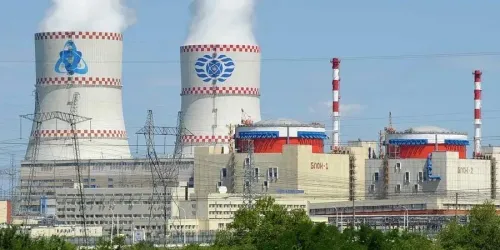
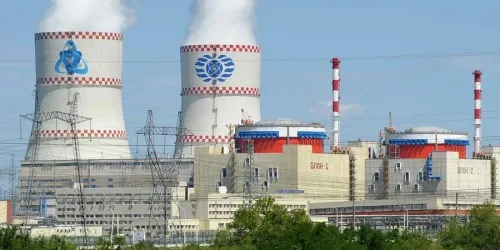
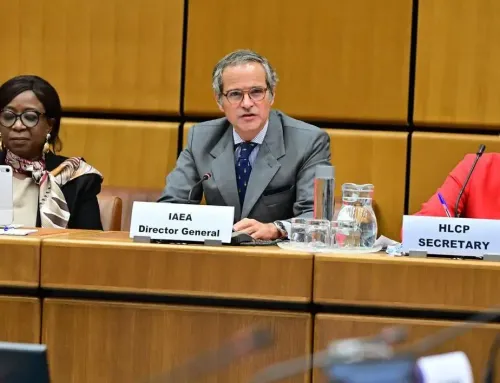
Zaporizhzhia nuclear plant repairs begin under IAEA-brokered ceasefire
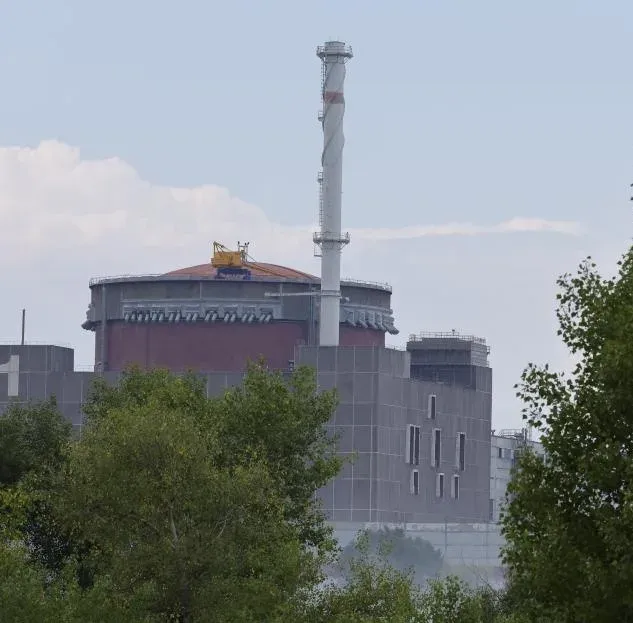
Synopsis
For the sixth time since late last year, the IAEA has brokered a localised ceasefire near the Zaporizhzhia Nuclear Power Plant — this time to allow repairs on a 750kV power line severed since March. With a drone having struck Unit 6 just days earlier and the ceasefire window open only until 23 June, the window to stabilise Europe’s largest nuclear plant is narrow and fragile.
Key Takeaways
Repair work on the 750-kilovolt Dniprovska transmission line — disconnected since 24 March — began on 5 June 2025 under an IAEA-brokered ceasefire .
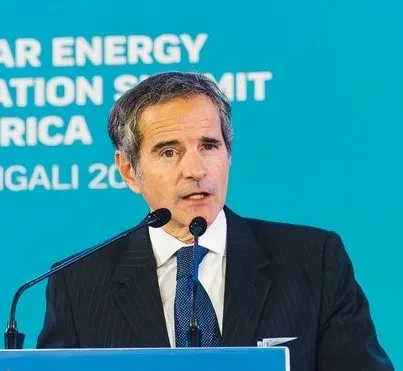
This is the sixth temporary ceasefire IAEA Director General Rafael Grossi has negotiated with Russia and Ukraine to protect nuclear safety at the ZNPP .
The ceasefire will remain in force until 23 June , according to Rosatom chief Alexey Likhachev .
A Ukrainian combat drone struck the turbine hall of Unit 6 on 30 May , injuring three people , according to Likhachev.
The damage is located atop high pylons across the line of control on the Dnipro River , complicating repair logistics.
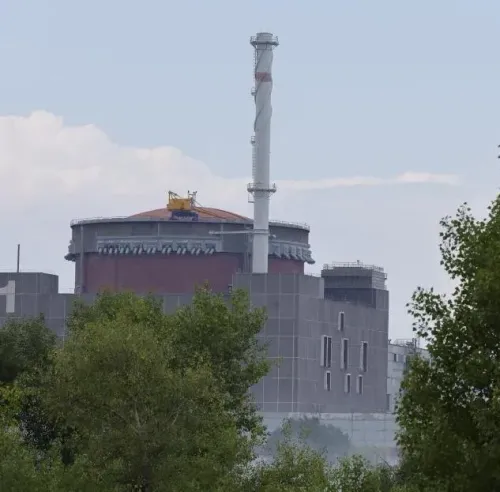
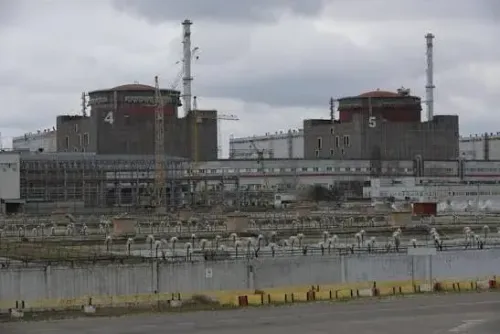
Repair work on a critical external power line serving the Zaporizhzhia Nuclear Power Plant (ZNPP) commenced on Friday, 5 June, after a localised ceasefire brokered by the International Atomic Energy Agency (IAEA) took effect along the frontline near the plant. The move is aimed at averting the threat of a nuclear accident at Europe's largest nuclear facility, which has operated under persistent safety stress since the onset of the conflict.
The Repair Operation
Specialists are working to restore the 750-kilovolt Dniprovska transmission line, which has been disconnected since 24 March. The line is described as a critical component of the plant's external power supply system, and its restoration is expected to significantly improve power reliability and strengthen nuclear and radiation safety at the site.
The repairs have been complicated by the location of the damage — atop high pylons straddling the line of control across the Dnipro River, according to the IAEA. The ceasefire was specifically designed to protect personnel working on this exposed stretch of energy infrastructure.
IAEA's Role and the Ceasefire
The IAEA confirmed on its official X account on Friday that the localised ceasefire had taken effect, describing it as “paving the way for crucial power line repairs to prevent the threat of a nuclear accident.” This marks the sixth such temporary ceasefire that IAEA Director General Rafael Grossi has negotiated with both Russia and Ukraine since late last year to secure off-site power and maintain nuclear safety at the ZNPP.
According to Alexey Likhachev, Director General of Russia’s state nuclear corporation Rosatom, the ceasefire will remain in force until 23 June. Likhachev also disclosed that three people were injured in a Ukrainian drone attack on the ZNPP.
The Drone Strike That Preceded the Repairs
The urgency of the repair push follows a Ukrainian combat drone strike on the turbine hall of Unit 6 of the Zaporizhzhia NPP on 30 May. IAEA experts subsequently inspected the impact site. Director General Grossi expressed serious concern over the strike, warning that attacks on nuclear facilities are “like playing with fire.”
This is not an isolated incident — the ZNPP has faced repeated power supply disruptions throughout the conflict, with each outage raising the spectre of a cooling failure and potential radioactive release.
Why Nuclear Safety at ZNPP Remains at Risk
The Zaporizhzhia plant, situated on the front lines of the Russia-Ukraine conflict, has been under Russian military control since early 2022. Its vulnerability to power disruptions is acute: without external electricity, the plant relies on diesel generators to cool its reactors, a contingency the IAEA has repeatedly flagged as unsustainable over the long term.
The restoration of the Dniprovska line, if completed successfully, would provide a more stable power buffer — though experts caution that the broader security environment around the plant remains deeply uncertain. With the ceasefire window open until 23 June, the pace of repairs will be closely watched by the international nuclear safety community.
Point of View
But each negotiated pause is also an implicit acknowledgement that the plant’s safety cannot be guaranteed between rounds. The drone strike on Unit 6 just days before this latest ceasefire underscores the core contradiction: repair windows are being carved out of an active conflict zone, not a secured one. Until the plant’s operational status is resolved at a political level, the IAEA is essentially managing a slow-motion crisis with a series of temporary patches.
NationPress
21 Oct 2026
Frequently Asked Questions
Why has the IAEA brokered a ceasefire near the Zaporizhzhia nuclear plant?
The IAEA brokered a localised ceasefire to allow specialists to repair the 750-kilovolt Dniprovska transmission line, a critical external power supply for the Zaporizhzhia Nuclear Power Plant that has been disconnected since 24 March. Without stable external power, the plant faces heightened nuclear and radiation safety risks.
How many ceasefires has the IAEA negotiated for the Zaporizhzhia plant?
This is the sixth temporary ceasefire that IAEA Director General Rafael Grossi has negotiated with Russia and Ukraine since late last year, each aimed at securing off-site power and maintaining nuclear safety at the ZNPP.
What happened at Zaporizhzhia’s Unit 6 on 30 May?
A Ukrainian combat drone struck the turbine hall of Unit 6 of the Zaporizhzhia Nuclear Power Plant on 30 May. IAEA experts inspected the impact site, and Rosatom chief Alexey Likhachev said three people were injured in the attack.
How long will the ceasefire near the Zaporizhzhia plant last?
According to Rosatom Director General Alexey Likhachev, the ceasefire will remain in force until 23 June, providing a window for repair crews to restore the damaged transmission line.
Why is the Dniprovska power line repair so difficult?
The damage to the Dniprovska line is located atop high pylons straddling the line of control across the Dnipro River, making access logistically complex and dangerous without a security guarantee for repair personnel.