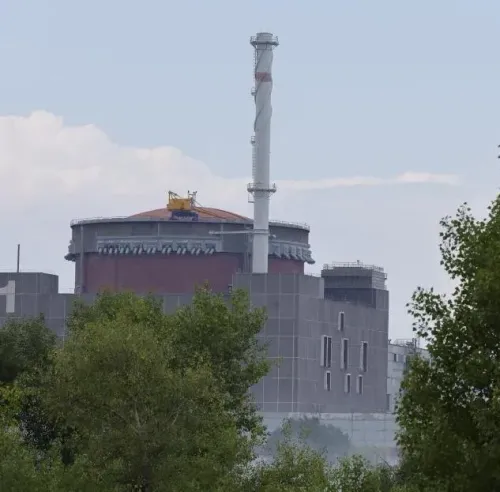
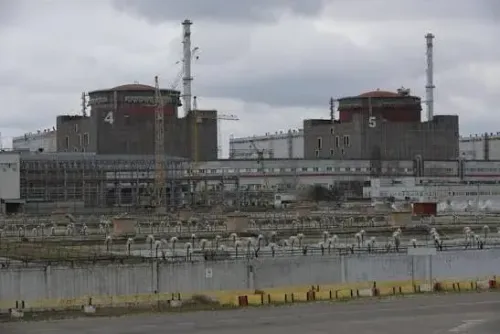
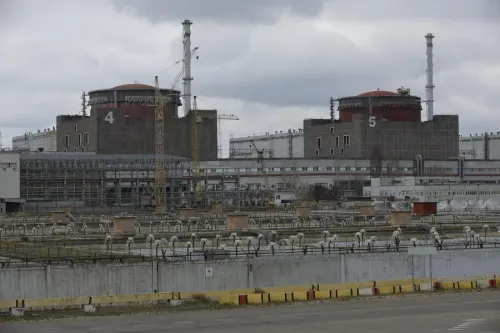
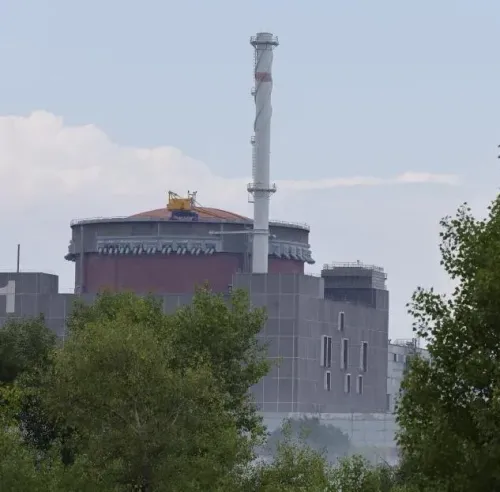
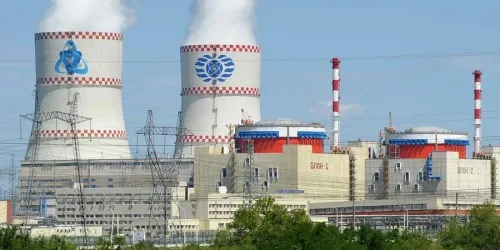
Zaporizhzhia Nuclear Plant Unit 6 hit by Ukrainian drone, turbine wall breached
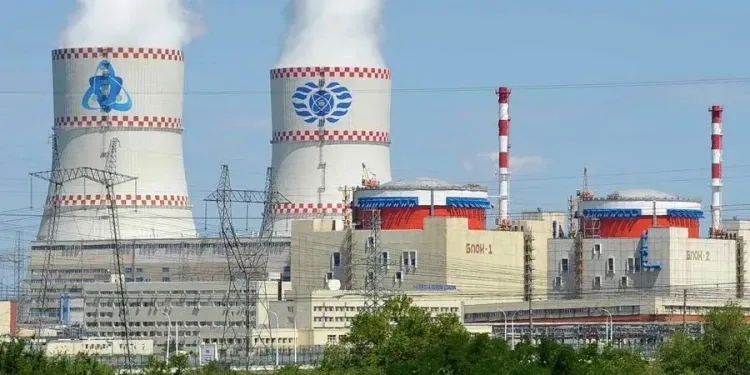
Synopsis
A Ukrainian drone has struck the turbine hall of Unit 6 at the Zaporizhzhia Nuclear Power Plant — what Russia's Rosatom chief is calling the first-ever targeted attack on a nuclear plant's core equipment. With the turbine wall breached and fibre-optic guidance confirmed, this is no stray hit, and the warning from Moscow is stark: the world may be one step from a nuclear incident with no borders.
Key Takeaways
A Ukrainian combat drone struck the turbine hall of Unit 6 at the Zaporizhzhia Nuclear Power Plant on Saturday afternoon .
The explosion breached the turbine building wall but did not damage the plant's primary nuclear equipment, according to Rosatom .
Rosatom Director General Alexey Likhachev said the drone was guided via fibre-optic control , ruling out an accidental strike.
Likhachev described it as the first targeted attack on a nuclear plant's core equipment in international history.
The plant's external radiation monitoring laboratory was also reportedly attacked earlier in May in a separate drone strike.
No independent verification of Russia's account was immediately available; the IAEA has not yet formally responded.
A Ukrainian combat drone struck the turbine hall of Unit 6 of the Zaporizhzhia Nuclear Power Plant (NPP) on Saturday afternoon, according to Rosatom Director General Alexey Likhachev. The explosion did not damage the plant's core reactor equipment but blew a hole in the turbine building wall, Likhachev said in an official statement.
What Happened
Likhachev stated that the drone was guided via fibre-optic control, which he said 'completely rules out the possibility of an accidental impact.' The detonation caused structural damage to the turbine building of Unit 6 but stopped short of breaching primary nuclear systems, according to the statement.
Earlier this month, the plant's external radiation monitoring laboratory was also reportedly targeted in a separate drone strike, suggesting a pattern of escalating attacks on the facility's infrastructure.
Russia's Claims on Nuclear Risk
Likhachev described the strike as 'the first targeted attack on a nuclear power plant's core equipment in the history of the international community,' according to reports citing Russia's state media. He warned of potentially catastrophic consequences, saying the world is 'one step closer to an incident that will most likely affect even those living far beyond Russia and Ukraine.'
'The Ukrainian armed forces repeatedly cross not just red lines, but the boundaries of common sense. What should we expect next? Strikes directly at the turbine? The reactor hall? The reactor and its safety systems?' Likhachev said in his statement.
Context and International Concern
The Zaporizhzhia NPP is Europe's largest nuclear power plant and has been under Russian control since early in the conflict. It has been a focal point of nuclear safety concerns throughout the war, with both sides trading blame for attacks near the facility. International bodies including the International Atomic Energy Agency (IAEA) have repeatedly called for a protection zone around the plant.
Likhachev's statement urged the international community to treat attacks on the plant with greater urgency, arguing that many observers have not taken the threat seriously enough. No independent verification of the Russian account was immediately available.
What Comes Next
The strike is likely to intensify calls from nuclear safety advocates and international organisations for an immediate ceasefire around the plant. Whether the IAEA or the United Nations will formally respond to Saturday's incident remains to be seen. Any escalation targeting reactor systems directly would represent a qualitatively different and far graver threat to regional and global safety.
Point of View
And each incident has produced warnings without binding international action. The IAEA's repeated calls for a protection zone have gone unheeded by both sides. If fibre-optic drone guidance is confirmed, it does signal deliberate targeting — which raises the question of what the international community's red line actually is, and whether it will be articulated before, or only after, a radiological event.
NationPress
25 Sept 2026
Frequently Asked Questions
What happened at the Zaporizhzhia Nuclear Power Plant on Saturday?
A Ukrainian combat drone struck the turbine hall of Unit 6 at the Zaporizhzhia NPP on Saturday afternoon, causing an explosion that breached the turbine building wall. According to Rosatom, the plant's core reactor equipment was not damaged.
Who confirmed the drone strike on the Zaporizhzhia plant?
Rosatom Director General Alexey Likhachev confirmed the strike in an official statement. His account was reported by Russian state media, and no independent verification was immediately available.
Was there any radiation leak or nuclear safety breach?
According to Rosatom's statement, the explosion did not damage the main nuclear equipment or safety systems. No radiation leak was reported, though the turbine building wall was breached.
Why is the Zaporizhzhia plant so significant?
The Zaporizhzhia Nuclear Power Plant is the largest nuclear facility in Europe. It has been under Russian control since early in the Russia-Ukraine conflict and has been a central concern for global nuclear safety, with the IAEA repeatedly calling for a protection zone around it.
Has the plant been attacked before?
Yes. Earlier in May, the plant's external radiation monitoring laboratory was reportedly struck in a separate drone attack. The facility has been the subject of multiple reported incidents throughout the conflict, with both sides accusing each other of endangering nuclear safety.